Items
-

Queen Elizabeth visits the Smithsonian "Castle"
In July of 1976 Queen Elizabeth II came to the US to commemorate the Bicentennial of the American Revolution. One of her stops while in Washington, DC, was the Smithsonian Institution Building, or the “Castle,” and the National Mall. The night before, her Majesty had been an honored guest at a state dinner in the Rose Garden within President’s Park, hosted by President Gerald Ford. At the Castle, she was greeted by the Smithsonian's Vice President, Nelson Rockefeller, and Secretary S. Dillon Ripley. -
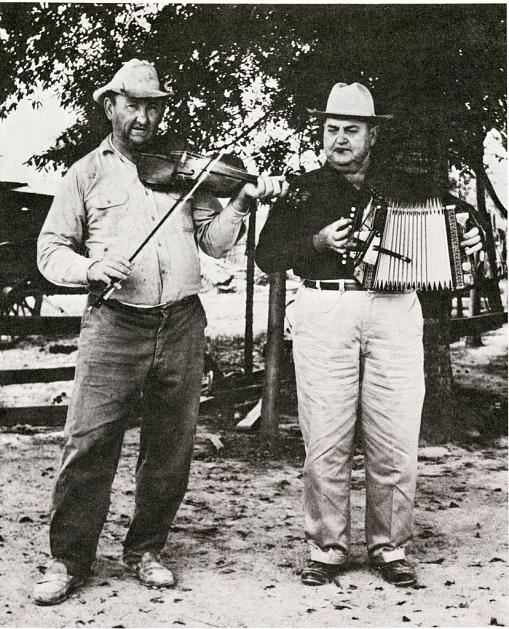
First Festival of American Folklife
Now called the Smithsonian Folklife Festival, the first Festival of American Folklife was created by Secretary of the Smithsonian S. Dillon Ripley and James R. Morris. Smithsonian Secretary Dillon Ripley wanted to change museums from stuffy institutions to lively participants in national life. The festival included about 84 folk artists, including musicians, craftsmen and women, singers, and dancers. It has grown to become one of the largest annual cultural events in Washington, bringing more than 23,000 musicians, artists, performers, craftspeople, workers, cooks, storytellers, and others to the National Mall to demonstrate the skills, knowledge, and aesthetics of people around the world. -

Boy Scout Jamboree
The 1937 Boy Scout Jamboree was the first ever “jambo” event, now held every four years. 25,000 Scouts from around the country attended the event, camping for more than a week around the Washington Monument and Tidal Basin. Scouts rode in the Goodyear blimp, toured the city, and went to baseball games. Professional chefs who were unemployed during the Depression prepared food for the encampment in large centralized tents. President Franklin Roosevelt conducted a grand review of the Scouts in formation on Pennsylvania Avenue. -

Tidal Basin Beach Officially Opens
Even before the Tidal Basin was constructed, planners proposed to use it as a recreational bathing beach. On August 24, 1918, the Tidal Basin bathing beach officially opened with a water carnival. Diving competitions, swimming competitions, and canoe tilting contests were all held for men and women. The beach remained open until the mid-1920s, when it closed due to pollution. -

Cherry Tree Protest at Jefferson Memorial site
In November 1938 a group of white women led by Eleanor Patterson, owner of the Washington Times-Herald, protested the removal of cherry trees from the Tidal Basin to make way for the Jefferson Memorial. On November 18, the women chained themselves to trees at the Memorial worksite and stole workmen's shovels. Their tactics delayed cherry tree removal until officials convinced the women that after the removal of cherry trees to make way for the Memorial, more would be planted elsewhere along the Tidal Basin. -

Resurrection City
Resurrection City, organized by Ralph Abernathy, was part of the 1968 Poor People's Campaign, a demonstration for full employment and living wages. During May 1968 thousands of demonstrators representing communities across the country lived in a shantytown of plywood and canvas homes south of the Reflecting Pool. Intense rainfall flooded the encampment and internal dissension plagued the city. Resurrection City's Park Permit expired on June 23. The next day, police moved through the area, tearing down the buildings and arresting nearly 300 people. Sometimes remembered as a failure, Resurrection City nonetheless brought together many disparate groups to work toward common goals. -
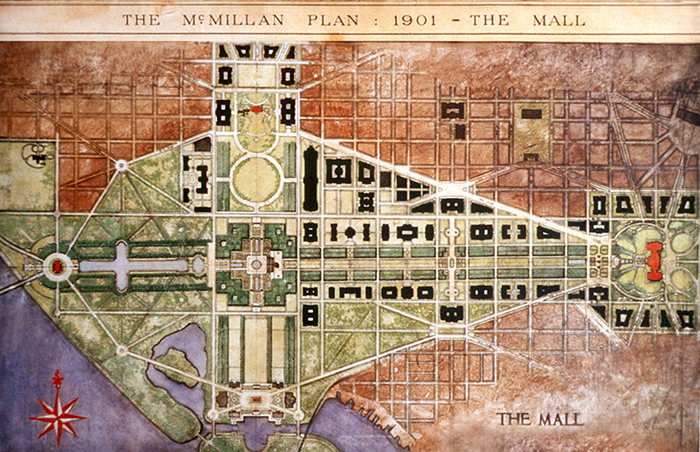
Senate Park Commission releases the McMillan Plan for the National Mall
In 1902 the Senate Park Commission announced a plan to renovate the National Mall. Named after the committee chair, Senator James McMillan, the McMillan Plan redesigned the layout of the Mall from a system of informal gardens to today's streamlined, symmetrical, neoclassical landscape and architecture. This plan also supported the creation of monuments and museums along the expanse of the Mall, and the integration of East and West Potomac Parks into the National Mall. The McMillan Plan changed the Mall from a commercial area and city park into a monumental center for the nation. -
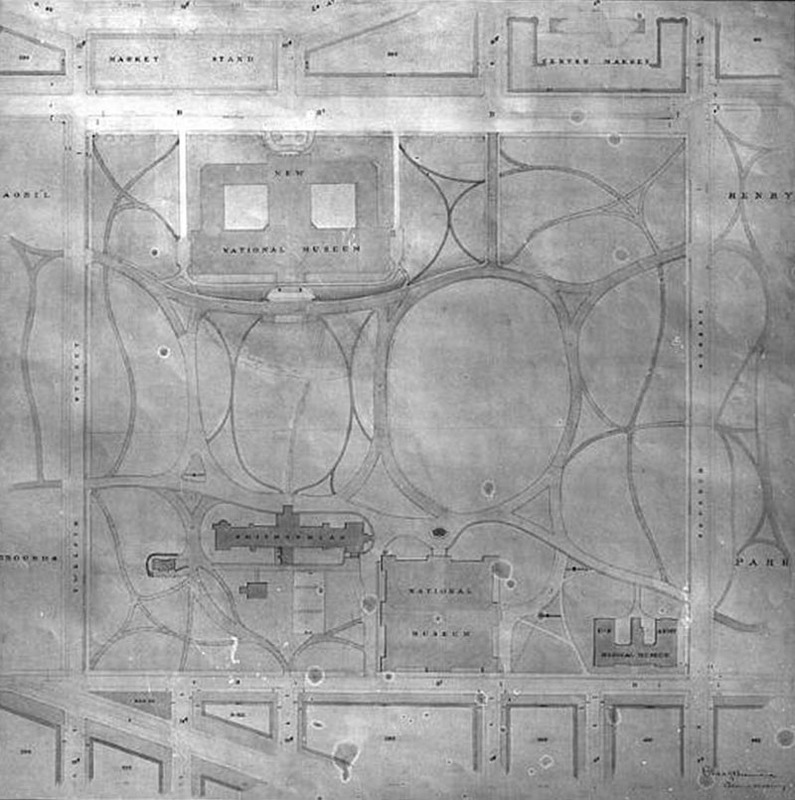
Andrew Jackson Downing creates a landscape plan for the Mall
In 1850 President Millard Fillmore asked Andrew Jackson Downing, the nation's preeminent landscape gardener and advocate of a rural American style, to design the landscaping for the largely undeveloped National Mall and Smithsonian grounds. Downing’s plan departed from the classic design originally planned for the Mall. A champion of public parks, Downing created a plan which connected four different, but compatible, garden spaces extending from the Capitol to the Washington Monument and using flora and fauna indigenous to the US, created a public museum of living trees and shrubs. Congress failed to allocate funds, however, and Downing’s plan never materialized. -
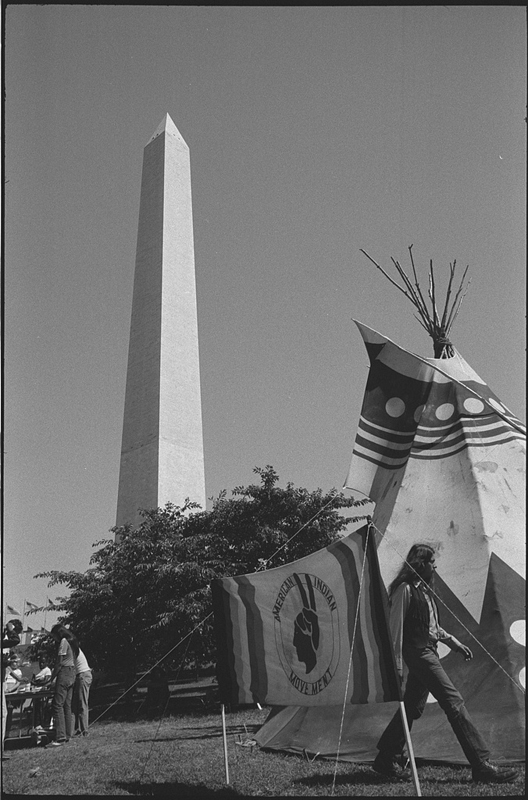
Longest Walk ends at National Mall
In February 1978 the American Indian Movement began The Longest Walk, a cross-country march beginning on Alcatraz Island in California, to support tribal rights and bring attention to 11 pieces of legislation before Congress affecting American Indians. The proposed legislation changed the provisions of early treaties on tribal government, hunting and fishing rights, and schools and hospitals. Marchers arrived in July. Tribal elders and walk leaders camped in tipis on Washington Monument grounds. Over the course of a week, they held rallies and meetings throughout Washington, including at the Capitol, Supreme Court, and White House. None of the bills they protested were passed. -
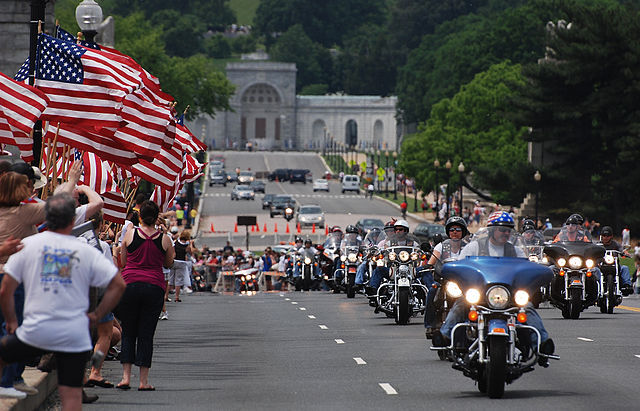
First Rolling Thunder Rally
The first Run to the Wall event, now known as Rolling Thunder, was held on Memorial Day in 1988. The rally was organized by Vietnam veteran Ray Manzo who wanted to bring national attention to the plight of prisoners of war and soldiers missing in action in Southeast Asia. Working together with the Vietnam Veterans Motorcycle Club, Manzo encouraged many veterans and supporters to ride into Washington and gather on the Mall. Approximately 2,500 bikers participated in the first rally. Rolling Thunder continued to grow and now occurs every Memorial Day weekend. -

US Marine Band's First Public Concert
On August 21, 1800, the Marine Band gave its first public concert in Washington on a hill overlooking the area which became the National Mall. At the time, the band probably consisted of two oboes, two clarinets, two French horns, a bassoon, and a drum. The United States Marine Band was created by an Act of Congress in 1798 to provide music for the President. When the seat of government moved from Philadelphia to Washington in 1800, the Band followed, performing for President Adams at the unfinished White House on New Year's Day 1801. -

Washington Canal filled in
By 1871, the Washington Canal was little more than an open sewer. Although many people proposed ways to make the canal functional, no solution was ever put into practice. In February 1871 Congress revoked the charters that made Washington and Georgetown independent cities and brought the entire District of Columbia under a territorial government. The Director of the Board of Public Works for this new territory, Alexander Shepherd, immediately enacted a solution to the canal problem by filling it in. The newly created road where the canal had been was first called B Street, then renamed Constitution Avenue in 1931. -

Presidents' Day snowstorm of 1979
On Presidents' Day 1979 a 22-inch blizzard shut down Washington, DC. Forecasters had predicted that the storm would bypass the city, so residents and city planners were taken by surprise. For the first time in fifty years, the Smithsonian museums were closed for two days in a row. Farmers in town to protest agricultural policy as part of a movement called "Tractorcade" used their tractors to help clear streets and get emergency personnel to hospitals. -
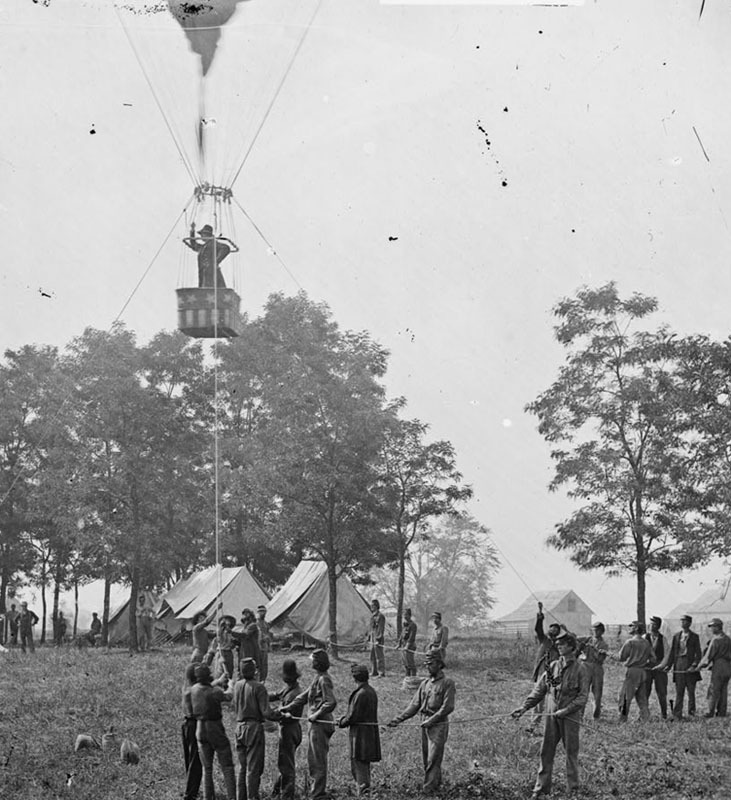
T.S.C. Lowe launches balloon test flight
On June 16, 1861, on the site of today’s National Air and Space Museum, T.S.C. Lowe launched his balloon the "Enterprise." Only months into the Civil War, Lowe launched his balloon in order to convince President Lincoln of the usefulness of the invention for military reconnaissance missions. Lincoln approved Lowe's Balloon Corps, a team of hand-picked aeronauts who conducted aerial reconnaissance for the Union Army between 1861 and 1863. -
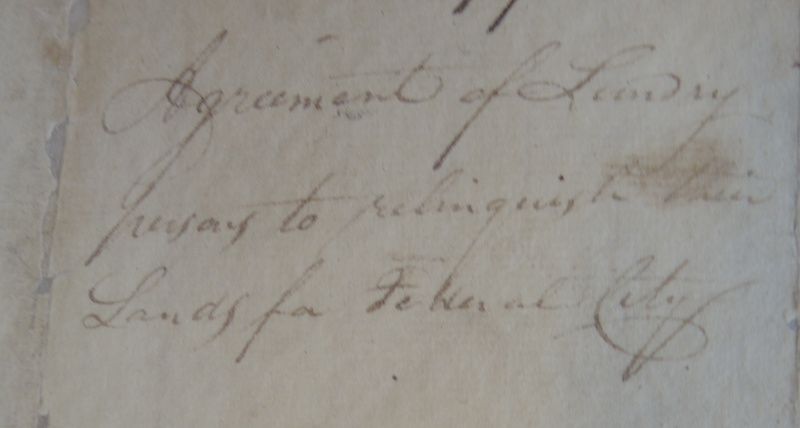
Proprietors deed land for new capital
In July 1790, when Congress approved the establishment of a federal capital on the Potomac River, the area they chose was already owned by people who lived and farmed there. President George Washington and other government officials negotiated with these proprietors to convince them to sell or donate the land to the United States. In March 1791 fifteen proprietors signed an agreement that sold half of their property to the government, while they kept the rights to the other half, which allowed the city to develop while residents kept their homes. Formal deeds of transfer were registered in December 1791. -

Carousel Opens on the Mall
On April 12, 1967, a classic wood merry-go-round with 33 animals and 2 chariots moved to the National Mall near the Smithsonian Arts and Industries Building. Rides cost 25 cents apiece. In 1981 museum officials replaced the worn-out merry-go-round with the present, larger carousel, a 1947 vintage model with 60 horses. Music for the first merry-go-round came from a Wurlitzer band organ with wooden pipes and bellows. Today the carousel’s music wafts from a CD player. -
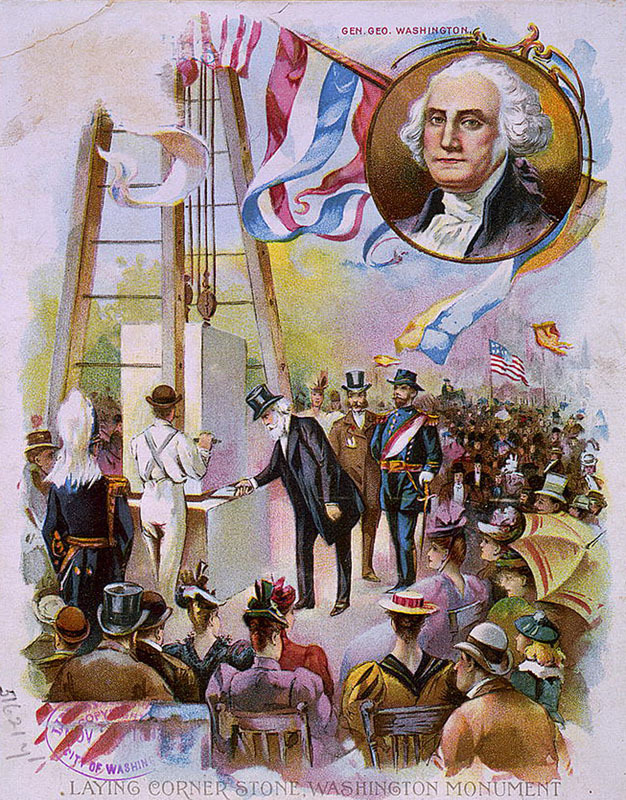
Cornerstone Laid for the Washington Monument
In 1848 the Freemason Society laid the cornerstone for the Washington Monument during an elaborate Fourth of July ceremony commemorating George Washington. Thousands attended, including the President and Vice-President, Congressmen, representatives of Indian tribal nations, and other dignitaries. Speaker of the House Robert Winthrop delivered a carefully planned speech, avoiding the controversial political issues of 1848, such as the war with Mexico, relationships with the Vatican, and conflicts over slavery. -

Tidal Basin Beach Closes
The public bathing beach at the Tidal Basin closed in 1925 after less than a decade in operation. This swimming area was segregated, open only to whites. Congress controlled the Washington DC budget and received increasing pressure from the African American community to create a beach for African Americans on the Tidal Basin, equivalent to the white beach. Although Congress approved funding for a second beach, debate within Congress halted progress on its creation. As the conflict intensified, funding for both beaches was canceled and Congress ordered the demolition of the white beach. -

Work Begins on the Smithsonian "Castle"
James Renwick, Jr began work on the original Smithsonian Institution building in 1847. Renwick's design was inspired by western European structures originally built in the 1100s, making this Gothic Revival building look like a castle. When construction began, the Mall was quiet and the Smithsonian building was isolated from the city Washington. When it opened in 1855, the Castle housed the first museum on the Mall. -

Washington's First Streetcar Line Opens
In 1862 the Washington & Georgetown Railroad Company opened Washington, DC's first streetcar line running nine horse-drawn cars on tracks extending from the US Capitol to the State Department. The growth of public transportation was fed by the influx of people into the nation's capital during the Civil War, the development of military depots and equipment, and increased government and residential activity. By 1863, the Washington & Georgetown ran 18 miles of track, and in 1864, reported a nine percent profit and an estimated 7.5 million passengers rode its horse cars. These first cars were segregated; African Americans rode only on front and rear platforms. -

National Drill and Encampment
In May 1887, militia groups from nineteen states and the District of Columbia participated in a drill competition on the National Mall. They set up their tents on the grounds of the Washington Monument and participated in marching, drilling, and shooting competitions on the Ellipse. Militia drill competitions were popular in the 1880s, but this was the first time black companies competed against white. Two white companies from Mississippi and Tennessee refused to march in a parade when they were placed behind a black company. Hospital tents near the encampment were provided by the Red Cross and overseen by Clara Barton. -
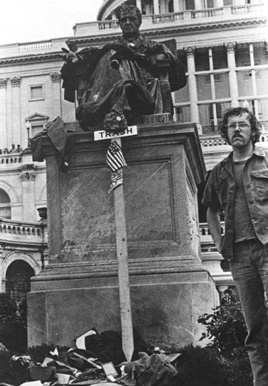
Dewey Canyon III – Vietnam Veterans protest the War
For a week in April 1971, Vietnam veterans camped on the Mall near the Capitol to protest the Vietnam War. The veterans set up camp in defiance of recent court rulings declaring it illegal to sleep on the Mall. The protest was organized by Vietnam Veterans Against the War and named after Operation Dewey Canyon I and II, military invasions of Laos in 1969 and 1971. Veterans attended hearings by the Senate Foreign Relations Committee and protested at Arlington National Cemetery, the Supreme Court, and the Pentagon. On the last day of the protest, Veterans threw their medals, discharge papers, and other war mementos onto the steps of the Capitol. -

1963 March on Washington for Jobs and Freedom
Roughly 250,000 people joined The March on Washington for Jobs and Freedom, one of the largest civil rights demonstrations in US history. Marching for social and economic equality, the crowd stretched from the Washington Monument to the Lincoln Memorial. Dr. Martin Luther King, Jr. delivered his "I Have A Dream Speech" on its steps. The march influenced Congress to pass the Civil Rights Act (1964) and the Voting Rights Act (1965). -
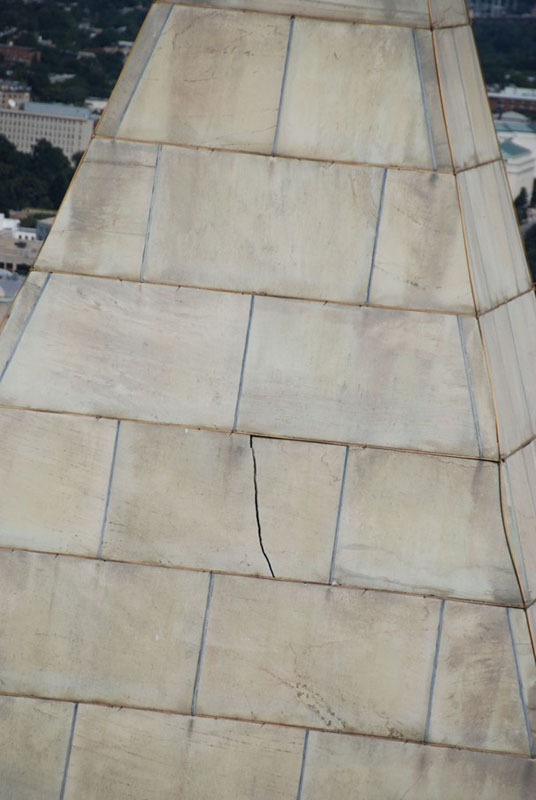
Earthquake on the National Mall
On August 23, 2011, a 5.8 magnitude earthquake affected the Washington, DC area and much of the east coast. From its epicenter in Louisa County, Virginia, the unusual quake caused minimal damage. However, the exterior of the Washington Monument had several large cracks that required repair. The National Park Service closed the Monument for safety and the structure was clad in scaffolding until the repairs were completed in May 2014. -

Wi-Fi Comes to the National Mall
In 2010 the DC government announced that public wireless internet was available on the National Mall. Visitors and residents can get online by logging into “DC Wifi” using wifi-enabled devices. The Smithsonian Castle Information Center, National Gallery of Art, Museum of National History, Museum of American History, US Department of Agriculture, National Air and Space Museum, and the Museum of the American Indian serve as hotspots for the network. Outdoor wifi is accessible from the Washington Monument (14th Street) and the Capitol (3rd Street) and between Constitution and Independence Avenues. A map of hotspots in the District can be found here. -
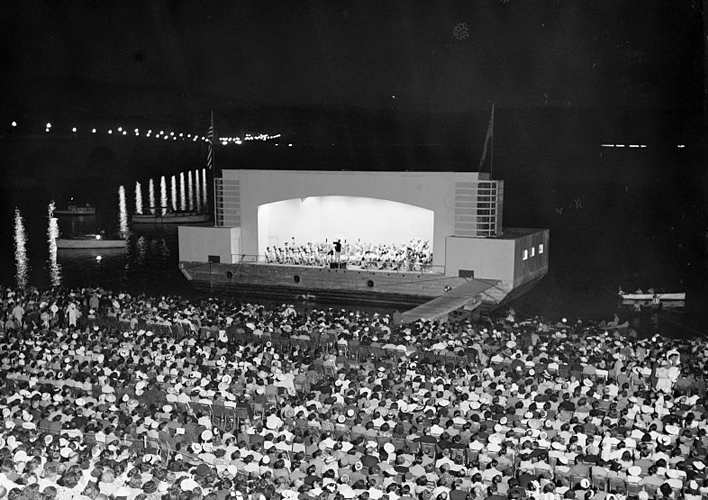
First Watergate Barge Concert
At sunset on July 14, 1935, Dr. Hans Kindler conducted the National Symphony Orchestra in the first performance at the Watergate steps near the Lincoln Memorial. The orchestra played from a specially contracted barge anchored in the Potomac near the steps. Tickets ranged from 25 cents to a dollar, although people listened for free from nearby boats and the Arlington Bridge. The first concert included pieces by Wagner and Johann Strauss and the Tchaikovsky's 1812 Overture. President Franklin Roosevelt dropped in to listen shortly before intermission. Watergate concerts continued until the 1960s. -
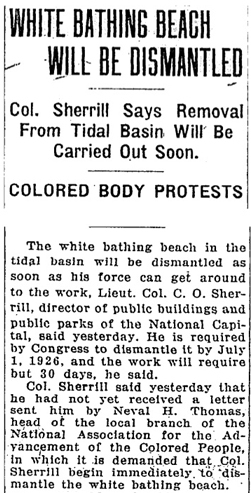
White Bathing Beach Will Be Dismantled
In February 1925, the Senate voted to defund and demolish the white and black bathing beaches at the Tidal Basin. Black residents were critical of the unequal funding and facilities at their beach when compared with the white one. In addition, physicians were concerned that the water in the basin was increasingly polluted and not safe for swimming. -
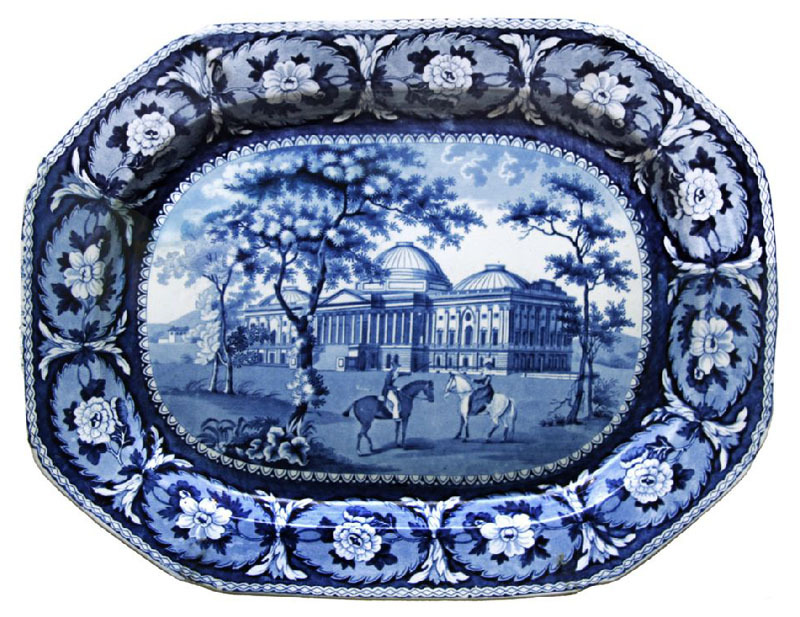
Washington, DC Dinner Plate
This plate from an American series shows men on horseback on what would become the National Mall with the Capitol building in the background. The plate shows the original design for the Capitol by Dr. William Thornton, which would be redesigned after being burned during the War of 1812. This style of blue and white pottery was popular during the 1820s and 1830s in America. They mirrored similar European plates of the time. Often depicting patriotic scenes, they were used to show the points of pride, revealing the importance of the National Mall to the young nation. -

Snow Riot
Washington's first race riot spilled to the edges of the National Mall in 1835. On August 12, angered at rumors of a slave attack on a white woman, a mob of angry white men descended on the Epicurean Eating House owned by Mr. Beverly Snow at Sixth and Pennsylvania Avenues. A successful African American entrepreneur, Snow fled his restaurant while the mobs continued to attack the property of free blacks across the city. The upheaval became known as the Snow Riot. Afterwards, Black Codes, restrictive legislation limiting the rights of free blacks in the city, became increasingly harsh. -

AIDS Quilt displayed on the National Mall
The first display of the Project NAMES Aids Memorial Quilt was on the National Mall on October 11, 1987, during the National March on Washington for Lesbian and Gay Rights. Composed of nearly 2,000 panels, the Quilt was larger than a football field. Cleve Jones, a gay rights activist from San Francisco, conceived the Quilt in 1985 during a candlelight march in memory of Harvey Milk and George Moscone. Panels were, and still are, created by family and friends of those who have died of AIDS. In the first weekend over half a million people visited the Quilt while volunteers stood at a microphone and read the names of people remembered on the panels. This has become a tradition followed at nearly every display of the Quilt. -
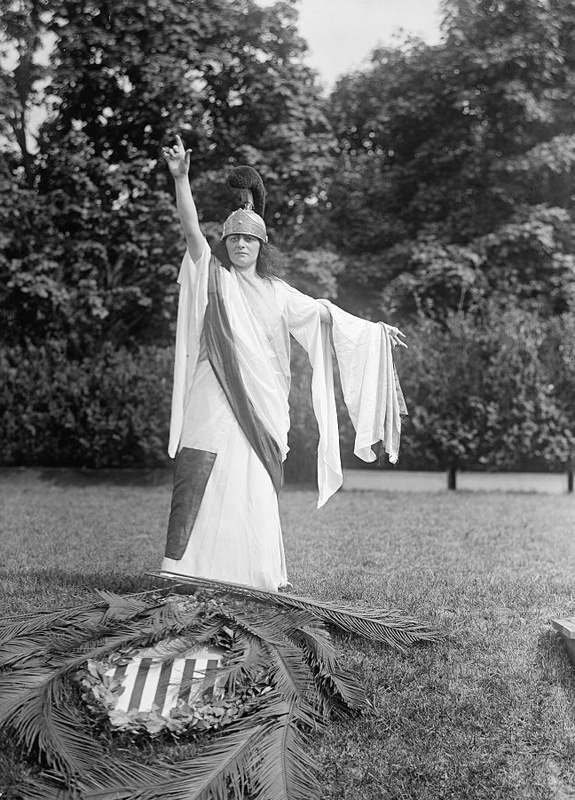
First Performance at the Sylvan Theater
The first performance at the Sylvan Theatre on the Washington Monument grounds took place on the evening of June 2, 1917. Artist and philanthropist Alice Pike Barney Hemmick founded the theater, believing that Washington needed a nationally supported theater and that an outdoor theater would be a good first step. The performance on opening night consisted of speeches, a rendition of "The Star-Spangled Banner" by the Marine Band, and a play written by Mrs. Hemmick. Over 6,000 people attended the Sylvan Theater first show. -
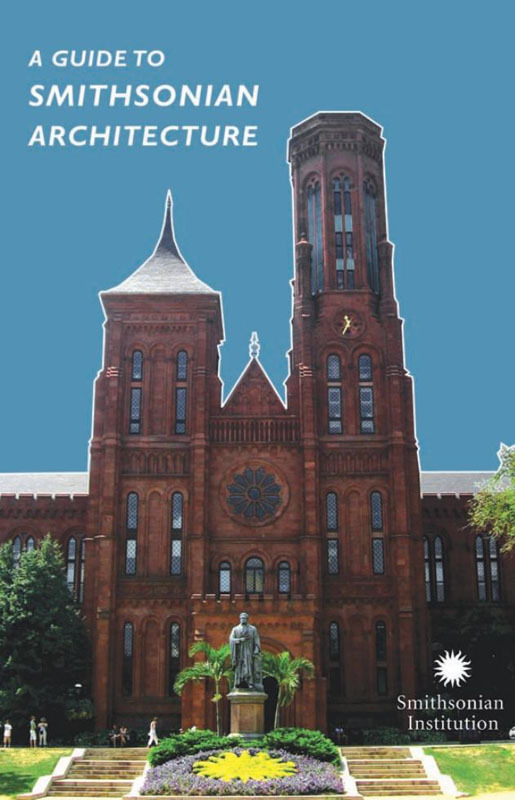
A Guide to Smithsonian Architecture
This Smithsonian Institution brochure documents the architectural styles, architects, and unique histories of the museums on the National Mall from 1855 to 2004. It also includes information on Smithsonian buildings which lay outside of the scope of the National Mall. -
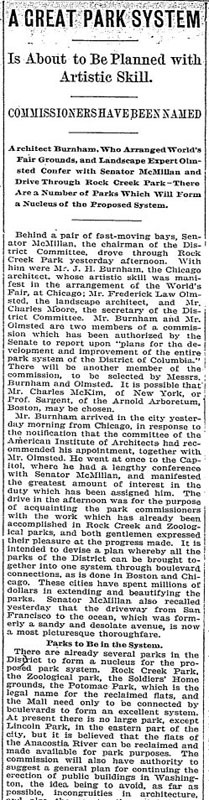
A Great Park System
This 1901 Washington Post article discusses the newly formed McMillan Commission. Architect Burnham, who arranged World's Fair Grounds, and landscape expert F.L. Olmsted are among the newly appointed members of the committee. The article is hopeful that they will create artistic parks that will continue on the tradition of great parks in the City. -
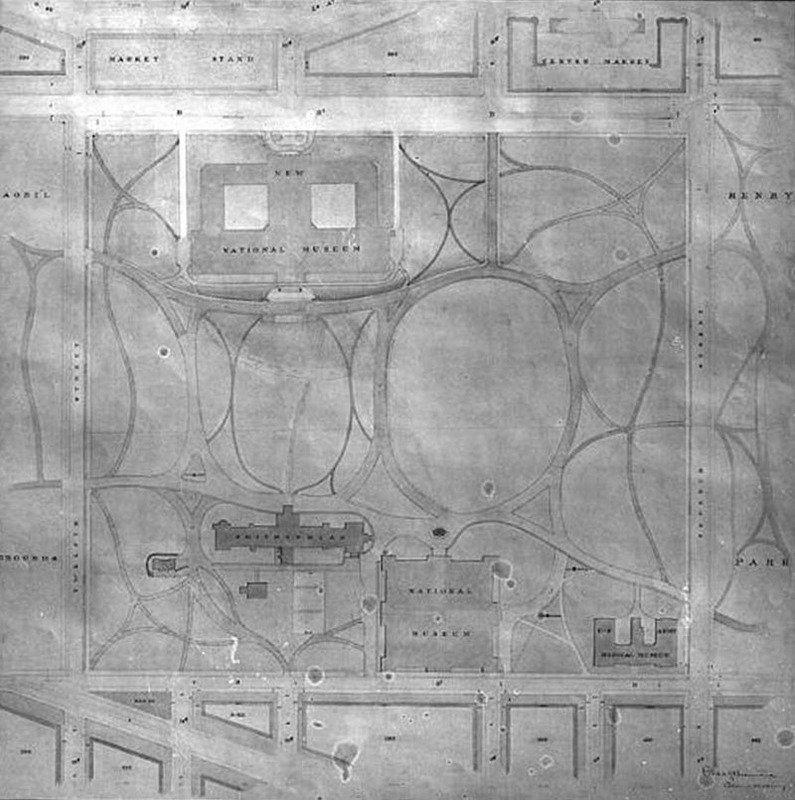
Plan of Smithsonian Grounds
This plan of the Smithsonian grounds between 7th and 12th Streets identifies where the new US National Museum Building, now the National Museum of Natural History, was to be built. It also shows the Smithsonian Institution Building (and behind it the Astrophysical Observatory, the Annex, the Laboratory of Natural History shed), the Henry statue, the Arts and Industries Building (then known as the National Museum), the Army Medical Museum building, and the markets on B Street (now known as Constitution Avenue). The landscaping shows winding paths, as conceived by designer Andrew Jackson Downing in his 1851 plan. -
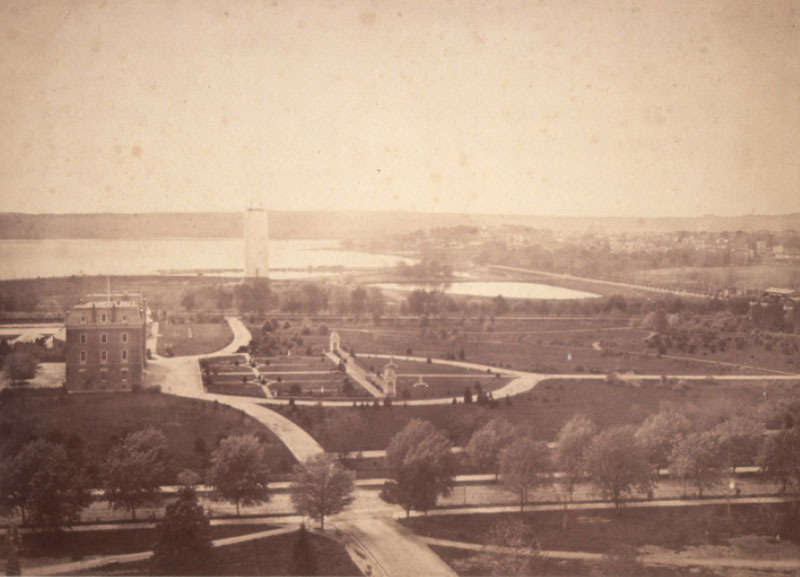
Panoramic Views of Washington, DC
This five-part panorama shows the National Mall and surrounding buildings, from the Smithsonian "Castle" Institution Building. The left section shows Washington Monument under construction in background, with Agriculture Department at left. The left center and center sections show the B Street (now Constitution Avenue) side of the Mall with building trade structures and Center Market. The right center section shows Baltimore and Potomac railroad station and tracks. The right section includes the US Capitol in background and Independence Avenue area of Capitol Hill. -

Samuel Morse sends first telegraph message from the US Capitol
On May 24, 1844 after receiving $30,000 in appropriations from Congress, inventor Samuel Morse sent the first official telegraph message from Washington, DC to Baltimore, Maryland. In a series of dots and dashes, later known as Morse code, Morse transmitted the message "What Hath God Wrought" from the Supreme Court Chamber, then located inside the Capitol. Before the telegraph, information transmission was limited to the speed of horse travel, but could now be transmitted wide distances almost instantly. The telegraph office existed inside the Capitol until 2007. -
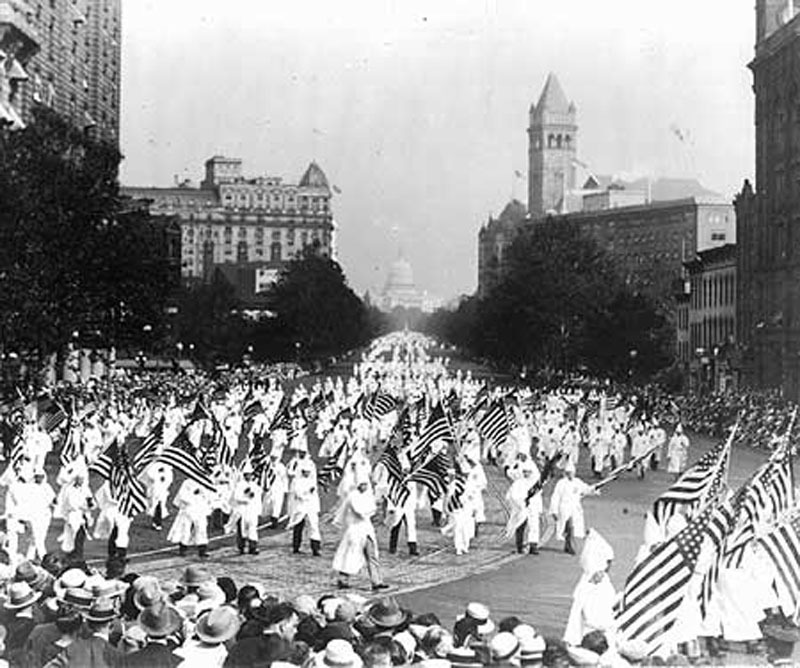
Ku Klux Klan Rally
In 1925 the Ku Klux Klan (KKK) marched down Pennsylvania Avenue in Washington, DC. The organized event brought 25,000 members in full regalia to the city. Demonstrating at the height of their power, the KKK was a national fraternal organization founded on the premise of white supremacy. The KKK attacked the social and political rights of African Americans, immigrants, Catholics, and Jews. First founded in 1865, the power of the Klan peaked during the 1920s when urbanization, industrialization, and immigration frightened many Americans. -
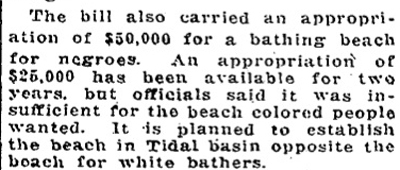
$1,795,847 District Deficiency Measure is Now Up To Senate
One of the line items in the proposed 1924 appropriations for the District of Columbia was $50,000 for a bathing beach at the Tidal Basin for the African American residents of the District. While white residents had enjoyed a formal beach since 1918, an equivalent for blacks was never established. In 1925, the Senate not only chose not to approve funding for a "colored beach," but cut out all funding for the white beach, solving the question of equal facilities for white and black by closing all the beaches. -
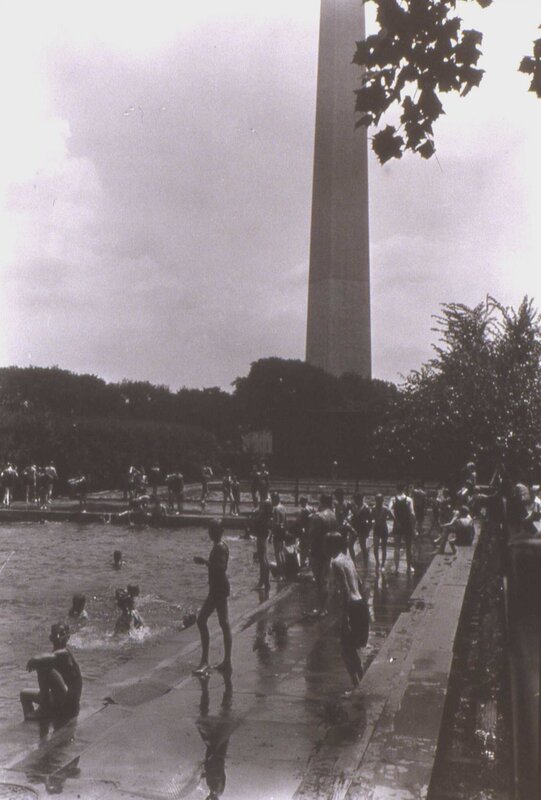
City swimming pool and Washington Monument in distance
These swimming pools were built between 1907 and 1910 on the site of the US Fish Commission hatching ponds. In addition to the pools there was a building with showers and changing rooms. The pools were removed in 1936. -
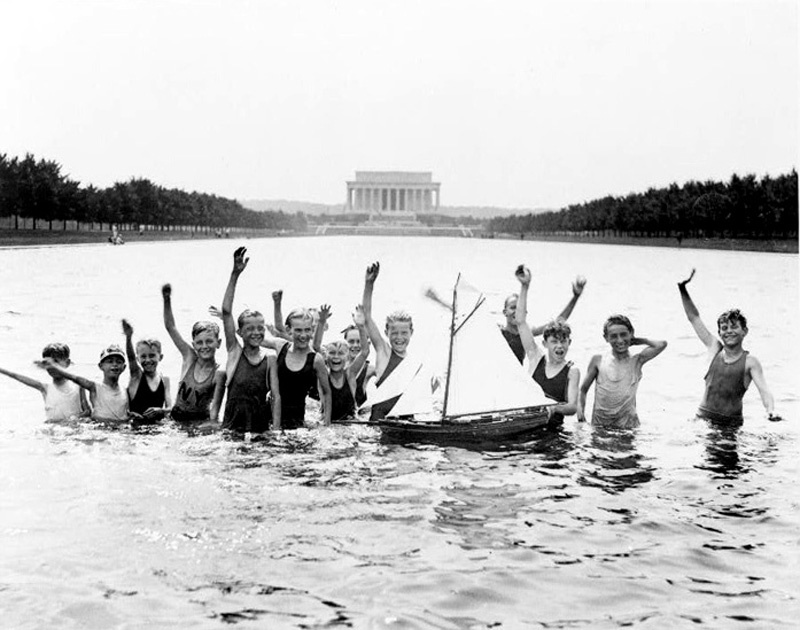
Children in the Reflecting Pool
The Reflecting Pool was never intended to be a swimming pool. In the late 1920s, however, people cooled off in its waters because there were not many other options. The beaches at the Tidal Basin closed in 1925 due to concerns about water quality and increasing conflict over segregation. Washington, DC, had only a handful of city pools, which were always crowded and cost money to access. City residents used public bodies of water like the Reflecting Pool, the fountains near the Capitol, and other fountains throughout the city, as public pools, despite laws and regulations to the contrary. -
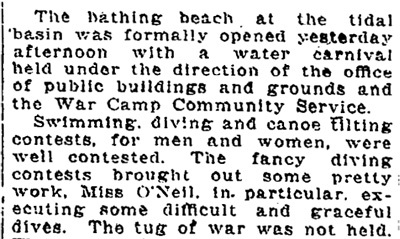
District Swimmers Race as Beach Opens
The city office of public buildings and grounds, who operated the site, held a carnival to celebrate the opening of a formal bathing beach at the Tidal Basin. The beach included buildings for changing and a shelter. It was segregated, open only to white residents and visitors. African Americans in the city used other areas, without facilities, in the Anacostia and Potomac Rivers. -

Bonus March
In May 1932, 17,000 World War I veterans and their families arrived in Washington, led by Walter W. Waters. Propelled by hard economic times of the Depression, they called themselves the Bonus Expeditionary Forces. They traveled to Washington to ask Congress to authorize immediate payment of bonuses for their war service, not scheduled to be paid until 1945. Some of the veterans camped on the grounds of the Capitol while the families built shanties on the Anacostia flats. On July 28, President Hoover ordered police to evict marchers. The confrontation between veterans and police resulted in the death of two veterans. The US Army took over and drove the Bonus Marchers from Washington. -
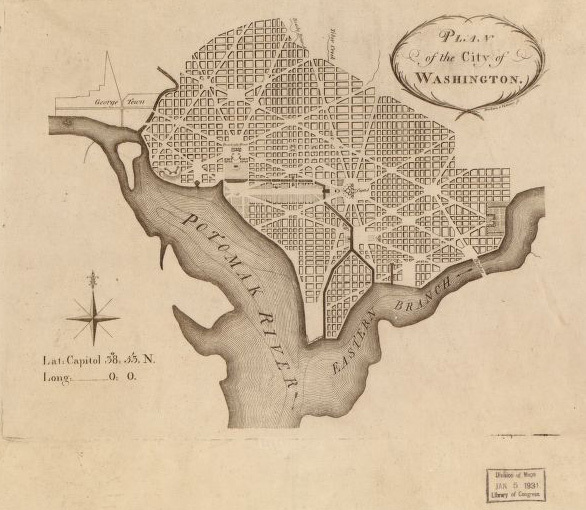
Pierre L'Enfant plans the Federal City
In 1791, President George Washington hired Pierre Charles L'Enfant to create a plan for the layout of the federal city. L'Enfant focused on the area between Tiber Creek, today Constitution Avenue and the Eastern Branch, also called the Anacostia River. L'Enfant surveyed the area in the spring of 1791 and created a plan for the city by the end of the year. This plan established the placement of the Capitol and President's House, now called the White House, and recommended the creation of the public promenade from the Capitol to the Potomac, the area we now call the National Mall. -
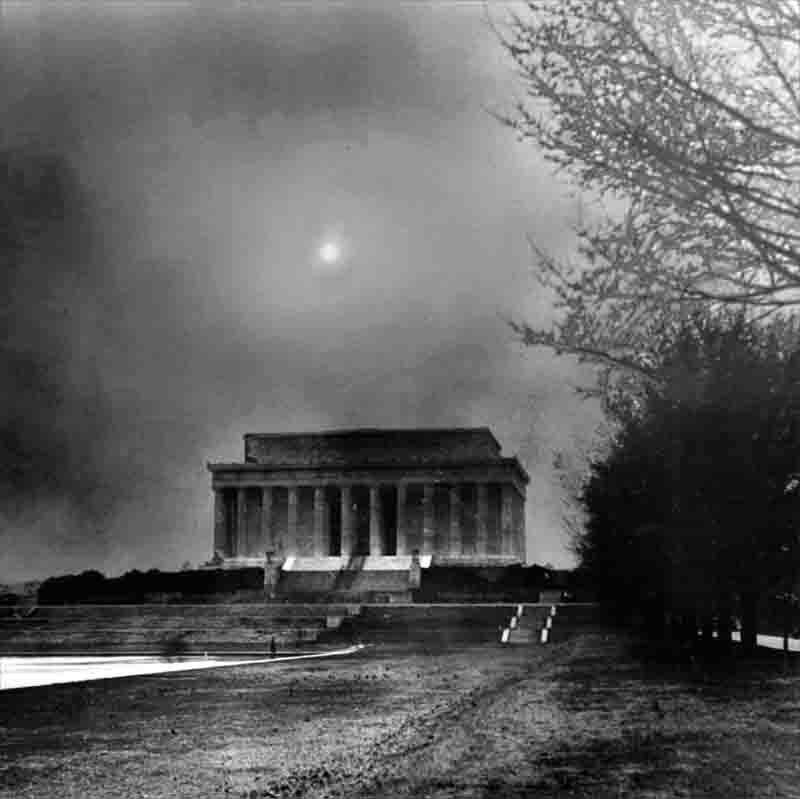
Black Blizzard blankets the National Mall
In March 1935, the sky went dark over Washington, DC as a dust storm from the midwest blanketed the city. As this offshoot of the Dust Bowl moved over the nation's capitol, Hugh Bennett, head of the Soil Erosion Service in the Department of Agriculture, was testifying before Congress about the urgent need for money and programs to combat the Dust Bowl. As he spoke the air became thick with dust. People swarmed out of government buildings and onto the Mall to watch the sky. The black blizzard brought home the need for action. One month later Congress voted permanent funding for an independent Soil Conservation Service. -

Baltimore & Potomac Railroad bisects the National Mall
In 1872, the Baltimore and Potomac Railroad Station opened near the Capitol, crossing the parks and lawns of the National Mall. The first train departed at 5 a.m. on July 2 with sixty passengers. The depot buildings were opened in 1874. The presence of the railroad on the Mall was controversial until it was removed in 1907. Although the Mall was barely developed when the railroad arrived, some argued that the noisy, dirty, smelly steam-driven locomotives would ruin the landscape of the park. Others believed that the Mall could accommodate both technology and nature and that the railroad represented progress and economic growth. -

Center Market Opens
The Center Market, one of the first formal markets in Washington City, opened in mid-December 1801. The market's location was proposed in the early plans of the city and George Washington had set aside land for its establishment in March 1797. Laws governing the market encouraged local farmers to bring their products into the city and contributed rental revenues to the city's poor fund. The market was near Tiber Creek, the planned route of the Washington City Canal, which provided easy transportation. -

White Bathing Beach
White residents of Washington enjoyed swimming in the Tidal Basin as early as the 1880s. In 1918, the district office of buildings and grounds added buildings to make the beach more enjoyable, like a cabana and diving platform. Like other recreational areas in DC, the part of the beach with buildings and diving structures was white-only. The Tidal Basin beaches closed in 1925. -

Nixon Inaugural Ball in the Museum of History and Technology
The Smithsonian Museum of History and Technology (now the National Museum of American History) hosted one of the five Inaugural Balls for Richard Nixon's second Presidential Inauguration in January 1973. During the party, a rooster escaped from an exhibit on early American farm life and started bothering some of the guests. Secretary of the Smithsonian S. Dillon Ripley rescued the rooster and returned it to its exhibition, but not before a newspaper photographer caught the wayward bird on camera. -

Act of Congress establishes the Smithsonian Institution
James Smithson, an English scientist, specified in his will that if his nephew, Henry J. Hungerford, died without heirs, his estate should be given to the United States to found an institution "for the increase and diffusion of knowledge." Smithson died in 1829 and his nephew died in 1835, without heirs, leaving $508,318 to the people of the United States. In August 1846, President James K. Polk signed an act creating the Smithsonian Institution, to be established in Washington, DC, either in a building of its own or in a wing of the Patent Building. -

Coxey's Army
In 1894, economic depression brought more than forty different armies of unemployed workers to Washington, DC. Jacob S. Coxey, a wealthy Populist, led the most well known of these groups. Publicity of the march worried the authorities and 1,500 soldiers were stationed in Washington to meet them. However, when they arrived on May 1, 1894, the “army” numbered only 500. Coxey was prevented from speaking at the US Capitol when he was arrested for walking on the grass. This was the first large scale protest on the National Mall. -

Fire in the Smithsonian Building
The original Smithsonian Institution Building, often called the Smithsonian Castle, caught fire in 1865 when workmen mistakenly installed a stovepipe in the building wall. The building was poorly fireproofed and the fire kindled unnoticed within the walls for several days. When it erupted, it destroyed the lecture hall, apparatus room, Board of Regent's room, Secretary's office, the Picture Gallery, and all the priceless artifacts they housed. The main room of the museum and the library were saved. The Castle was rebuilt beginning in spring 1867 and fireproofed throughout. -

First Execution in Washington: James McGirk
James McGirk, also spelled McGurk, was hanged on October 28, 1802, near the Capitol in the same area today occupied by the statues of Presidents Garfield and Grant. He was the first person executed in the District of Columbia. In April 1802, McGirk was convicted of having beaten his wife to death shortly after she delivered stillborn twins; newspapers speculated that his repeated physical abuse may have contributed to the infants' death. Appeals to President Jefferson by McGirk and his lawyer for a stay of execution were unsuccessful. -

Burning of Public Buildings, War of 1812
After defeating American troops at the Battle of Bladensburg in 1814, British troops under the command of Rear Admiral George Cockburn and Major General Robert Ross entered Washington, intent on destroying government property. First Lady Dolley Madison fled the White House at the last moment but managed to save important documents and, with the help of slaves and servants, a portrait of George Washington. The British set fire to the White House, the Capitol, the Navy Yard, and other public buildings. The destruction of the federal city was devastating to the American people, and Congress debated relocating the capital city. -

Martin Luther King Jr. Memorial
The Martin Luther King Jr. Memorial was dedicated on the 48th anniversary of the March on Washington for Jobs and Freedom, where King delivered his "I Have a Dream" speech. King's college fraternity, Alpha Phi Alpha originally proposed a memorial to the civil rights leader on the Mall in 1984; a dozen years later in 1996, Congress approved a joint resolution authorizing the project. -

The Woman Suffragist Parade of 1913
Over 5,000 marchers, mostly women, came to Washington, DC, from around the country to participate in the Woman Suffrage Parade of 1913. They marched down Pennsylvania Avenue from near the Capital to the Treasury Building. The mostly male crowd lining the street was hostile to the women and their aim of enfranchisement. Marchers were jeered, shoved, and tripped with police doing little to help. Eventually troops from nearby Fort Myer had to be called in for crowd control. Despite setbacks some were able to make it to the grandstand at the Treasury Building to speak. The parade and the crowd’s reaction reinvigorated support for the suffragists. -

Richard H. Sylvester
Sylvester was the Chief of Police in Washington, DC, during the Woman Suffrage Parade of 1913. The women were harassed by a large crowd of mostly male onlookers. Instead of protecting the marchers, the police failed to intervene and at times joined in on the attacks on the women. Eventually, Sylvester requested help from Secretary of War Henry L. Stimson, who authorized US Army troops on horseback from nearby Fort Myer to help with crowd control. In 1915, formal criminal charges were filed against Sylvester for the incident and he resigned from the police force. -
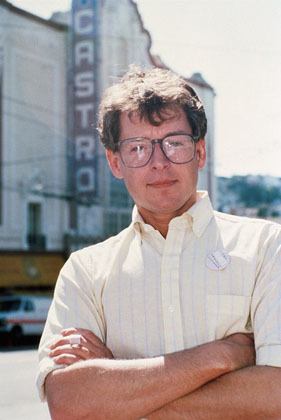
Cleve Jones
Cleve Jones is a human rights activist who created the idea of a memorial quilt commemorating people who have died of AIDS. The first time the NAMES Project AIDS Memorial Quilt was displayed was October 11, 1987, when it was laid out in full on the National Mall. At that point it had 1,920 panels. At this display, Jones read out the names of his friends who had died, the start of a list of the names of all memorialized by the quilt. The AIDS quilt has returned to the Mall in 1996 and in 2012, although it is now too large to display all at once. -

George Washington
Authorized by The Residence Act of 1790 to select a site along the Potomac to be the home of the new national government, President George Washington was heavily involved in the planning and development of the new federal city. He chose the area which is now Washington, DC, as the site, insisting that its southern boundary include the city of Alexandria, which was a part of the District of Columbia until 1846. In 1791, he appointed Pierre L'Enfant to create a plan for laying out the streets and major buildings. Although L'Enfant technically answered to the Commissioners for the Territory, he sent all of his reports to President Washington. -

W. Richard West Jr.
Richard West was the founding Director of the National Museum of the American Indian, serving from the museum's opening in 2004 until 2007. West is a citizen of the Cheyenne and Arapaho Tribes of Oklahoma and a Peace Chief of the Southern Cheyenne. He has devoted much of his professional and personal life to American Indian cultural, educational, legal, and governmental issues. West supported a broad scope for the museum, representing the wide cultural and ethnic diversities of Native Americans, both through historical collections and exhibits and through living history presentations. -

Spencer Baird
Spencer Baird served as the first curator of the Smithsonian Institution and became the second Secretary of the Smithsonian. He worked at the Institution from 1850 until his death in 1887. Baird expanded and strengthened the Smithsonian's collections, and helped the young museum grow into a prominent research and educational organization. Baird devoted his career to caring for the museum's scientific collections and objects associated with the country's founding fathers. When Congress appropriated funds to create a second museum on the Mall next to the original Smithsonian Castle, Baird became its director. In 1878, he was appointed as Secretary of the Smithsonian. -

James L. Farmer Jr.
James Farmer was one of the leaders of the 1963 March on Washington for Jobs and Freedom. As one of the founders of the Congress on Racial Equality (CORE), an interracial civil rights organization, and its National Director in the early 1960s, Farmer was a major figure in organizing civil rights protests. While he participated in the planning for the March on Washington, Farmer was unable to attend the event because he had been arrested at a protest in Louisiana. But, imprisonment did not prevent him from being heard in Washington: his speech was read by fellow CORE member Floyd McKissick. In the speech, Farmer declared that the fight for racial equality would not end "until the dogs stop biting us in the South and the rats stop biting us in the North." -

Washington National Monument Society
Formed in 1833, the Washington National Monument Society took charge of creating a memorial to George Washington on the National Mall. They raised money through public donations and awarded the design contract to architect Robert Mills. In 1854, Congress transferred the land on the Mall to the Society and the Monument cornerstone was laid in July of that year. The Society quickly ran out of money, however, and fundraising campaigns were unsuccessful. The Society returned the land and the unfinished monument to Congress in 1876, then serving as advisors to the Congressional committee charged with completing the Monument. -

Augustus Saint-Gaudens
A prominent sculptor of memorials and monuments since the 1880s, Saint-Gaudens was a member of the Senate Park Commission. Formed in 1901, this commission was charged with developing the National Mall and other areas of Washington, DC. Saint-Gaudens not only created sculptures but designed the landscape around them to enhance their beauty. He brought his experience and ideas to the National Mall, incorporating landscape designs to frame the statues, monuments, and memorials of the Mall. -

Roy Wilkins
Roy Wilkins was a prominent civil rights activist who held leadership positions within the National Association for the Advancement of Colored People from 1931 until 1977. In 1941, he helped coordinate staff and financial support from the NAACP for A. Philip Randolph's proposed march on Washington to protest discrimination and segregation in the government. Although the march did not happen, it did result in an executive order banning discrimination in the national defense industry. In 1963, Wilkins was one of the leaders of the March on Washington for Jobs and Freedom, and in his speech, he emphasized the need for Congressional action on school desegregation. -

United States Marine Band
The United States Marine Band was established by an Act of Congress in 1798 and has been based in Washington, DC, since 1800. They are known as "The President's Own," and played at the first Inauguration in Washington (1801), the first Inaugural Ball (1809), and countless other White House functions. In 1883, led by their director, John Philip Sousa, the band played in front of the Smithsonian Castle for the dedication of the statue of Joseph Henry. -
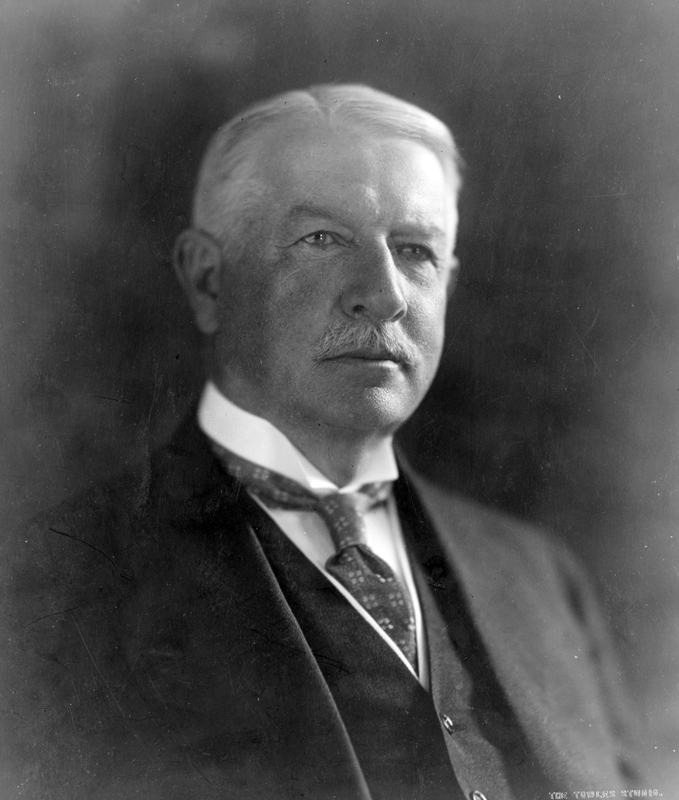
Charles Carroll Glover
Charles Carroll Glover was a business man who advocated for the development of parks in Washington, DC, during the late 1800s. In 1881, he called a meeting of fellow businessmen to propose transforming the Potomac flats, a tidal marsh area, into a public park. He continued to promote the idea, even meeting personally with President Grover Cleveland, until the land was formally declared a public park in 1897. Today the Lincoln Memorial and Jefferson Memorial are just a few of the national monuments that reside on the flats. -
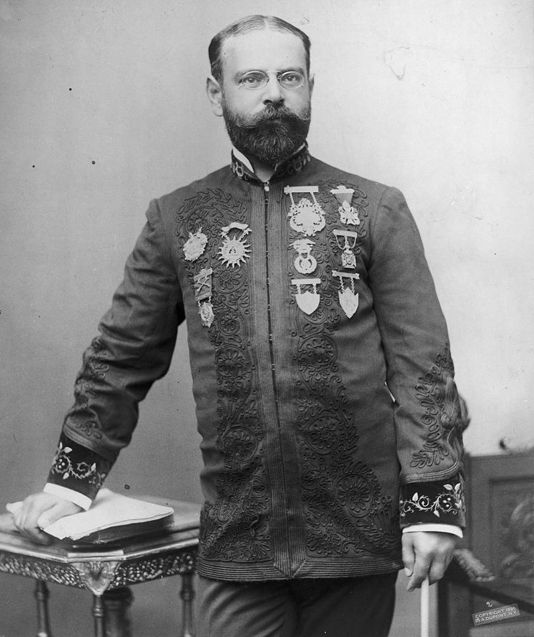
John Philip Sousa
John Philip Sousa was an American composer and conductor, best known for his military marches, which school, professional, and military bands still play today. He served as Director of the United States Marine Band, based in Washington, DC, from 1880-1892. In 1883, Sousa directed the band in front of the Smithsonian Castle for the dedication of the statue of Joseph Henry. Sousa wrote the military march "The Transit of Venus March," for the occasion at the request of the Smithsonian Institution. The music played while dignitaries walked to a special receiving stand in front of the Castle. -
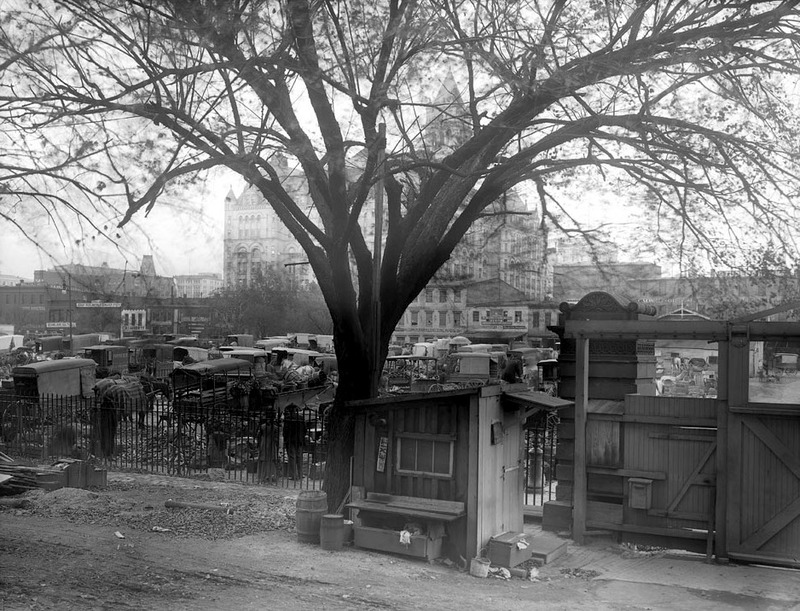
Horse-drawn wagons in front of the Center Market, Washington, D.C.
In 1909, visitors standing at the entrance of the United States National Museum (now the Museum of Natural History), saw horse-drawn carriages and carts, vendors, and storefronts, of Center Market. The small building in the foreground is a guard house next to the wooden gate leading to the museum. -
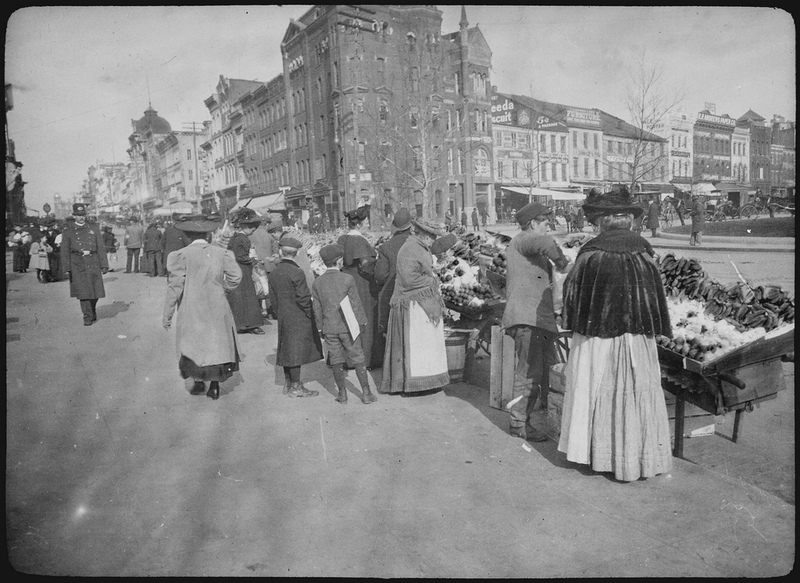
Shoppers at the outdoor food market
People from all walks of life shopped at Center Market, from Presidents and First Ladies to local residents. In addition to the stalls and businesses inside the main building, vendors set up stalls outside the building. This photograph from 1910 shows the range of shoppers at one of these outdoor stalls. For example, the woman on the right wearing a fur cape was probably wealthier than the woman in the middle with a large white apron. -
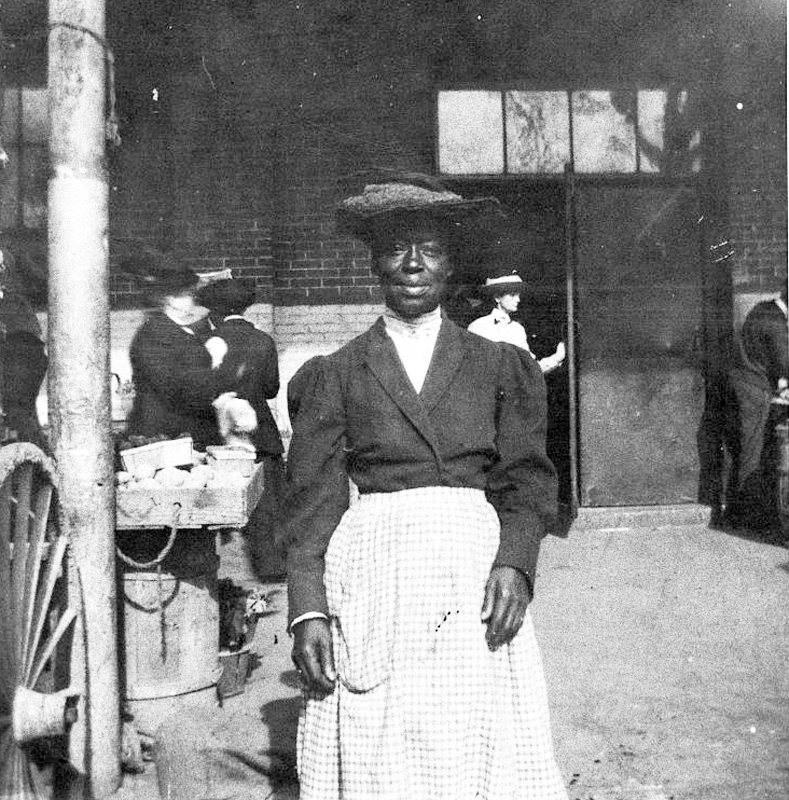
Center Market, Vendor, Pennsylvania Ave. and 7th St., N.W.
Center Market was a hub of activity for Washington's African American population during the 1800s. Both free and enslaved African Americans bought and sold produce at the market and operated stalls before and after Emancipation. This woman, photographed in 1890, ran her own stall, possible the one just behind her in the picture. -
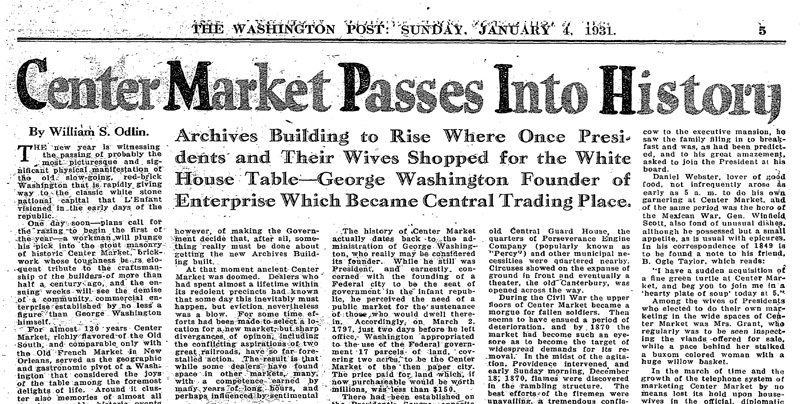
Center Market Passes Into History
Center Market was established in the early 1800s and for most of that century served as a central point of commerce, transportation, and entertainment for the city. Toward the end of the century, city officials, private entrepreneurs, and the federal government argued over jurisdiction of the market and whether to relocate it. Many complained that the market was an unsanitary eyesore as marble federal buildings grew up around it. In the early 1930s, the city decided to close and demolish the market to make way for the National Archives. This nostalgic article from the Washington Post describes the market's history. -

Archie Alphonso Alexander
Archie Alexander was an African American engineer from Iowa and the senior partner in the firm Alexander and Repass. In the 1940s, the firm was hired to build a bridge and seawall at the Tidal Basin. Alexander spearheaded the project and brought in an integrated construction crew. -

Lonnie G. Bunch III
Lonnie G. Bunch III is the director of the Smithsonian National Museum of African American History and Culture. He develops exhibits and public programs and coordinates the museum's mission. Under his leadership, the Museum opened an exhibit in the National Museum of American History on the Scurlock Studio, one of the foremost African American photography studios in the nation. -

Thomas Law
Thomas Law was a wealthy Englishman who invested financially and ideologically in the development of the new city of Washington. In 1804 he wrote a pamphlet, published anonymously, proposing a canal from the Anacostia River to the Potomac following Goose Creek, which he thought would encourage trade in the city. He was one of the incorporators of the Washington Canal Company. -

Sidney Dillon Ripley
S. Dillon Ripley was the eighth Secretary of the Smithsonian, serving from 1964-1984. Under his leadership, the Smithsonian Institution expanded and revitalized. Ripley believed museums should be vital sites of learning and engagement, actively involving the public. He also encouraged expanding the Institution's research agenda through a number of initiatives, including the establishment of the Conservation Biology Institute of the National Zoo. The first annual Folklife Festival, a showcase of living history and culture held on the National Mall, was organized with his full support. -

First Division Monument
The First Division Monument, funded by the Society of the First Division, was first created to remember First Division soldiers who died while serving in World War I. The Monument, designed by Cass Gilbert and Daniel Chester French, was dedicated in 1924. Since then, additions to the monument have been built to commemorate service in World War II, Vietnam War, and Desert Storm. Cass Gilbert Jr., son of the original sculptor, designed the World War II addition. -

Daniel Hudson Burnham
Architect Daniel Burnham was the Chairman of the Senate Park Commission, which created a comprehensive redesign of the National Mall and DC parks system in the early 1900s. At that time, he was also working for the Pennsylvania Railroad to design a new station. Burnham helped convince the Railroad to relocate their station from the Mall to a nearby site; the building he designed on that site is Union Station. In 1910, President Taft appointed Burnham Chairman of the US Commission on Fine Arts, which advised the Federal Government on the location and design of monuments like the Lincoln Memorial. -

Jeannette Rankin
Jeanette Rankin was the first woman member of Congress. Rankin served two nonconsecutive terms in 1916 and again in 1940, giving her the unique ability to vote against US entry into war for both World War I and World War II. Rankin continued her activism for women's rights and pacifism for her entire life. In 1968, at age 87, Rankin led a march on Washington of women's peace organizations who protested US involvement in the Vietnam War. Five thousand women descended on the National Mall, voicing their protest on the opening day of the 1968 Congressional session. -
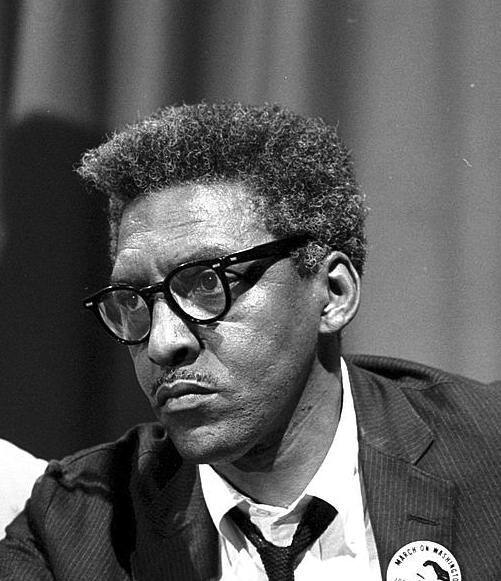
Bayard Rustin
Rustin was a crucial force driving civil rights activism, especially in organizing protests on the National Mall. The first March on Washington movement emerged in 1941 when African American activists, including Rustin, successfully pressured President Franklin D. Roosevelt to end racial discrimination in federal hiring. By threatening to march in Washington during World War II, Rustin and his colleagues changed federal policy without needing to march. In 1963, Rustin was a pivotal organizer for the March on Washington for Jobs and Freedom. Rustin remained behind the scenes during the event on the Mall, but he was recognized as co-organizer with A. Philip Randolph on the cover of LIFE Magazine. -
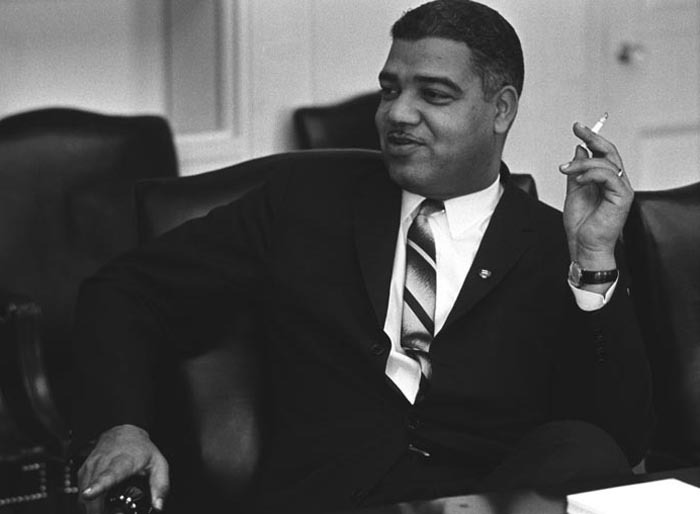
Whitney Moore Young Jr.
From 1961 to 1971, Whitney Young was the Executive Director of the National Urban League (NUL), a civil rights organization which emphasizes economic parity and self-reliance. In March 1963, A. Philip Randolph asked Young and the NUL to participate in a proposed March on Washington for Jobs and Freedom to be held in August. Young agreed and became one of the organizers of the March, known as the Big Six. -

Alexander Robey Shepherd
As a member of the DC Board of Public Works and later as Governor of the District of Columbia, Alexander Robey "Boss" Shepherd managed a number of public works programs in the 1870s. He oversaw the project to fill in the part of the Washington City Canal which ran along present-day Constitution Avenue. A statue honoring Shepherd can be found just off the Mall at the intersection of 14th Street and Pennsylvania, Avenue, NW. -
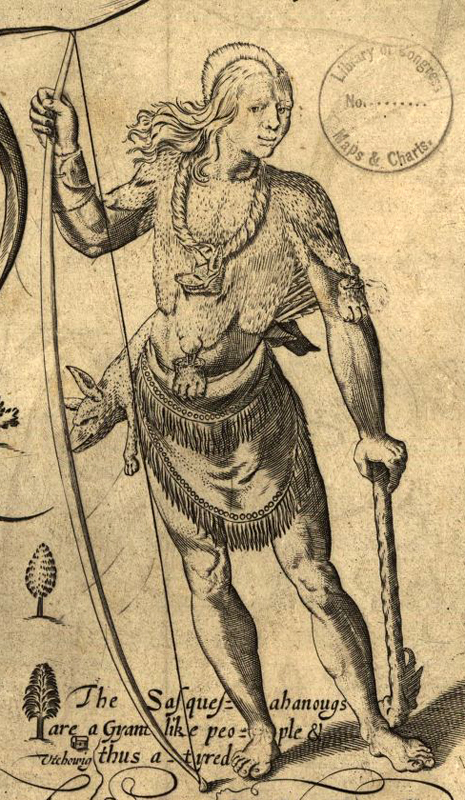
Nacotchtanks
The Nacotchtanks are a Native American Algonquian tribe who once lived on land which is now near the National Mall. Captain John Smith noted that the village had 80 fighting men in 1608. The Nacotchtanks likely spoke the Piscataway variation of the Nanticoke language. Prominent fur traders, the Nacotchtank village was a trading center for other Indian tribes on the East Coast and for European fur hunters. Disease from European settlers took a heavy toll on the tribe. Eventually, they moved to Anacostine Island, today called Theodore Roosevelt Island, in the late 1680s. Over time the tribe merged with other local native groups. -

Thaddeus S.C. Lowe
On June 11, 1861, Thaddeus S.C. Lowe flew a gas balloon, the Enterprise, over the White House. Lowe wanted to demonstrate the potential of using balloons for reconnaissance missions. Lowe placed his gas generators on the Mall near the Smithsonian Institution and in proximity to the Washington Gas Works, launching the balloon from the present site of the National Air and Space Museum. Once aloft, he telegraphed President Abraham Lincoln, reporting a view of 50 miles. Awarded the position of Chief Aeronaut for the Army, Lowe's flight contributed to the birth of the Aeronautical Corps of the Union Army. -

Mary Ann Hall
Mary Ann Hall purchased a home in 1840 on land where the National Museum of the American Indian is today. Her three-story home became the site of a high end brothel for the District. Archaeologists excavated fragments of champagne bottles, oyster shells, and fine china, all indicating the upscale clientele of Hall's establishment. She created a profitable business. In 1860, Hall owned real estate and personal property valued at over $18,000. By the time of her death in 1886 that estate had grown to $100,000, the equivalent of $1.9 million today. -
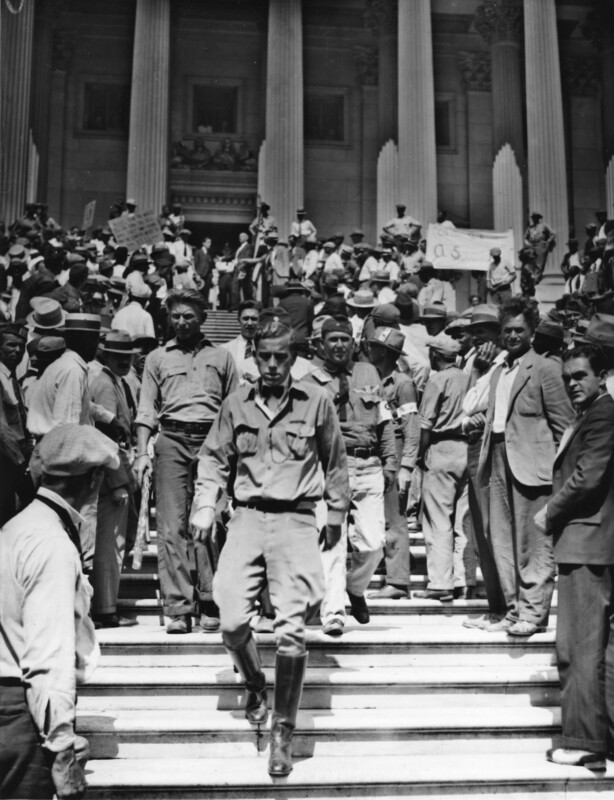
Walter W. Waters
In May 1932, Walter W. Waters, a World War I veteran, led a group of his fellow veterans to Washington, DC, to demand immediate payment of bonuses which were not due to be paid to the soldiers until 1945. This group was dubbed the Bonus Expeditionary Forces, or the Bonus Army. During their time in Washington, as they camped on the Mall and on the banks of the Anacostia River, Waters acted as their leader and spokesman. The Bonus Army was evicted from the city in July. -

Hillel Kook
Hillel Kook was a Jewish activist and member of the Revisionist Zionist movement who was also known by the alias Peter Bergson. He lived in the United States during World War II and led the Emergency Committee to Save the Jewish People of Europe. In October 1943, Kook organized a march on Washington of nearly 500 Orthodox Rabbis in support of the Allied Forces, but also calling for more aid for European Jews. The rabbis gathered at the Lincoln Memorial and at the Capitol, giving addresses and offering prayers at both locations. President Roosevelt declined to meet with the group. -

Margaret Bayard Smith
Margaret Bayard Smith was a writer and a vital figure in the early social life of Washington, DC. Her letters and diaries provide some of the best descriptions of early Washington. In 1837 she recorded what the Mall looked like when she and her husband moved to Capitol Hill in 1800: "Between the foot of the hill and the broad Potomac extended a wide plain, through which the Tiber wound its way. The romantic beauty of this little stream was not then deformed by wharves or other works of art." -

Horatio Greenough
Horatio Greenough is best known in Washington, DC, for his controversial sculptures titled "George Washington" and "The Rescue," which stood for a time inside the US Capitol building. Both were commissioned from Greenough by Congress, making him one of the first American sculptors to receive a major commission from the federal government. He created both sculptures at his studio in Florence, Italy. -

Charles F. McKim
In 1901, Charles McKim was appointed by Senator James McMillan to the Senate Park Commission, which was meant to suggest improvements to the National Mall. McKim was a dominant voice in the Commission, recommending a return to the 1791 design proposed by Pierre Charles L'Enfant and extending the boundaries of the Mall to include the site designated for the Lincoln Memorial. Because of his work on the McMillan Commission, McKim was chosen by President Theodore Roosevelt in 1902 to remodel the White House. -

Douglas MacArthur
In 1932, MacArthur was the Chief of Staff of the Army when a group of veterans called the Bonus Army converged on Washington to demand payment of bonuses by Congress. On July 28 the protesters clashed violently with police, resulting in the death of two men, William Hushka and Eric Carlson. President Hoover ordered General MacArthur to evict the protesters. Accompanying the troops, MacArthur was present as they advanced using gas, tanks, and bayonets to clear out protesters who fought back with bricks and rocks. Though no shots were fired, the event hurt MacArthur’s public image. -

Robert Mills
Robert Mills, an architect from South Carolina, won the competition to design the Washington Monument in 1836. Although construction began under his supervision, work stopped in 1854, a year before he died, and the monument was not completed for another thirty years. Mills was also the architect of other prominent Washington buildings, including the central and eastern wings of the Treasury Department building. -

Alethia Browning Tanner
Alethia Browning Tanner was an enslaved woman who ran her own vegetable market in Lafayette Square in front of the White House during the late 1700s and early 1800s. She was highly successful, counting President Thomas Jefferson among her customers. By 1810 she had saved enough to purchase her freedom: $1400. She continued to be successful in business, and was an important member of the early free black community of Washington, DC. -

Paul Jennings
Paul Jennings was an enslaved man owned by James Madison who lived in the White House during the Madison presidency. He was 15 years old in 1814 when the British invaded Washington, DC, and burned down the presidential residence. Almost fifty years later, Jennings wrote a memoir recalling that day and asserting that a gardener and the cook saved the portrait of George Washington, not Mrs. Madison. Jennings gained his freedom in 1847 and became a prominent member of the free black community in Washington, DC. In 1848, he helped to organize an ultimately unsuccessful slave escape in Washington; the path the slaves took toward freedom ran across the Mall. -
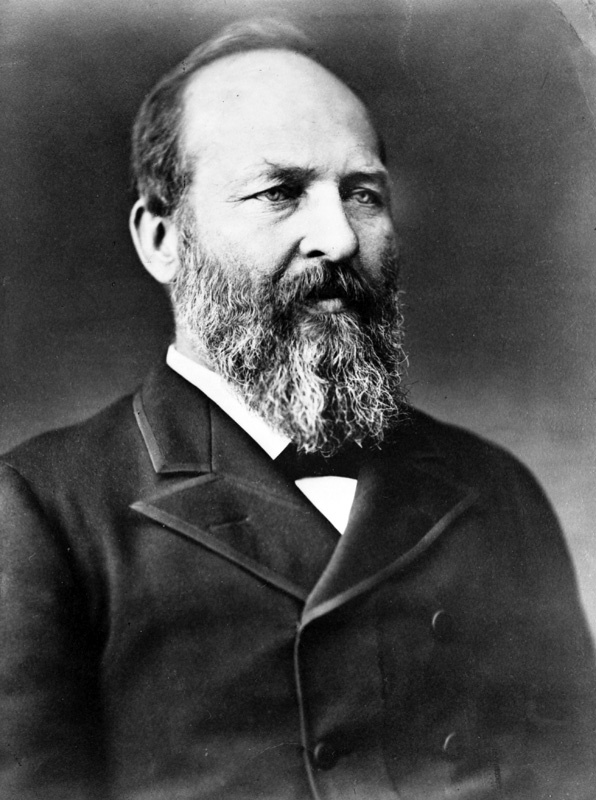
James A. Garfield
President James Garfield was shot twice in the back by an assassin, Charles Guiteau, only five months after taking the oath of office. The attack took place at the Baltimore and Potomac Railroad Station on Sixth Street. Garfield survived the attack but was extremely ill for two months. He finally died in September, 1881. -

Diane Carlson Evans
Diane Carlson Evans is a Vietnam veteran who was the driving force behind the creation of the Vietnam Women's Memorial. Motivated to include the voices of approximately 265,000 military women of the Vietnam era whose experiences were overlooked or forgotten, Evans founded the Vietnam Women's Memorial Project in 1984 to push to include women in memorials of the war. Evans advocated before Congress and to the public for seven years before authorization was granted to create the Vietnam Women's Memorial. The sculpture was dedicated on November 11, 1993 as part of the Vietnam Veterans Memorial. -

James Hoban
James Hoban was an Irish-born architect who won a competition in 1792 to design the home of the President. He moved from South Carolina to Washington, DC, to oversee the construction of his design. A neo-classicist, Hoban's design influenced the style of other government buildings in Washington, particularly the executive office buildings designed by George Hadfield. After British troops burned the White House in August 1814, Hoban was hired to oversee repairs and renovations to the building. -

Pelham Davis Glassford
Glassford was Superintendent of Police of Washington, DC, in 1932 when World War I veterans, who would come to be known as the Bonus Marchers, descended on the city. They sought immediate payment of service certificates which were not due to be paid until 1945. A veteran himself, Glassford was sympathetic to the veterans' demands He believed they had a right to protest and helped them find food and shelter. In July 1932, President Hoover ordered Glassford to evict the marchers from federal property. Although the Superintendent gave orders to hold fire, a DC policeman shot and killed two veterans. President Hoover ordered the Army to complete the eviction of the Bonus Marchers. -

Andrew Ellicott
Andrew Ellicott was a surveyor employed by President George Washington to survey the boundary lines of the federal Territory of Columbia, which became the District of Columbia. His survey team included his younger brother Joseph and Benjamin Banneker, a self-taught African American surveyor. The team laid the boundary stones of the 100-square mile borders of the District. Ellicott also completed and revised the original city plan of Pierre Charles L'Enfant. -

Marian Anderson concert at the Lincoln Memorial
African American contralto Marian Anderson sang on the steps of the Lincoln Memorial on Easter Sunday, April 9, 1939. A peaceful crowd of seventy-five thousand people stretched from the Lincoln Memorial to the Washington Monument to attend the free concert; thousands more tuned in to listen on the radio. The Daughters of the American Revolution had barred the world-renowned singer from appearing in Washington's prestigious Constitution Hall because she was African American. First Lady Eleanor Roosevelt and Secretary of the Interior Harold Ickes rallied support for her public appearance on the Mall, focusing public attention on racial discrimination and inequality. -

Alice Pike Barney
Alice Pike Barney successfully lobbied Congress to create a federally-funded outdoor theater on the National Mall near the Washington Monument. Barney, a painter, wanted to encourage enjoyment of the arts in Washington, DC. She provided the funding to construct the National Sylvan Theater and served as its first resident playwright.