Places
Item set
Items
-
Vietnam Memorial Education Center
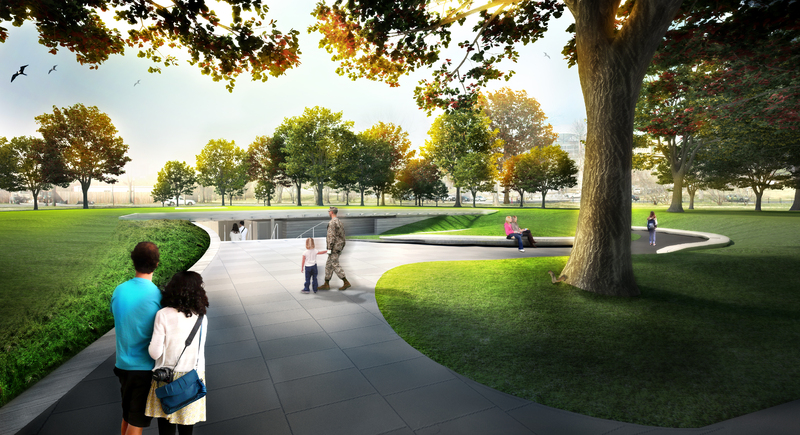
Jan Scruggs, President and Founder of the Vietnam Veterans Memorial Fund, proposed in 2000 to build an education center focusing on veterans' service in the wars following Vietnam. The planned center would have been located across the street from the Vietnam Veterans Memorial. It will display some objects that visitors have left at the Wall since 1982. Congress approved of the center in 2003, but the project did not break ground until 2012. In 2018, the VVMF announced their decision to cancel the building project, focusing instead on digital resources and online exhibits. -
Statue of Freedom
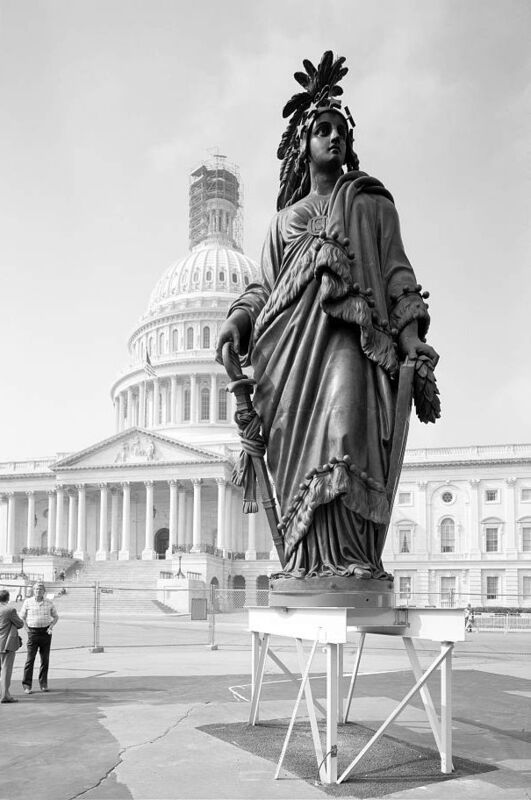
In 1855, Congress commissioned Thomas Crawford to build a statue to top the cast-iron Capitol dome. Two years later, Crawford created the plaster model in Rome and sent it to the US for casting. The bronze was cast at a foundry in Washington DC under the supervision of Philip Reid, an enslaved man. Casting was briefly interrupted by the beginning of the Civil War, but was completed by 1862. The statue stood on the Capitol grounds until the dome was completed. The statue was installed in stages, with the final pieces added in December 1863. Today, the Capitol Visitor Center displays the plaster model of the statue. -
Infinity
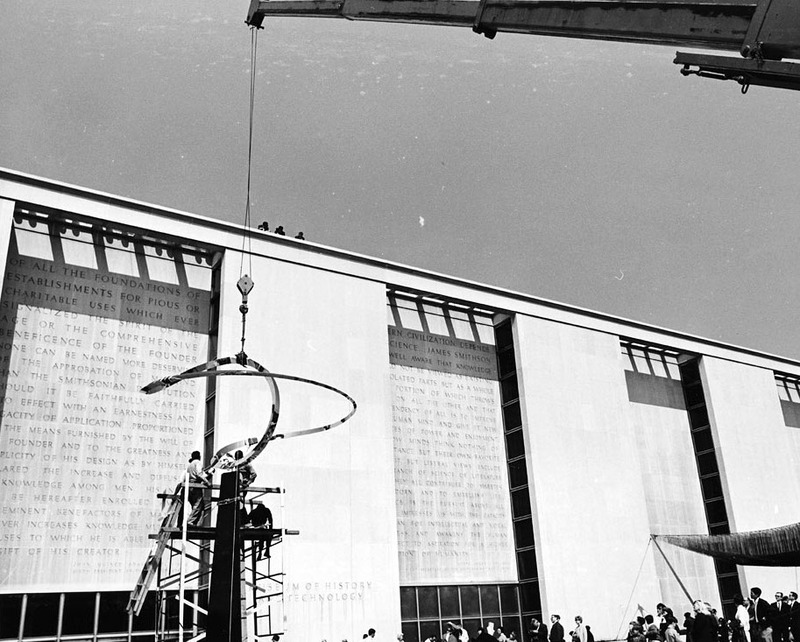
Louisiana-born sculptor, Jose de Rivera designed and built the abstract sculpture "Infinity" that currently welcomes visitors to the Smithsonian National Museum of American History. The sculpture slowly rotates on its base, completing 1 revolution every 6 minutes. In 1965, the federal Art-in-Architecture program commissioned this statue by reserving half of 1 % of the estimated total construction costs of the new National Museum of History and Technology. Museum architect, Walker Cain, recommended Rivera's proposal for a new art work to accompany the new museum. After two years of design and construction, the sculpture was dedicated in the spring of 1967. -

Gwenfritz
Sculptor Alexander Calder designed "Gwenfritz" in 1965 after Washington philanthropist Gwendolyn Cafritz commissioned him to create a piece for the new Museum of History and Technology. Calder built the 40-foot tall metal stabile in France and shipped it to Washington in 6 crates. Smithsonian staff installed the work in 1969 on a reflecting pool facing 14th Street. In 1984, the Museum moved the sculpture and filled in the pool. In 2013, the Smithsonian began conserving "Gwenfritz," and in October 2014 returned it to the original location. During the restoration, staff repainted the sculpture and replaced all 1,200 bolts connecting its panels. -

National Native American Veterans’ Memorial
Since the 1770s, American indigenous people have always served in the US military at a higher rate than other groups. In 1994, a bipartisan congressional effort passed the Native American Veterans’ Memorial Establishment Act to authorize the creation of a memorial to all American Indian, Alaska native, and native Hawaiian veterans. The memorial was to be placed inside the Smithsonian National Museum of the American Indian. In 2013, Congress gave the Museum authority to select the final location of the Memorial and to assist with fundraising since no federal funds would pay for its construction. Some advocates wish the Memorial could be on the Mall near other memorials honoring American war veterans. -
National Peace Garden
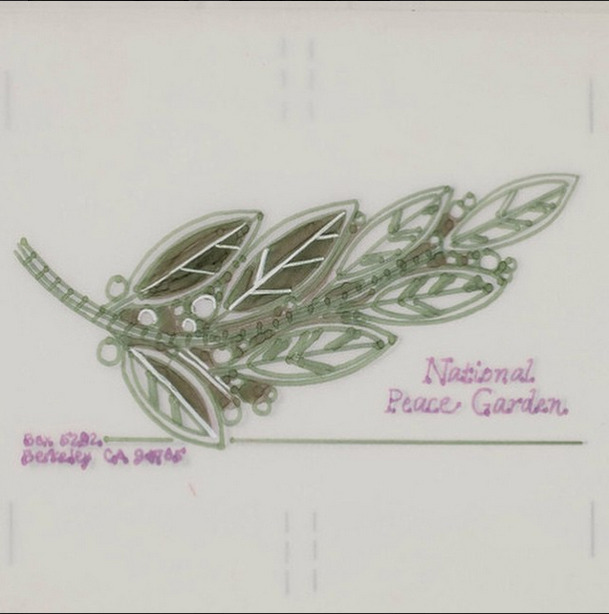
In 1985, Elizabeth Ratcliff, a former English teacher from California, proposed a national monument to peace. The monument was approved by Congress within two years and Hains Point was selected as the site. The Peace Garden Project Committee, led by Garret Eckbo, held a design competition in 1989 and selected Eduardo Catalano’s olive branch plan. Catalano's plan was approved by two planning Committees but rejected by the US Fine Arts Commission in 1992. The design firm Royston Hanamoto Alley & Abey was then hired and a year later their design received full approval. Funding for the monument was not secured by 2003, and the Garden was never built. -
National Liberty Memorial
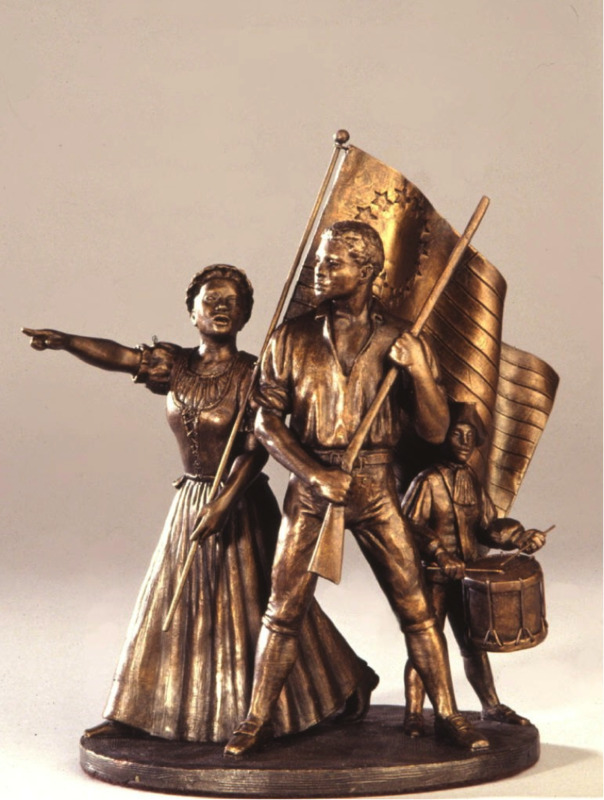
After authorization expired for the Black Revolutionary War Patriots Memorial, Maurice Barboza and Lena Santos Ferguson restarted their campaign to honor African-American service during the Revolutionary War. Congress authorized the National Liberty Memorial in 2013 that will be located at the corner of 14th Street and Independence Avenue near the Department of Agriculture. The Memorial will commemorate African American soldiers, sailors, and civilian volunteers, and also honor enslaved people who escaped or petitioned for their freedom during the war. By 2020, organizers must raise money to design and build the monument. -
Benjamin Banneker Memorial
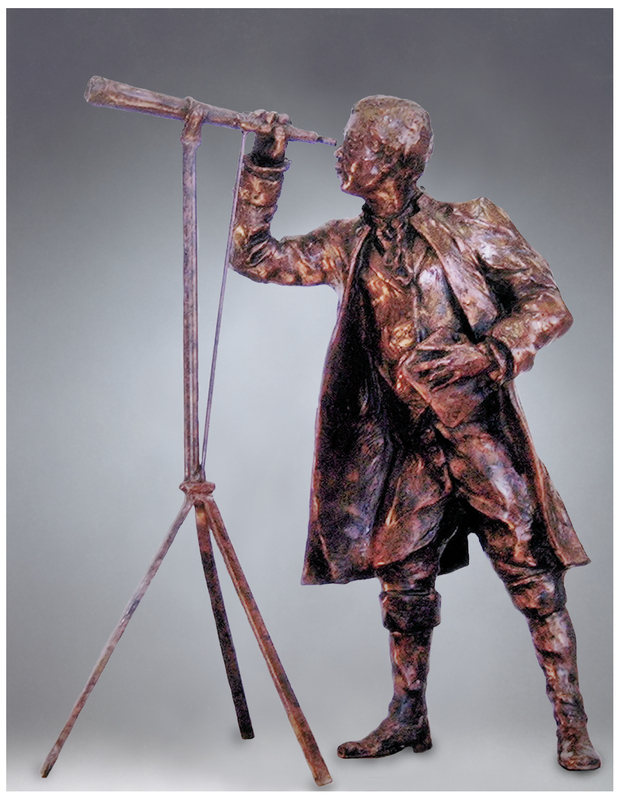
In 1996, the Washington Interdependence Council began planning a memorial to Benjamin Banneker, an African American scientist and surveyor who helped map the boundaries of the District of Columbia. Congress authorized the plan, and the Council was responsible for raising money for construction. The initial authorization expired in 2005, but the project was renewed in 2010 through new legislative efforts. The memorial is expected to part of a large-scale renovation near L’Enfant Plaza and Banneker Park. The proposed project includes a 14-foot statue, visitors' center, and a large clock tower. -

Black Revolutionary War Patriots Memorial
In 1986, Maurice Barboza and Lena Santos Ferguson won Congressional authorization to honor African Americans who fought in the Revolutionary War with a monument on the Mall. Congress authorized the memorial, but followed precedent by not allocating any funds. Barboza and Ferguson raised enough money to fund a design by Edward Dwight that represented African American men, women, and children emerging from a granite vortex led by black soldiers. Barboza and Ferguson were unable to raise enough money before the authorization expired. The memorial was never built, but they revised their plan in 2005 and proposed the National Liberty Memorial. -
Faithful Slave Mammies of the South Memorial
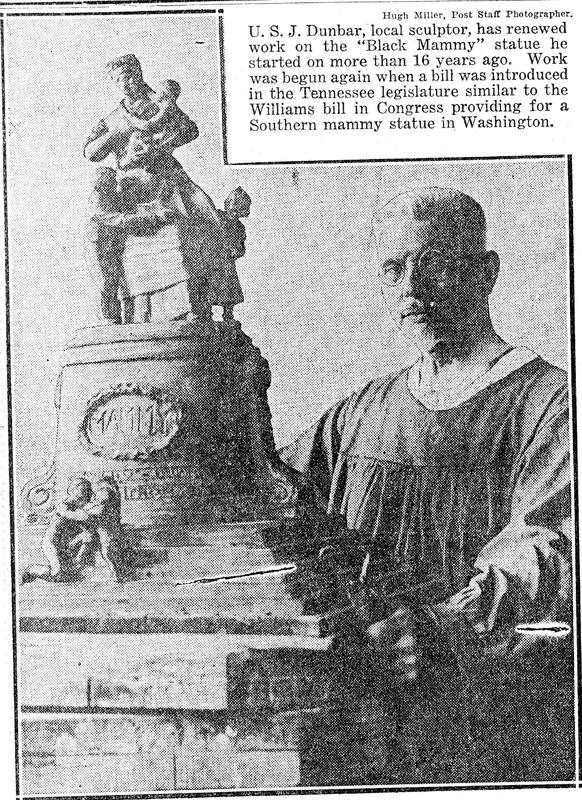
In 1922, Congress received a proposal from the Washington, DC, chapter of the United Daughters of the Confederacy to create the "Faithful Slave Mammies of the South" memorial recognizing the supposed loyalty of enslaved women to their owners during the Civil War. African American newspapers, including the Chicago Defender condemned the proposal as an insult at a time when Congress was unwilling to pass laws protecting African Americans from lynching. The Senate approved the proposal in 1923, but pressure from citizens and the press prevented passage of the bill in the House, and the memorial was never built. -

American Veterans Disabled for Life Memorial
The first national memorial to specifically honor members of the American armed forces who were permanently disabled during their service opened in 2014. The memorial was proposed to Congress in 1998 by a group led by philanthropist Lois Pope; Jesse Brown, then Secretary of Veterans Affairs; and Art Wilson, National Adjutant of the nonprofit Disabled American Veterans. The memorial was authorized by Congress and signed into law by President Clinton in 2000. The land on which it is built was transferred from the city to the National Park Service for the memorial. It was dedicated on October 4, 2014. -

John Stevens Shop
The John Stevens Shop is a stone carving workshop based in Rhode Island and currently co-owned by the father and son team of John E. and Nicholas Benson. They have been involved in the design and execution of lettering for inscriptions for four memorials on the Mall. The Bensons designed and executed special typefaces, or lettering styles, for the Franklin Delano Roosevelt Memorial, the World War II Memorial, and the Martin Luther King Memorial. Additionally, John Benson designed the lettering for the date stones in the Vietnam Veterans' Memorial. -
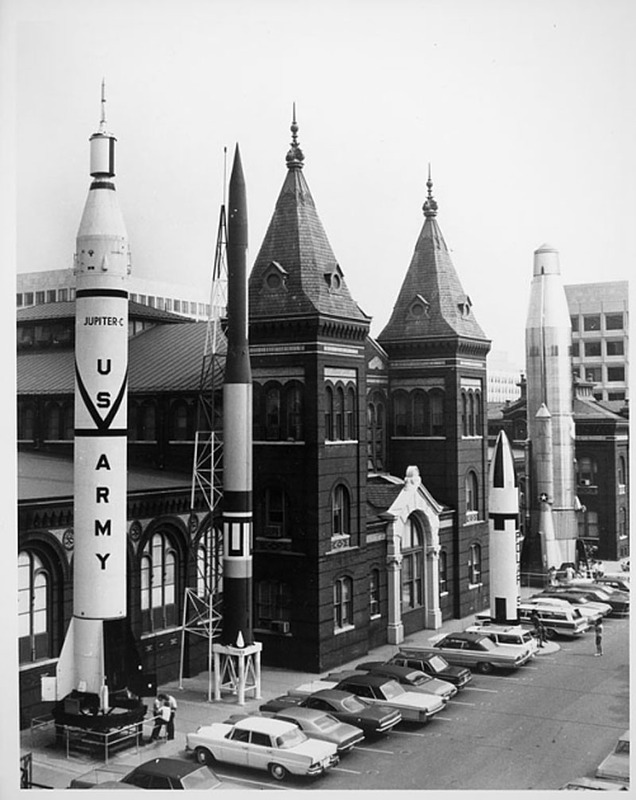
Rocket Row
Visitors to the Mall during the 1950s-1970s may have encountered large rockets that lined the west side of the Smithsonian Arts and Industries building. Called "Rocket Row," this outdoor exhibit accommodated large objects before the National Air and Space Museum opened. This photo from the 1960s shows, from left to right, a Jupiter C, Vanguard, Polaris, and Atlas missile. The Jupiter C and the Vanguard were moved to the National Air and Space Museum, where they are still on view today. -

Tennis Courts in the South Yard
From 1915 to 1935, there was a tennis court behind the Smithsonian Institution Castle, next to the Smithsonian Astrophysical Observatory in the South Yard. The court was created for the Smithsonian's tennis team, which played in intramural as well as inter-departmental matches against teams from other federal agencies. This image shows Loyal B. Aldrich (Smithsonian Astrophysical Observatory employee), and Astrophysicist Charles Greeley Abbot (Fifth Secretary of the Smithsonian) playing tennis. -
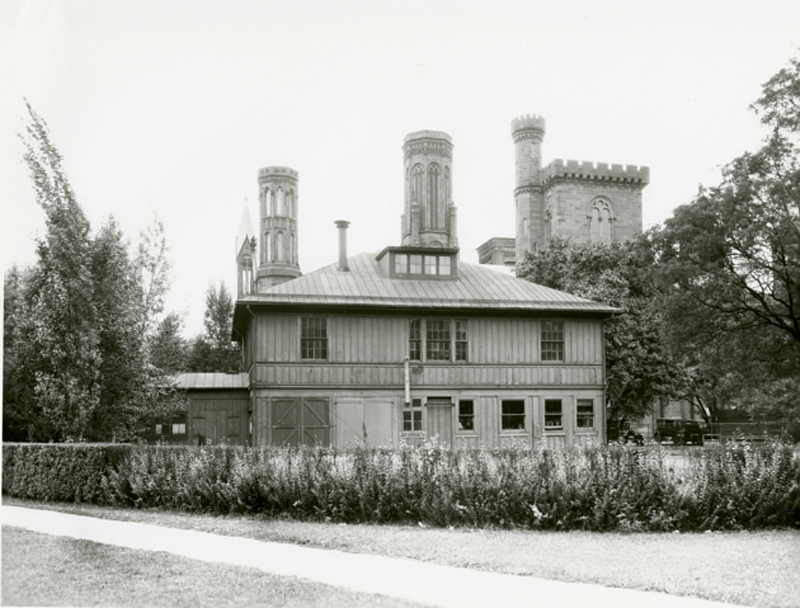
Smithsonian South Shed
The South Shed, also called the Annex, was used to prepare specimen for exhibition. Built in 1898 and demolished in 1975 to make way for the Victorian Garden, the South Shed at various times housed the Smithsonian's model and taxidermy shop, the bug house, and astrophysicist Samuel P. Landley's Aerodrome shop. -
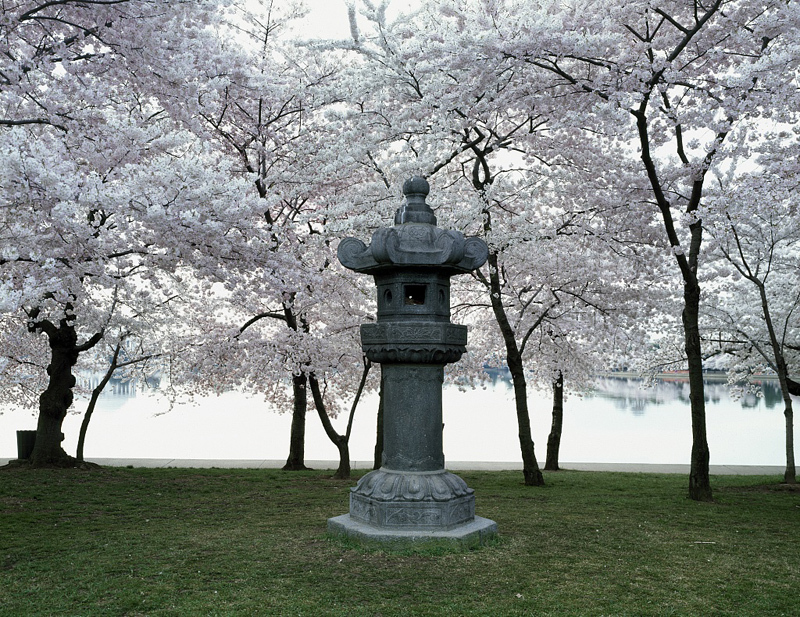
Japanese Lantern
The lantern was given to the people of the United States by the Governor of Tokyo in 1954 to mark the 100th anniversary of Commodore Matthew Perry's arrival in Japan and the opening of trade between the two countries. It was installed amid the first cherry trees planted along the Tidal Basin. The lantern is lighted during the annual Cherry Blossom Festival. It is one of two lanterns created in 1651 to mark the death of a warlord named Tokugama Iemitsu. Both lanterns were formerly located at a temple in Tokyo's Ueno Park, where the twin remains today. -

American Colonization Society Hall
The American Colonization Society was a national organization founded in 1817. Its purpose was to encourage the migration of free African Americans and formerly enslaved Africans to Africa. Members of the Society saw this plan both as a way to encourage slave owners to free their slaves and to give free black Americans a way to escape the inequality they experienced in the US. The Society was responsible for sending 6,000 black Americans to Liberia between 1821 and 1867. The organization had a permanent office on the Mall from 1860 until the building was razed in 1930. -

Federal Government Building
One of the first office buildings in Washington, this building initially housed the Departments of State, War, and the Navy, as well as the Patent Office, the General and City Post Offices, and the offices of the Superintendent and Surveyor of the City. By 1814, only the Departments of State, War, and the Navy remained, but they were temporarily relocated when the building was damaged by British forces during the War of 1812. In 1816, all three departments returned to a renovated office building, although the Department of State moved in 1819. The Department of the Navy continued to occupy the building until it was demolished in 1884. -
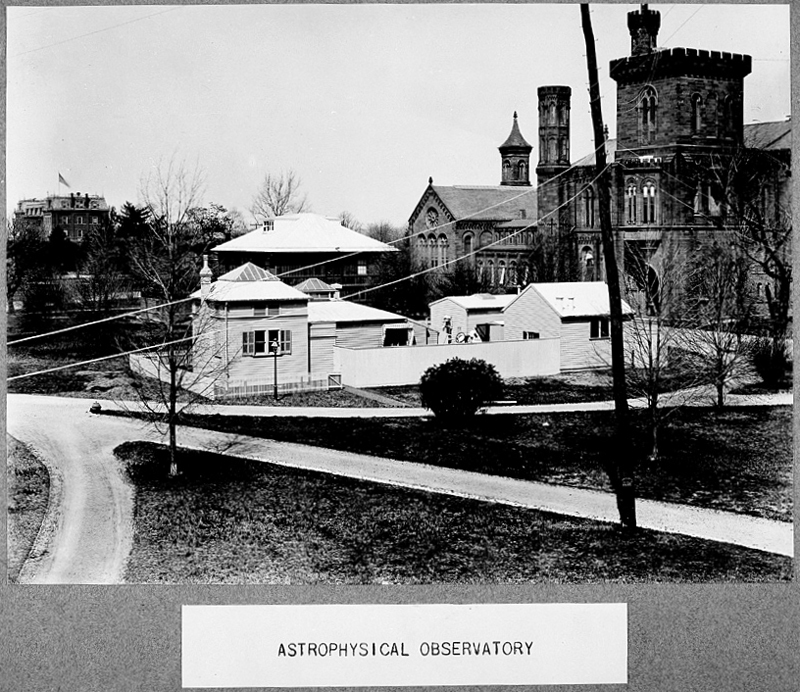
Smithsonian Astrophysical Observatory
This observatory was established in March 1890 and was one of the first to practice astrophysics. It was housed in buildings in the South Yard of the Smithsonian Institution Building's grounds. Early research conducted on the site focused on solar radiation. In the 1950s, the Smithsonian Institution created a partnership with Harvard University and the Astrophysical Observatory headquarters moved to Cambridge, Massachusetts. -

Annex Building of the Bureau of Engraving and Printing
The original Bureau of Engraving and Printing was opened on July 1, 1880, but by the 1930s, the facility had become too small for all of the Bureau's responsibilities, which included printing money, stamps, and government security documents. In 1938, a new facility was opened across the street from the original building. Beneath the building are two tunnels, one walkway connecting to the main building and one set of railroad tracks connecting to a freight-receiving building. The tracks are no longer in use. -
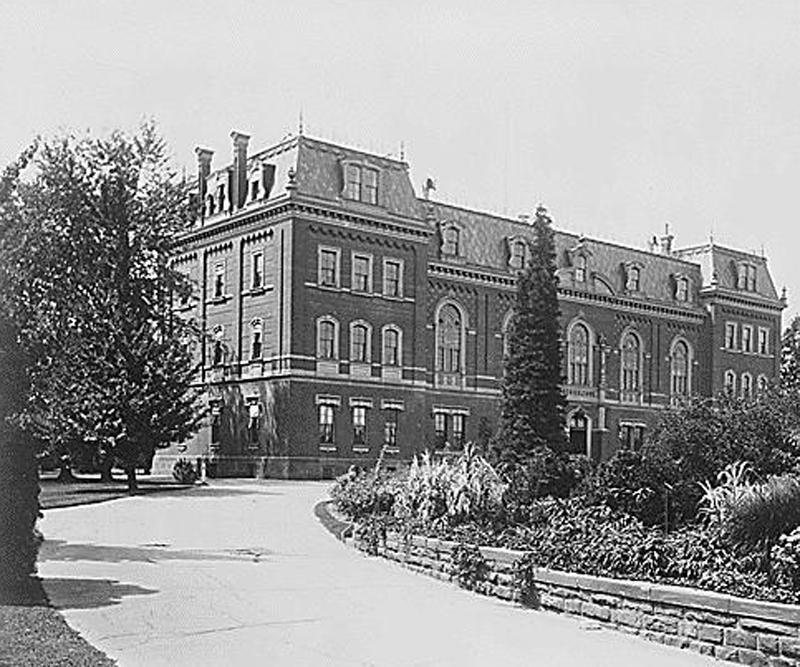
Original Department of Agriculture Building
The original building which housed the Department of Agriculture was designed in 1867 by Adolf Cluss, the same architect who designed the Smithsonian Arts and Industry Building. For decades, this building housed offices, research laboratories, and even a small museum. The building was razed in 1930 to fulfill the McMillan Commission's plan for the National Mall. -

Hains Point Teahouse
The first teahouse in Hains Point, the southernmost tip of East Potomac Park, was a refreshment stand opened in 1920 and run by local Girl Scouts. It was very popular, and in 1922 construction began on a permanent structure with restrooms, which opened in 1924. Both the stand and building served light refreshments to park visitors. In 1925, park authorities transferred operation of the tearoom from the Girl Scouts to the Welfare and Recreation Association of Public Buildings and Grounds. By 1969, business had slowed significantly. The teahouse closed in 1985 and was demolished in 1987. -

Native Landscape at the National Museum of the American Indian
The grounds surrounding the National Museum of the American Indian are an extension of the exhibit space within. Representing what local Chesapeake Bay landscapes would have been like before European contact, the space pays tribute to indigenous social and spiritual land use patterns. The landscape includes features such as a hardwood forest, wetlands, meadows, Grandfather Rocks, and traditional croplands. More than 33,000 plants of approximately 150 species can be found throughout the landscape. There are also performances for visitors at the outdoor amphitheater and fire pit. -

Floral Library
Also known as the Tulip Library, the Floral Library was established in 1969 as part of Lady Bird Johnson's Capital Beautification Project. The 'library' has 93 flower beds maintained by the National Park Service. These beds feature either tulips or annuals depending on the planting season. The flowers require up to 10,000 bulbs to be planted by hand each year. -
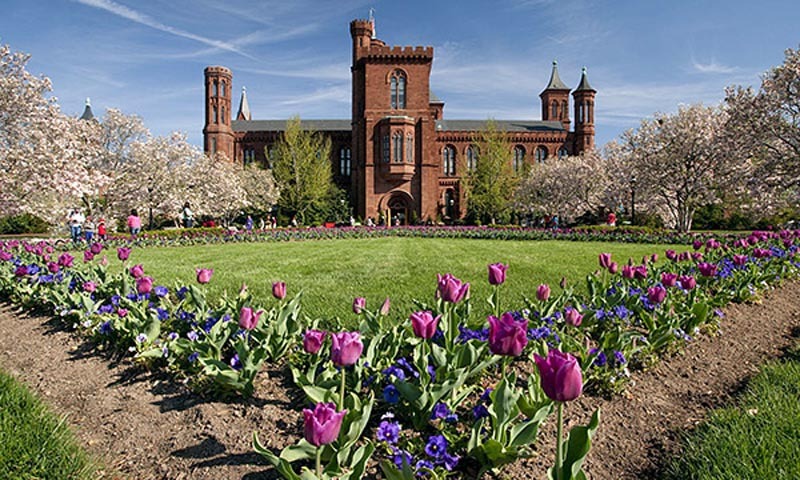
Enid Haupt Garden
The Enid Haupt Garden was created in the 1980s as part of a redesign of the area around the Smithsonian Castle. It sits to the south of the Castle and above the underground galleries and offices of the National Museum of African Art, Arthur M. Sackler Gallery, and S. Dillon Ripley Center. The garden is named for publisher and horticultural philanthropist Enid A. Haupt. The design of the garden is a modern take on American gardens from the mid-to-late 1800s. -

Tidal Basin
The Tidal Basin serves several purposes on the National Mall. Primarily, it is a reservoir for the Potomac River and Washington Channel. In the past, it has also served as a recreational area for swimming, ice skating, or boating. Built by Alexander and Repass, the Tidal Basin is lined with Japanese Cherry Trees, making it the center of the Cherry Blossom Festival, and it borders several monuments, including the Jefferson, Martin Luther King Jr., FDR, and George Mason memorials. All of these factors make the Basin one of the central natural and recreational features of the National Mall. -

National Gallery of Art Sculpture Garden
Plans for a National Sculpture Garden on the Mall began in the 1960s, but it was not until 1991 that jurisdiction for the site was transferred from the National Park Service to the National Gallery. Olin Partnership, headed by Laurie D. Olin, designed the landscape, working with staff from the National Gallery of Art. The first sculptures for the garden, many of which can still be seen today, were curated by Mark Rosenthal and Marla Prather. The middle of the garden is a fountain in summer and an ice rink in winter. Sculptures include works by American and international artists. -

National Gallery of Art West Building
In the 1920s, art collector and financier Andrew Mellon decided that the city needed a proper museum of art to rival those in Europe. With construction funds, a sizable endowment, and art all donated from Mellon, construction on the National Gallery of Art was begun in 1937. The building, designed in a classical style by John Russell Pope, was dedicated on March 17, 1941. The museum quickly attracted donations from other prominent art dealers, and today features art from around the world. -

National Gallery of Art East Building
When Andrew Mellon donated his collection to form the National Gallery of Art in the 1930s, he asked Congress to reserve land near to the Gallery for future expansion. By the 1960s, the Gallery needed that expansion. With funding from the Andrew Mellon Foundation and Mellon family members, the Gallery commissioned architect I. M. Pei to design a modernist wing to the east of the original building. Construction began for the new East Wing in 1971 and was completed in 1978. -

Potomac and Anacostia Rivers
The southern boundary of Washington, DC, is bordered by two rivers: the Potomac and the Anacostia. The rivers have long had problems with pollution from human and industrial waste. In the 1860s, President Lincoln used to complain of the smell of the rivers, retreating to Soldier's Home to escape. In the 1970s, President Lyndon B. Johnson attempted to reverse decades of pollution, making the rivers a focus of the 1972 Clean Water Act. Today the rivers are improving, but still suffer from pollution. -

Executive Stables
The Executive Stables, which held the horses, carriages, and later automobiles of the President, were built, rebuilt, and relocated several times. The first stables were built in 1800 by the Jefferson administration and sat just off the White House grounds, near the current site of the Treasury Building. The stables were relocated and redesigned three more times before those shown in this photo were constructed. Built during the Pierce administration in 1857 and destroyed by fire during Lincoln's presidency in 1864, these stables were located in the backyard of the White House. Three redesigns later, the final Executive Stables stood where the Eisenhower Executive Office Building is located today. -

Organization of American States Building
The Organization of American States (OAS) Building was completed in 1910. Its style is meant to be a fusion of some of the major architectural elements from its participating members, with Spanish, Native American, French, Portuguese, and English influences. The OAS was founded in 1889. Proposed by the US and first meeting in Washington, DC, the Organization was established as “an order of peace and justice, to promote their solidarity, to strengthen their collaboration, and to defend their sovereignty, their territorial integrity, and their independence." (Article I, Charter of OAS). Today, the OAS has 35 member nations from across North and South America. -

Jose Artigas Statue
General Jose Gervasio Artigas was a military and political leader in Uruguay in the 1800s. Influenced by the Enlightenment ideas which also sparked the American Revolution, Artigas' revolutionary movement was part of the Spanish American wars for independence. This statue is a cast of one which stands in Uruguay. It was commissioned as a goodwill gesture between that nation and the United States in the early 1940s, but was not delivered until 1947. Two years later, Congress authorized funds for the creation of a base for the statue and the work of installing it at its present site. -

Second Division Memorial
Located within President's Park on the National Mall, the Second Division Memorial is dedicated to those members of the Second Infantry Division of the US army who have died while in service. Originally dedicated in 1936 by President Franklin Roosevelt, the memorial honored service in World War I. The flaming sword at the memorial's center represents the defense of Paris from German forces during that conflict. In 1962, two wings were added to the memorial to represent service in World War II and the Korean War. -

Simon Bolivar Statue
This statue of Simon Bolivar was donated to the United States by the Venezuelan government and installed in 1955. Bolivar was a revolutionary Latin American military and political leader from the 1810s to the 1830s. He led the nations of Venezuela, Columbia, Ecuador, Peru, and Bolivia to independence, earning the reputation of having founded democracy in Latin America. -

National Museum of African American History and Culture (NMAACH)
The National Museum of African American History and Culture was established by an Act of Congress in 2003 and is the only national museum devoted to African American life. The goals of the museum are: to educate about African American history and culture; to show the importance of African American history to American history; to show the global context of American history more broadly; and to be a place of collaboration, both with other museums and with new audiences. -

Monument to the Founding of the Grange
This small plaque along the walking path on the Mall at Fourth Street and Madison is the only private monument on the Mall, dedicated on September 9, 1951. It commemorates the founding of the National Grange of the Order of Patrons of Husbandry, a national agriculture association. The Grange, whose purpose is to help give farm families a political voice, was founded December 4, 1867. The plaque names the seven original founders of the association: Oliver Hudson Kelley, William Saunders, Aaron B. Grosh, John R. Thompson, Francis M. McDowell, William M. Ireland, and John Trimble. -

United States Holocaust Memorial Museum
The United States Holocaust Memorial Museum serves as a memorial to the thousands of people murdered during the Holocaust, and to teach about the need to prevent genocide worldwide. Suggested by the President’s Commission on the Holocaust in 1979, the act to create the museum was unanimously approved by Congress in 1980. Some citizens objected by questioning why a museum remembering the European Holocaust had a place on the National Mall. During construction, workers buried two cans containing pledges of remembrance by Holocaust survivors in the ground under the Hall of Remembrance. In addition to the permanent exhibition tracing the history of the Holocaust, the museum has special exhibits focusing on specific experiences and modern genocides. -

Andrew Jackson Memorial
At the center of Lafayette Park, along the White House’s north side, stands this equestrian statue of President Andrew Jackson. Cast to commemorate Jackson’s victory at the Battle of New Orleans, the bronze statue was sculpted by artist Clark Mills in 1853. It is part of a set of four - the other statues stand in New Orleans, LA; Nashville, TN; and Jacksonville, FL. The base of the statue is inscribed, “Our Federal Union. It must be Preserved.” -

National Gallery of Art Sculpture Garden Ice Rink
The ice skating rink at the National Gallery of Art’s Sculpture Garden is one of the Mall’s most popular winter activity spots. Open from November through March, the ice skating rink in its current form first opened in 1999. The rink was included in the plans for the Sculpture Garden when it was conceived in 1996 because an ice rink had been operating at that site since 1974. Even before the 1970s, ice skating was a popular activity on the Mall, with unofficial skating sites at the Tidal Basin and the Reflecting Pool in the nineteenth and early twentieth centuries. -

Survey Lodge
Located on the grounds of the Washington Monument, the Survey Lodge was originally a boiler and steam house for the machinery necessary to power the Washington Monument's elevator. It was constructed of leftover marble and granite from the construction of the Washington Monument. Today, the site is a National Park Service Ranger Station. -

Memorial Lodge
Memorial Lodge is a small, flat-roofed, one-story building less than 500 feet east of the Washington Monument. It serves as an information station where tickets can be retrieved to visit the top of the Washington Monument. Originally constructed in 1888, the building has seen three redesigns and expansions in 1931, 1942, and 1963. -

Aircraft Building
The Aircraft Building was constructed in 1917 for the use of the US Signal Service during World War I. After the war ended, the building was transferred to the Smithsonian. It opened to the public in October 1920 as an exhibit space housing aircraft. In the 1940s, it became the temporary home of the National Air Museum, established in 1946. Items on display included the Lockheed Vega Winnie Mae which flew around the world in eight days. The building was demolished in December 1975, once work was completed on a permanent building for the National Air and Space Museum. -

Daguerre Memorial
This memorial commemorates photography pioneer, Louis Daguerre, inventor of the daguerreotype. The Photographer's Association of America presented the memorial to the people of the United States in a ceremony at the Smithsonian Arts and Industries Building on April 15, 1890, where it was installed in an alcove. In 1897, it was moved outside to the Smithsonian Grounds so visitors could see the whole piece. The statue was removed from the Mall in 1969 to make way for the Hirshhorn Museum. Today, it stands on the grounds of the National Portrait Gallery. -

Dr. Samuel Gross Statue
This statue of Dr. Samuel D. Gross was unveiled in May 1897 outside the National Army Medical Museum and Library on the National Mall. Gross, who died in 1884, was a celebrated surgeon and professor at Jefferson Medical College in Philadelphia. He was immortalized in an 1875 painting by Thomas Eakin titled The Gross Clinic. The statue was commissioned by Congress and the Physicians and Surgeons of America and created by Alexander Stirling Calder. In 1970, when the Medical Museum and Library moved off the Mall, the statue was relocated to the campus of Jefferson Medical College. -

Treasury Department
The Treasury Department is one of the oldest government departments. It was among those established when the federal government moved to Washington in 1800. The first Treasury Department building was damaged by fire in 1801 and completely destroyed by the British in 1814, during the War of 1812. A second building was destroyed by fire set by arsonists in 1833. In 1836, Congress authorized the construction of a new, fireproof building, which was finished by 1842. Additional wings to the south, north, and west were added in between 1855 and 1869, completing the building we see today. -

World War I Temporary Buildings
During World War I, the federal government built a number of temporary office buildings in Washington to hold all the new workers. The group shown in this photograph stretched across the Mall from north to south just east of 7th Street, visible beyond the National Museum of Natural History on the left and the Smithsonian Castle on the right. The smokestacks of the power plant were set apart so they did not obstruct the view of the Washington Monument from the Capitol. This complex was slowly dismantled, with the power plant and central buildings removed by 1936. -

Polo Field
The polo field on the National Mall has been a popular site for polo matches since the early 1900s. During World War II members of the military, including General George S. Patton, used the field for intramural games. Today, the polo field and surrounding softball fields are used by local enthusiasts and maintained by the National Park Service. -

Tripoli Monument
The Tripoli Monument was commissioned by members of the US Navy's Mediterranean fleet in memory of 6 officers who died during the Barbary Wars of the early 1800s. Built in Italy in 1806, the monument came to the US on board the USS Constitution and was placed in the Washington Navy Yard. The monument was damanged during the burning of the Navy Yard in 1814. In 1831, it was restored and moved to the center of the Capitol reflecting pool in 1831, where is remained until 1860 when it was relocated to Annapolis, Maryland. -

Potomac Flats
The mud flats and marshland to the west of the Washington Monument (on the left side of this image) were called the Potomac Flats for most of the 1800s. In 1870, the Army Corps of Engineers began dredging the Potomac to remove silt and to deepen the ship channel to improve access to Washington by water. Dredged material was dumped onto the tidal flats along the Washington waterfront. The work continued until August 30, 1911, when contractors had moved over 12 million cubic yards of material from the river to create East and West Potomac Parks and the Tidal Basin. -
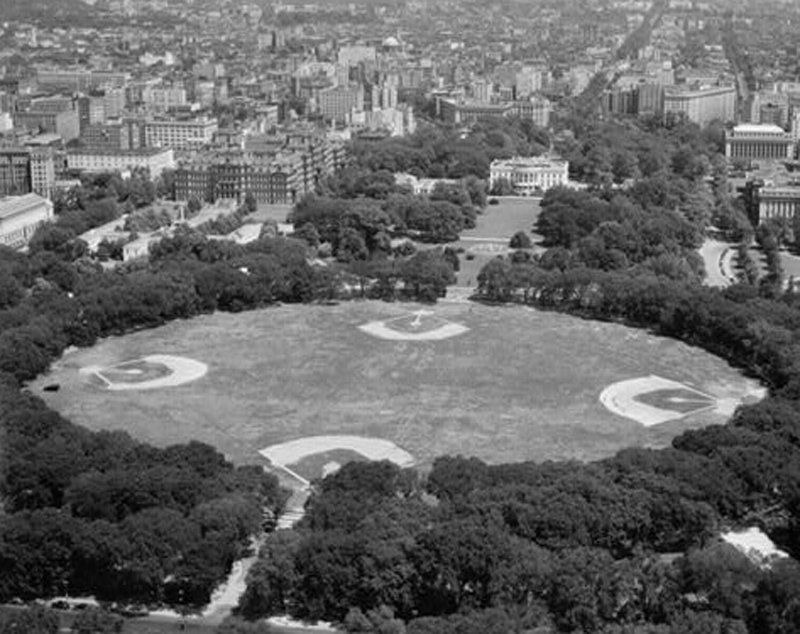
The White Lot
In 1860, the first baseball clubs in Washington, DC, the Nationals and the Potomacs, played a game on the field south of the White House, then known as the White Lot. The field was originally open to baseball enthusiasts of all races, but became segregated in 1874. In 1904, President Theodore Roosevelt formalized the park, laying out four diamonds for public play. The baseball fields remained open until the 1990s. -

Jefferson Pier
This historical survey stone was established in 1793 to mark the prime meridian of the United States. It was also intended to mark the intersection of direct lines from the middle of the Capitol and the White House, but it is in fact a little off center. The first marker, a wooden stake, was replaced by a stone in 1804. In the 1870s, the Army Corps of Engineers accidentally removed that marker, and the present stone was placed in 1889. The prime meridian was relocated in 1850. -

Fish Commission Building
The site of the National Air and Space Museum was once home to the headquarters of the United States Fish and Fisheries Commission, also known as the US Fish Commission. President Ulysses Grant signed the US Fish Commission into existence in 1871 to address issues of declining commercial fish populations in America. Stephen F. Baird, first curator of the Smithsonian Institution, also served as the first Commissioner of Fisheries. The Commission was housed in the old Armory Building, which was also used as storage by the Smithsonian until the building was demolished in the 1960s. -

The Ellipse
The Ellipse, officially known as President's Park South, is a 52 acre park located directly south of the White House. It was part of L'Enfant's original plan of the city. The Ellipse was originally called "The White Lot" due to the whitewashed fence which enclosed the area. It was the home park for some of Washington's first amateur baseball teams. The park was used by the military during the Civil War and World War II. The area is open to the public and contains many monuments and memorials. Since 1954, it has been the site of the annual Christmas Pageant of Peace. -

Dwight D. Eisenhower Memorial
The Eisenhower Memorial is a proposed monument to the 34th President of the United States, Dwight D. Eisenhower. The proposed monument site is located on the south side of Independence Avenue, directly across from the National Air and Space Museum. Like most memorials on the National Mall, architect Frank Gehry's proposed design selected in 2010 has generated controversy on Capitol Hill, within Eisenhower's family, and among public art organizations. In October 2014, the monument gained preliminary approval from the National Capital Planning Commission after design revisions. -

Babcock Lakes
The Babcock Lakes, located west of the Washington Monument, served as spawning pools for the US Fish Commission. Mandated to remedy decreases in the availability of commercial fish in America, the Commission used Babcock Lakes to breed Eurasian Carp, introduced in the US because they were hardy, harmless, vegetable feeders, and were already adapted to artificial propagation. By 1896, the Fish Commission had distributed 2.4 million carp to restock fish supplies in North and South America. The lakes were subsequently covered by land dredged from the Potomac River during the westward expansion of the National Mall. -

South B Street
The street now known as Independence Avenue was originally called South B Street, following the district's street-naming conventions. In 1934, Congress voted to rename the street Independence Avenue, three years after it had renamed North B Street as Constitution Avenue. -

North B Street
The street which is now known as Constitution Avenue was originally called North B Street, following the District's street naming system. For much of the 1800s, there was no road, but instead was the site of the City Canal. When the canal was covered over and paved, the street was named B. The street was renamed Constitution Avenue in 1931, following improvements to the road. -

Butterfly Habitat Garden
Built in 1995, the Smithsonian Butterfly Garden supports a variety of plant species which are important to the life cycle of butterflies in the Eastern United States. The 11,000 square foot area was originally built with funds provided by the Smithsonian Women's Committee and was later expanded through a gift from the Garden Club of America. The garden is comprised of several habitats, including an urban garden which showcases butterfly-friendly plants commonly found in American cities. -

Braddock's Rock
Originally, Braddock's Rock was a sizable outcropping of Piedmont stone jutting into the Potomac. Called the "Key of all Keys," this rock became a starting point for surveyors drawing property lines for early settlers. In 1755, General Edward Braddock landed at the rocky promontory and began his march to Fort Duquesne with the young George Washington among his soldiers. Later used as a quarry for the stone used in the White House, Capitol, and C&O Canal, it was blasted away in 1832. Today, the remaining portions are 16 feet underground, enclosed by a well located among the approaches to the Theodore Roosevelt Bridge. -

Armory Square Hospital
Built in 1862 as a model hospital to treat wounded Union soldiers, the Armory Square Hospital had twelve pavilions, overflow tents, and 1,000 hospital beds. It included officers' quarters as well as a chapel. President Lincoln frequently visited the patients here, shaking hands, and offering words of comfort. He suggested building flower beds between the wards using plants from government gardens. After the war, the hospital closed. The armory building was used for storage and then as the home of the Fish Commission. It was demolished in 1964. The National Air and Space Museum stands on the former hospital site. -

Old Brick Capitol
First known as the Old Brick Capitol, this building served as a a temporary meeting place for Congress after the burning of the US Capitol during the War of 1812. At the outbreak of the Civil War, the building became a prison. Confederate soldiers and spies, insubordinate Union officers, and several conspirators in the assassination of President Lincoln were imprisoned here. In 1929, the building was demolished, and the current U.S. Supreme Court building was constructed on the site. -

Smithsonian Carousel
In 1967, Smithsonian Secretary S. Dillon Ripley opened a carousel on the Mall. Built in 1922, the carousel featured music played by a Wurlitzer organ. In the photo, Ripley celebrated its 10th anniversary on the Mall. By 1981, the carousel was too difficult to repair and it was replaced by a larger one that remains today. The current carousel originally ran in Baltimore's Gwynn Oak Amusement Park, and was the first ride taken by an African American child when the park was desegregated in 1963. -

John Marshall Statue
In 1882, Congress approved the creation of a statue to honor John Marshall, fourth Chief Justice of the Supreme Court. The statue was sculpted by artist William Wetmore Story, whose father had served on the Supreme Court with Marshall. It was unveiled on May 10, 1884 on the west plaza of the United States Capitol. In 1981, the statue was moved to the ground floor of the Supreme Court Building. There are two other casts of the memorial, one in John Marshall Park in Washington and the other at the Philadelphia Museum of Art. -

National Air and Space Museum
The National Air and Space Museum holds the world's largest collection of historic aircraft and spacecraft. A second location in Chantilly, Virginia, opened in 2003 to display even more items from its collection, including the Space Shuttle Discovery. Some of the museum's popular artifacts include the original Wright brothers' 1903 flyer, Charles Lindbergh's "Spirit of St. Louis," the Apollo 11 command module, and a moon rock that visitors can touch. -

George Meade Memorial
The creation of a memorial to Civil War Union General George Meade was first proposed by the Pennsylvania legislature in 1911. Congress approved the memorial in 1915, but conflicts between the Pennsylvania Meade Memorial Commission and the Washington Commission of Fine Arts delayed the construction of the statue. In March of 1922, President Harding attended the groundbreaking and the memorial was dedicated in 1927. When construction began on the I-395 underpass in the late 1960s, the statue was removed. In 1983, it was finally placed in its present location outside the Federal Courthouse. -

Department of Living Animals, Smithsonian Institution
A bear, an eagle, badgers, and buffaloes comprised the original exhibition of the Department of Living Animals on the south side of the Smithsonian Institution Building. Opened to the public in 1887, the Department's live exhibits gave Smithsonian taxidermists an opportunity to observe the habits and positions of various animals and to use this knowledge in mounting collections and exhibitions. Under the direction of William Hornaday, the Department of Living Animals was the forerunner of the National Zoological Park, established by an Act of Congress in 1889 for "the advancement of science, the instruction and recreation of the people." -
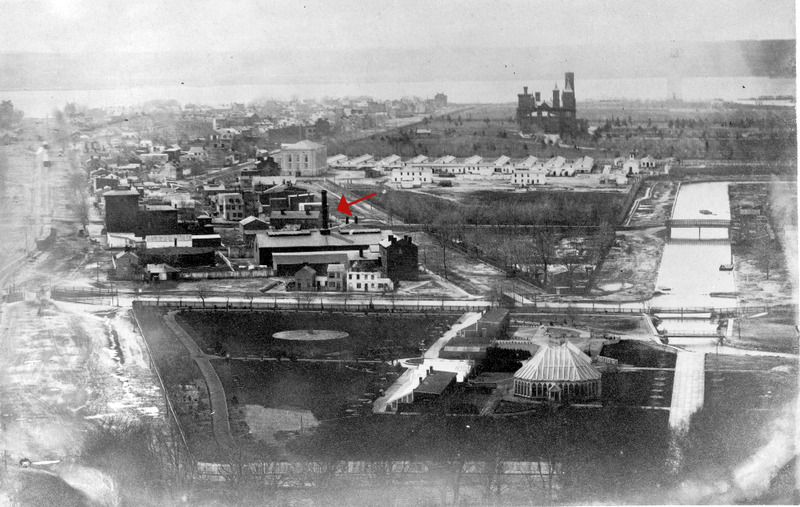
Washington Gas Works
During the 1840s, tired of the smell and dangers of candles and oil lamps, residents of Washington, DC regularly petitioned Congress to establish a gas company to light the city. In 1848, Congress agreed, first experimenting with lighting the Capitol dome using gas. The Washington Gas Light Company plant opened on the Mall in 1852 where the National Museum of the American Indian stands today; the site was a mixture of homes and businesses. Gas from this works illuminated Pennsylvania Avenue streetlamps and the White House, as well as local homes and businesses. The gas works remained for over 50 years. -

Arts of War
In 1930, the Arlington Memorial Bridge Commission selected Leo Friedlander to design a pair of statues representing war. Lack of funding because of the Depression delayed the project until 1935, when it was decided to use bronze instead of the more expensive granite. Friedlander completed his models by 1938, but by then, bronze became a critical war material and the project was again delayed. Finally, in 1949, the Italian government offered to cast the sculptures as a gift to the United States in thanks for post-war aid. The statues were dedicated in September 1951. -

Arts of Peace
In 1930, the Arlington Memorial Bridge Commission selected James Earle Fraser to design a pair of statues representing peace. Lack of funding during the Great Depression delayed the project until 1935. To curb costs, Fraser worked in bronze rather than granite. The sculpture models were completed in 1938, but were not cast completely due to wartime demands for bronze. In 1949, the Italian government offered to cast the sculptures as a gift to thank the United States for aid after World War II. The statues were dedicated in September 1951. -
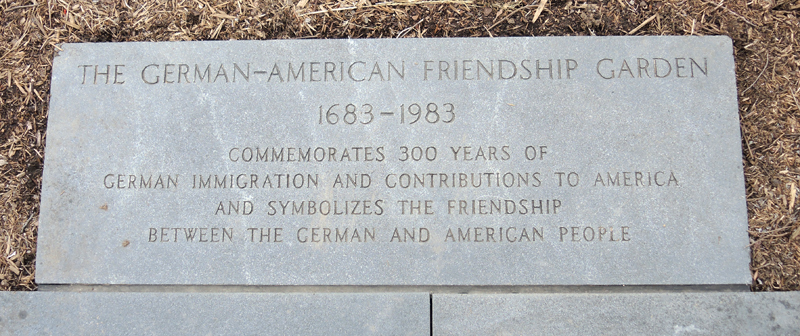
German-American Friendship Garden
In 1983, President Ronald Reagan created a Presidential Commission to commemorate the 300th anniversary of the arrival of 13 German Mennonite families in Pennsylvania. The Commission decided to create a German-American Friendship Garden on the National Mall. Donations to support the project came from American and West German businesses; in the 1980s, Germany was divided into two countries, West Germany and East Germany. The garden was dedicated on November 15, 1988. -

White Bathing Beach
White residents of Washington enjoyed swimming in the Tidal Basin as early as the 1880s. In 1918, the district office of buildings and grounds added buildings to make the beach more enjoyable, like a cabana and diving platform. Like other recreational areas in DC, the part of the beach with buildings and diving structures was white-only. The Tidal Basin beaches closed in 1925. -

Martin Luther King Jr. Memorial
The Martin Luther King Jr. Memorial was dedicated on the 48th anniversary of the March on Washington for Jobs and Freedom, where King delivered his "I Have a Dream" speech. King's college fraternity, Alpha Phi Alpha originally proposed a memorial to the civil rights leader on the Mall in 1984; a dozen years later in 1996, Congress approved a joint resolution authorizing the project. -

First Division Monument
The First Division Monument, funded by the Society of the First Division, was first created to remember First Division soldiers who died while serving in World War I. The Monument, designed by Cass Gilbert and Daniel Chester French, was dedicated in 1924. Since then, additions to the monument have been built to commemorate service in World War II, Vietnam War, and Desert Storm. Cass Gilbert Jr., son of the original sculptor, designed the World War II addition. -

Eisenhower Executive Office Building
Located next to the White House, the Eisenhower Executive Office Building currently houses offices for executive staffs of the President, Vice President, First Lady, and Second Lady. Designed in the French Second Empire architectural style, this massive granite building originally housed the State Department, War Department, and the Department of the Navy. The building took 17 years to complete. It was the largest office building in the US when it opened with 553 rooms. Each office door contained a brass knob with the insignia of the State, War, or Navy department. The building has been renovated and is a National Historic Landmark. -

White House
The White House is the official residence and office of the President of the United States. In 1792, the cornerstone was laid, and construction began with free and enslaved laborers doing much of the work. The building was designed in a Neo-Classical style with a sandstone exterior that was whitewashed, which is how it became known as "The White House." In 1800, when second President John Adams moved in as the first resident, the White House was unfinished. In 1814, the British burned the building during the War of 1812. The building has grown and changed several times throughout its history. Today, the White House contains 132 rooms. -

Vietnam Women's Memorial
The Vietnam Women's Memorial opened in 1993 as the first monument on the National Mall dedicated to women's military service. The memorial project began in 1984 to honor more than 7,500 American women Vietnam veterans. The memorial features 3 uniformed female nurses caring for a wounded male soldier. Each nurse is named for a virtue: Charity tends to the soldier, Faith prays for him, and Hope looks upwards for inspiration. The memorial reminds visitors that women have always served in times of war. -

Vietnam Veterans Memorial, Three Soldiers
The Three Soldiers statue sits a few feet from the Vietnam Veterans Memorial Wall. This statue was added after the Wall opened to complement it and to offer an alternative memorial for critics who disliked the non-traditional design of the Wall. The sculpture's 3 soldiers represent the diversity of the US military by including a Caucasian, African American, and Latino American whose service branch is intentionally ambiguous. Together, they face the Wall of the fallen. -

Vietnam Veterans Memorial Wall
The Vietnam Veterans Memorial Wall opened in 1982 to honor more than 58,000 American casualties lost in the Vietnam War. Two black walls form a wide V that list the names of each person missing or dead in chronological order. Diamonds appear beside names of the men and women killed, while the names of missing soldiers are marked with a cross. Kiosks near the memorial help visitors to locate names on the wall. Since it opened, visitors have left letters or other mementos for loved ones at the Wall. The Wall is 1 of 3 memorials honoring those who served in the Vietnam War. -

Korean War Veterans Memorial
On July 27, 1995, the presidents of the United States and the Republic of Korea dedicated the Korean War Veterans Memorial on the 42nd anniversary of the war's end. The memorial consists of an open triangle filled with 19 stainless-steel figures representing the 4 US military branches who look as if they are on patrol. A shallow reflecting pool fills the circle. Surrounding the soldiers is a wall filled with etchings made from war-related photographs. Another wall lists 22 members of the United Nations that contributed troops or medical support to the Korean War effort. -

National World War II Memorial
The National World War II Memorial opened in 2004 to honor American soldiers and civilians who served during World War II. Supporters spent over 15 years gathering Congressional support and raising money to fund the construction of this memorial. To highlight the national scope of the war effort, 56 granite pillars represent each of the 48 states and 8 US territories in 1945. Two arches stand at the opposite ends of the memorial symbolizing the Atlantic and Pacific theaters of the War. To remember more than 400,000 Americans who died during World War II, the Freedom Wall includes 4,048 gold stars. -
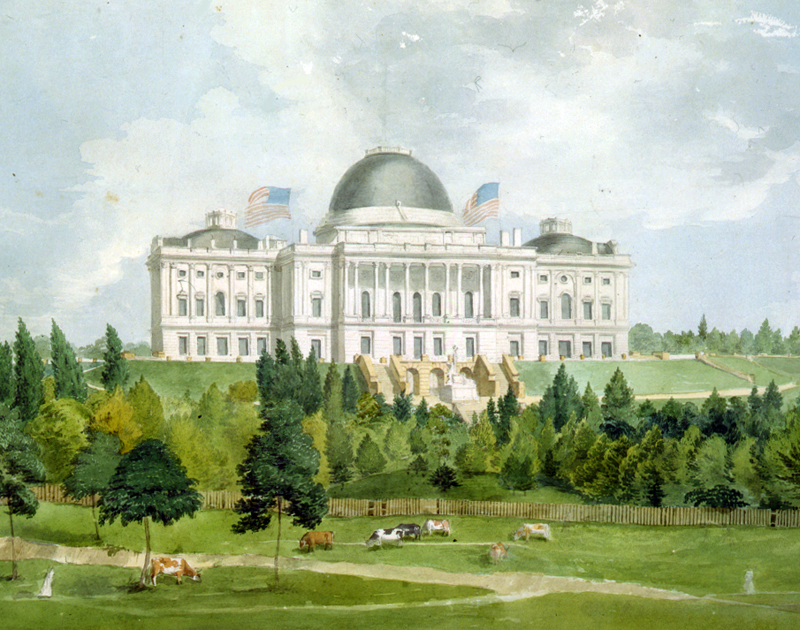
United States Capitol
In 1793, President George Washington laid the cornerstone for the Capitol, a building which saw more than 200 years of construction, redesigning, expansion, and renovation. By 1800, the building offered enough space for Congress, the Supreme Court, the Library of Congress, and the courts of the District of Columbia to operate inside. After British troops burned the Capitol in 1814, Congress moved out for five years. New architects added sections, rooms, terraces, the rotunda, a dome, and exterior landscaping. The Capitol borrows features from both ancient Roman and Greek structures. The Capitol Visitors' Center is the newest addition, built entirely underground, and is nearly 3/4 the size of the entire Capitol building. -

World War II Temporary Buildings
These buildings were erected by the federal government during World War II to create offices for the many workers who came for new, war-related jobs. The buildings were never meant to be permanent, and were referred to by locals as "tempos." Temporary housing was constructed in front of the National Gallery of Art and on the grounds of the Washington Monument. There was a group of office buildings where the National Museum of American History is today, as well as by the Reflecting Pool. Some of these buildings remained until the 1970s. -

Main Navy and Munitions Buildings
The Main Navy and Munitions temporary war buildings were built quickly in 1918 during World War I under the direction of Secretary of the Navy, Franklin D. Roosevelt, to provide emergency offices for wartime workers. Nearly 14,000 U.S. Navy personnel worked in these buildings, including the Secretary of the Navy and the Bureau of Navigation. FDR would later say he wanted the structures to be "of such superlative ugliness" that they would be torn down quickly. Despite their appearance and presence on parkland of the Mall, the offices proved useful for more than 50 years. President Nixon ordered them demolished in 1970. Today, the Vietnam Veterans' Memorial and Constitution Gardens occupy the same space that belonged to the Main Navy and Munitions buildings. -

Smithsonian Arts and Industries Building
The Arts and Industries Building opened in 1881 as the “US National Museum.” Spencer Baird, the second Secretary of the Smithsonian, developed exhibits for the museum that included objects from the Centennial Exposition of 1876 and samples of the Smithsonian’s collections of natural history and science, history, and art. Designed in a late Victorian style, the building is symmetrical and composed in the shape of a Greek cross with a central rotunda. The colorful exterior features bricks in geometric designs and has an iron truss roof. In 1910, this museum was renamed the Arts and Industries Building, and the National Museum moved to what is now known as the National Museum of Natural History. -

National Museum of Natural History
First known as the new National Museum, the National Museum of Natural History's building opened in 1910 after nearly 10 years of construction. The Museum's Beaux Arts design features a domed rotunda, columns, and a portico. The Museum first housed art, culture, history, geology, and natural history collections until the 1960s when the Museum of Natural History became a separate museum. Today, it is one of the most visited museums in the world, and displays such diverse objects as the Hope Diamond, a complete Tyrannosaurus Rex skeleton, and a live butterfly collection. -

Arthur M. Sackler Gallery
Arthur M. Sackler donated his collection of Asian art and funds to build a new museum for the Smithsonian that bears his name. Opened in 1987, the Sackler Gallery is connected physically and thematically to the Freer Gallery by interpreting Asian art. Like the National Museum of African Art, the Sackler's exhibition space is primarily underground and was designed in a post-modern style. The Enid A. Haupt Gardens surround the Sackler in the Quadrangle behind the Castle. -

National Museum of African Art
In 1979, the National Museum of African Art became part of the Smithsonian Institution and opened on the Mall in 1987. Warren M. Robbins founded the Museum in the Frederick Douglass House in Washington, DC and collected over 8,000 pieces of African sculpture, costume, instruments, and jewelry. These collections were moved to the Mall, and the NMAfA became the first museum in the United States to include in its mission a sustained focus on modern and contemporary African art. The building is designed in a post-modern architectural style with most of its exhibition space residing underground. -

Smithsonian Institution Building
Popularly known as "the Castle," the Smithsonian Institution's original building opened in 1855 and was the first museum on the Mall. James Renwick Jr designed the building in a Gothic Revival style with red sandstone from Seneca Creek, Maryland. The Castle housed collections, laboratories, and the family of the first Secretary. By 1881, the Smithsonian's collections and staff outgrew the Castle and expanded to a second building next door. Today, the Smithsonian Visitors' Center and founder James Smithson's crypt can be found inside the Castle. -

Freer Gallery of Art
Founded in 1906, the Freer became the first Smithsonian museum dedicated to Asian art. Charles Freer donated his collection of nearly 10,000 works of Chinese, Japanese, Egyptian, Near Eastern, and Indian objects and American art for this new museum. Freer also funded the construction of the building that opened in 1923, and he would only allow art from his collections to be displayed within its galleries. Since merging with the Arthur M. Sackler Gallery, the museum is now known as the Freer-Sackler. -

Hirshhorn Museum and Sculpture Garden
Established in 1966 as part of the Smithsonian Institution, the Hirshhorn collects and exhibits modern and contemporary art building on founder Joseph Hirshhorn's collection of 6,000 art works. Hirshhorn was a Latvian immigrant to the United States. His collection contained pieces by Pablo Picasso, Henri Matisse, and Edward Hopper and sculptures by August Rodin and Alexander Calder. The Museum opened in 1974, designed by architect Gordon Bunshaft as a large piece of modern sculpture. The elevated hollowed-center cylinder building distinguishes it from other museums on the Mall. Curved exterior concrete walls open to visitors through a large window offering a full view of the Mall and the Sculpture Garden below. -

National Museum of the American Indian (NMAI)
Opened in 2004 after nearly 15 years of planning and negotiations, the National Museum of the American Indian holds nearly 800,000 objects of cultural and historical significance. A photographic archive holds an additional 125,000 images. Congress established NMAI after it was discovered that the Smithsonian Institution held some 18,000 Native American remains. Native leaders petitioned Congress for respectful treatment of those remains, culminating in the museum's authorization. -

National Museum of American History (NMAH)
Originally opened in 1964 as the Museum of History and Technology, the National Museum of American History holds more than three million culturally and historically important objects on display and in its archives, including the original Star-Spangled Banner. The museum's mission is to help people understand the present through exploring the history and culture of the past. Designed by architect Walter O. Cain of McKim, Mead and White, the Post-War Modern architectural style is meant to link the classical architecture of the Mall with modern influences. -

Robey's Slave Pen and Tavern
Robey's slave pen, like its neighbor at the Yellow House, was a holding pen for slaves intended for auction. Brought in from surrounding areas, the slaves were subjected to brutal conditions before their sale and were marched through the streets of Washington in coffles. A high wall between 14 and 15 feet high surrounded the grounds to keep slaves and other prisoners in. Pens like this one operated until 1850, when the federal government abolished the slave trade in the District. -

Williams' Private Jail (Slave Pen)
A private home owned by William H. Williams, the Yellow House was one of two notorious slave holding pens in Washington, DC. The two-story home housed slaves temporarily in the basement; traders removed them to the yard on auction day for the convenience of buyers. A 12 foot high wall (originally wood, then brick) encircled the structure, guarded by ferocious dogs. Pens like this one operated until 1850, when the slave trade was abolished in Washington, DC. Williams sometimes held other prisoners here, as well, on a contract basis. -

Department of Agriculture, Jamie L. Whitten Building
Built between 1904 and 1908 to house the US Department of Agriculture, the Whitten Building is the only non-public structure on the National Mall. The Whitten building is joined to the South Building by a pedestrian bridge over Independence Avenue. The building's location is a compromise between the McMillan Plan's vision of the Mall and President Theodore Roosevelt's desire to have the building located on the Mall itself.