Mall History Test
Item set
Items
-
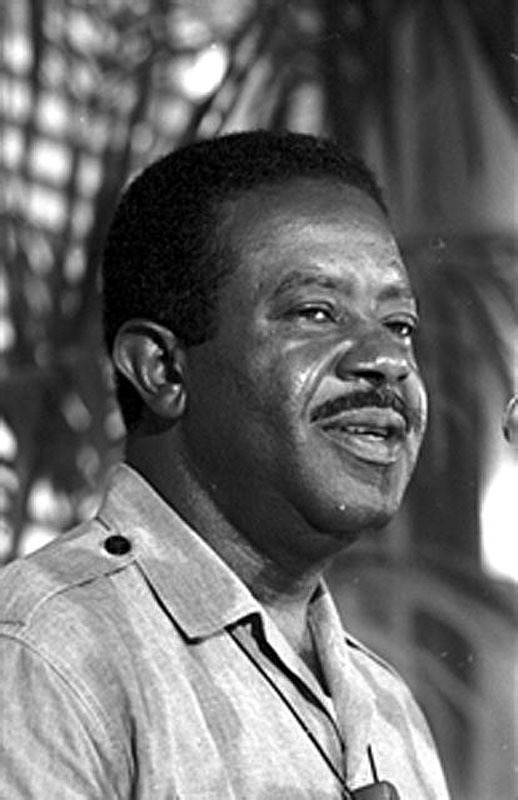
Ralph Abernathy
Abernathy was a civil rights activist and close advisor to Dr. Martin Luther King Jr. Abernathy helped to organize the 1963 March on Washington for Jobs and Freedom. After King's assassination, Abernathy led the 1968 Poor People's Campaign in Washington, DC that fought for economic justice for the poorest Americans. Protesters occupied the Mall for 6 weeks in small huts near the Washington Monument, known as Resurrection City, until late June when the group was removed by police. -
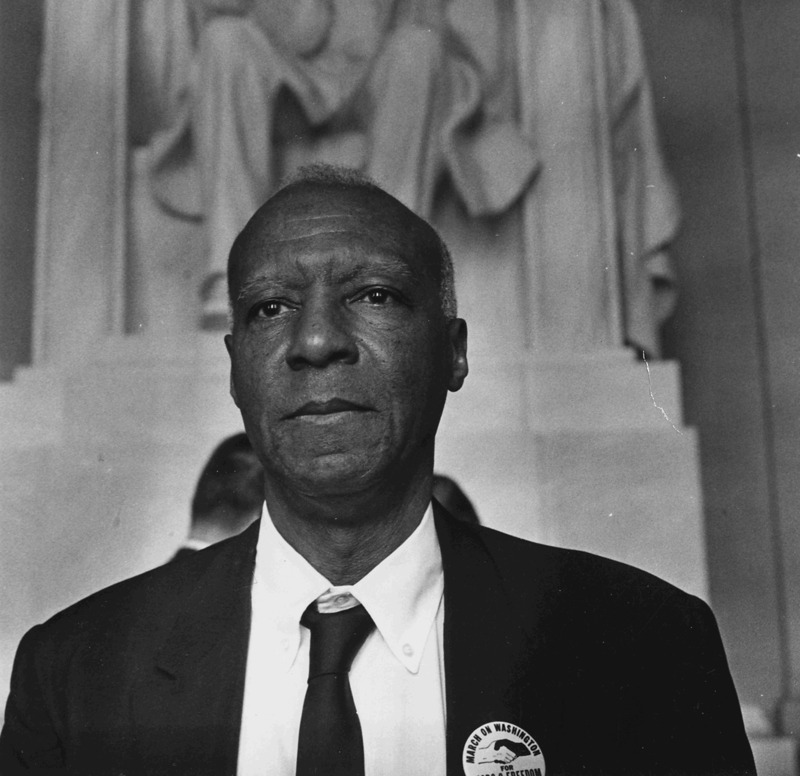
A. Philip Randolph
Civil rights leader and labor organizer A. Philip Randolph built coalitions of African Americans who pressured presidents, Congress, and local governments to end racial discrimination. In 1941, he organized a proposed march on Washington by African Americans to demand an end to racial discrimination in defense industries and the US military, and to ban lynching. Randolph cancelled the march after President Franklin Roosevelt signed Executive Order 8802 establishing the first Fair Employment Practices Committee, effectively banning racial discrimination in defense-related industries in 1941. Randolph continued fighting for equality and marched with other civil rights leaders in Washington in 1963. -
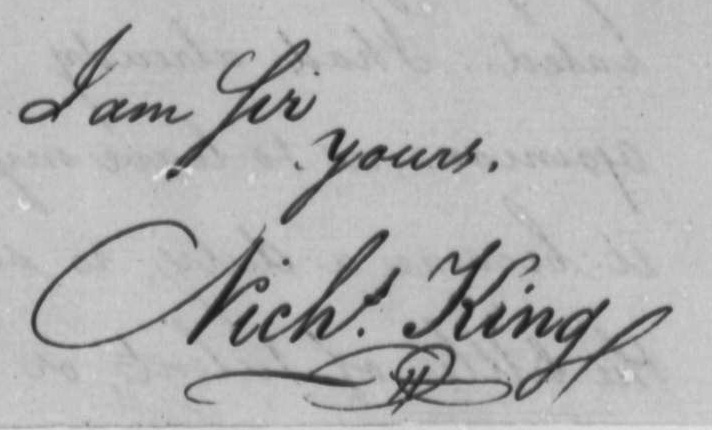
Nicholas King
Nicholas King worked as a surveyor for the Board of Commissioners of Washington from 1796 to 1797. Named the Surveyor for the City of Washington in June 1803, he served in that position until his death in May 1812. In 1804, King helped to measure and record the first meridian in the US in Washington. At President Thomas Jefferson's request, he placed a marker along this imaginary line of longitude on the Mall, in a spot west and north of where the Washington Monument stands today. -

John Lewis
John Lewis was a civil rights activist who helped plan the March on Washington for Jobs and Freedom in 1963. At age 23, Lewis was the youngest speaker at the March. His strongly-worded speech criticized lawmakers and the President for not doing enough within their powers to stop racial discrimination and the attacks on non-violent protesters across the American south. Other speakers and organizers objected to parts of Lewis’s speech, and he reluctantly cut the most confrontational phrases. Even with these changes, Lewis’s speech was still a rousing call to action. -
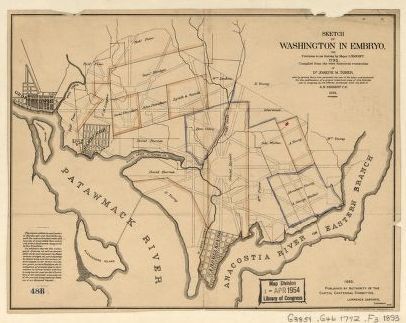
Original Proprietors of the National Mall's Land
In 1791, 15 landowners negotiated with President George Washington to give the government land for the creation of a new federal capital, Washington. Land from Daniel Carroll of Duddington, David Burnes, and Notley Young became the National Mall. Property boundaries were vague, making it possible that Samuel Davidson, Benjamin Oden, James Williams, or Uriah Forrest also contributed small portions of their lands to that which became the National Mall. -

Carl Browne
Carl Browne helped Jacob S. Coxey lead the first march on Washington. In the spring of 1894, Coxey and Browne set out from Massillon, Ohio, and marched to Washington, DC, with a few hundred unemployed people. Together they advocated for a public jobs project for the unemployed. Once they arrived, Coxey decided to speak on the Capitol grounds, even though it was illegal. Both Coxey and Browne were arrested and imprisoned. Although Coxey was the public leader of the march, Browne was active in promoting the protest to the national press. -

Diana Hopkins
Diana lived with her father and stepmother at the White House from 1940-1943, when her father, Harry Hopkins, served as a close adviser to President Franklin D. Roosevelt. Diana participated in the Easter Egg Roll each year that she lived in the White House. In 1943, Diana, at the age of 11, was given permission to plant a Victory Garden on the South Lawn of the White House grounds. Victory Gardens were small vegetable gardens grown by families to supplement the food rations they received during World War II. -
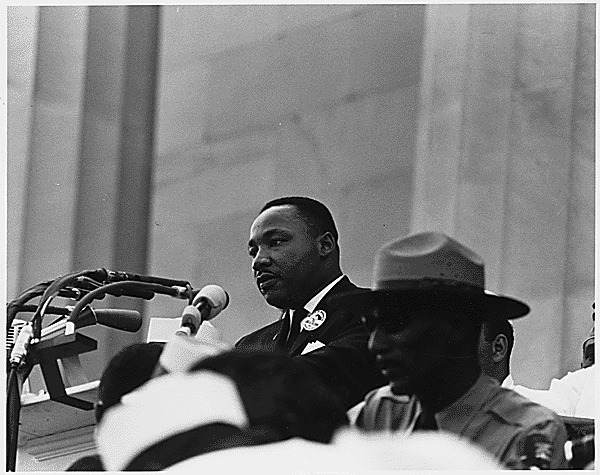
Martin Luther King Jr.
Dr. Martin Luther King Jr. was a minister and African American civil rights leader. On August 18, 1963, he delivered his famous "I Have a Dream" speech on the steps of the Lincoln Memorial during the March on Washington for Jobs and Freedom. A plaque on the steps of the Memorial marks this event. In 2012, the Martin Luther King, Jr. Memorial was dedicated on the National Mall to commemorate King's work and his vision for equality and national unity. -

Design Team, National Museum of the American Indian
Douglas Cardinal (Blackfoot), Johnpaul Jones (Cherokee/Choctaw), Lou Weller (Cado), Donna House (Diné/Oneida), and Ramona Sakiestewa (Hopi) were consultants on the concept and design of the National Museum of the American Indian. They represented a pan-tribal coalition that helped to ensure that the design and landscape of the museum captured some of the diverse values of Native American life. Cardinal was the initial architect and project designer. Jones headed the group that led the design architecture, which included Weller. House and Sakiestewa served as design consultants. -

James McMillan
McMillan was a US Senator from Michigan who led the Senate Park Commission in creating a new design plan for Washington's public spaces, including the National Mall. The work and plan of the Senate Park Commission is often referred to by McMillan's name, because he worked very closely with architects and artists appointed to the commission. McMillan died in office in 1902, and would not see his work implemented on the Mall. -

Glenna Goodacre
Glenna Goodacre is the designer and sculptor of the Vietnam Women's Memorial, dedicated in November 1993. Goodacre wanted the memorial's figures to show despair, dedication, and hope of the nurses and servicewomen serving in Vietnam. -

Jacob S. Coxey
Jacob Coxey led the first march on Washington in the spring of 1894. Starting in Massillon, Ohio, Coxey marched to the Capitol to bring attention to the plight of unemployed Americans. Coxey proposed that the federal government subsidize a labor program for the unemployed. At the time, a law prohibited gatherings on the Capitol Grounds, but Coxey believed in his cause and tried to give a speech. He was arrested and then jailed for 20 days. Coxey returned in 1914 and successfully spoke on the Capitol steps pleading for a jobs program for the unemployed. -

Frederick Law Olmsted
In 1783, the Senate Committee on Public Buildings and Grounds commissioned Olmsted, who had co-designed Central Park in New York City, to design the grounds of the Capitol. Olmsted created a park-like plan that complimented the Capitol building. His plan added marble terraces on the northern, western, and southern sides of the building, and a summerhouse for visitors on the side near the Mall. Olmsted's career designing park systems and as an urban planner influenced design plans for the National Mall into the 1900s. -

Andrew Jackson Downing
In 1850, President Millard Fillmore commissioned landscape architect, Andrew Jackson Downing to landscape the Mall. His design divided the Mall into four smaller parks, each with a unique appearance, connected by curving walks. Downing was an advocate for urban parks and hoped his design would inspire other cities to create large parks. He died suddenly at age 36 in a steamboat accident before the Mall's new landscape design was finished. A memorial urn in the gardens outside of the Smithsonian Castle honors his contributions to the Mall's design history. -

Pierre Charles L'Enfant
L'Enfant was an architect and civil engineer chosen by President George Washington in 1791 to survey and design the new federal city of Washington. L'Enfant designed streets in a grid pattern, and he placed major government buildings and parks in the plan. He also designed a "grand avenue" stretching west from the Capitol to the Potomac River, which we now call the National Mall. Disagreements with the city's commissioners led to L'Enfant's dismissal in February 1792. Never fully implemented, his vision for the city continues to influence planners and designers today. -
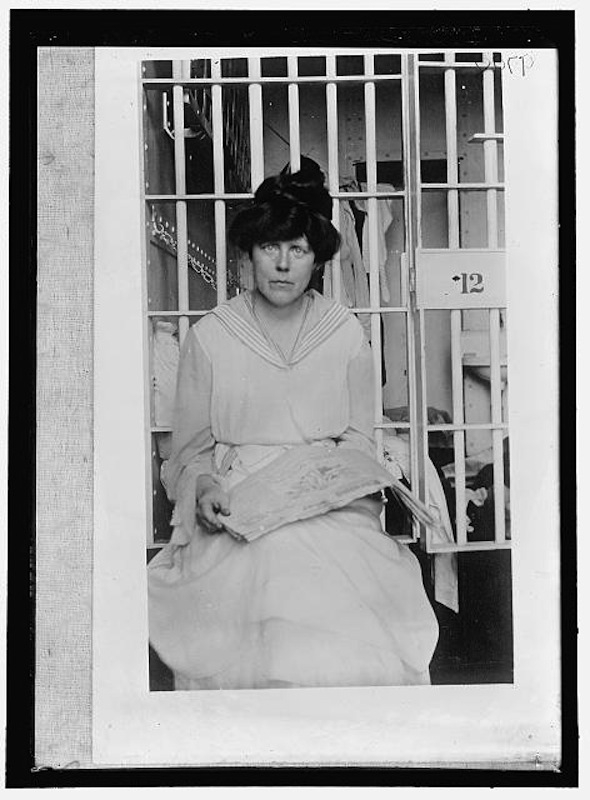
Lucy Burns
As a women's rights activist in the early 1900s, Burns organized political marches and rallies to pressure male lawmakers into passing a Constitutional amendment allowing women to vote. In 1913, she helped organize a suffrage march on Pennsylvania Avenue the day before Woodrow Wilson's inauguration. Burns and Alice Paul formed the National Women's Party in 1917 and continued to fight for women's right to vote. Burns was arrested with other members of the Party after picketing the White House in 1917. While in prison, she went on a hunger strike with Alice Paul to show their commitment to their cause. They won the fight in 1920 with the passage of the 19th Amendment. -
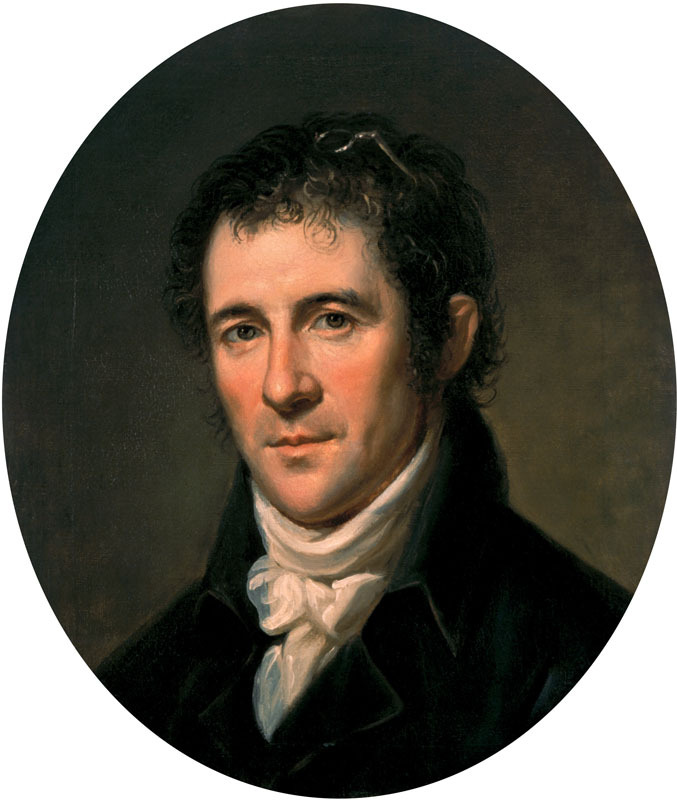
Benjamin Henry Latrobe
Benjamin H. Latrobe was an architect hired by President Thomas Jefferson to serve as the Surveyor of Public Buildings in 1803. He spent nearly 14 years in Washington supervising the construction and design of public buildings. His largest project was constructing the Capitol's south wing. After the War of 1812, Latrobe oversaw the rebuilding and redesign of the Capitol, which the British army destroyed in 1814. Hence, Latrobe is known as the second Architect of the Capitol. -
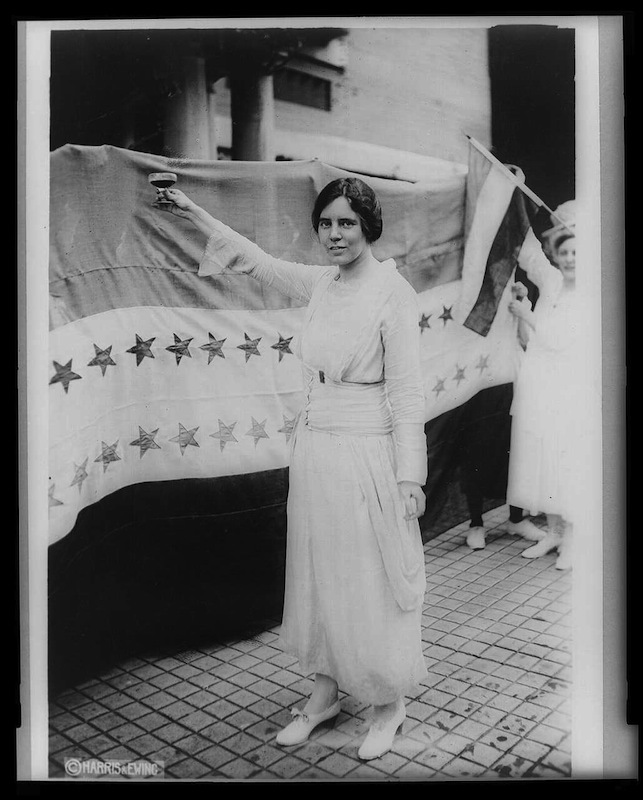
Alice Paul
Activist and leader of the National Woman's Party, Alice Paul organized the Woman Suffrage Parade on Pennsylvania Avenue the day before Woodrow Wilson's inauguration in March, 1913. Four years later, Paul led a demonstration in front of the White House, again demanding women’s right to vote. Protesters were arrested for obstructing traffic and jailed. While in prison, Paul began a hunger strike drawing more attention to her cause. Responding to political pressure, President Woodrow Wilson called on Congress and the states to amend the Constitution and allow women the right to vote. The 19th amendment was ratified in 1920. -

Frederick Law Olmsted Jr.
Olmsted Jr. was a landscape architect appointed by President Theodore Roosevelt to serve on the Senate Park Commission in 1901. The Commission was charged with improving the Mall's design and restoring elements of Pierre Charles L'Enfant's original plan. Olmsted Jr. established himself after apprenticing with his father, Frederick Law Olmsted, the landscape architect famous for building New York's Central Park. While working for the Commission, Olmsted Jr. was responsible for designing the landscape and parks system for the Mall. Throughout his life, he remained committed to national and civic parks across the US. -
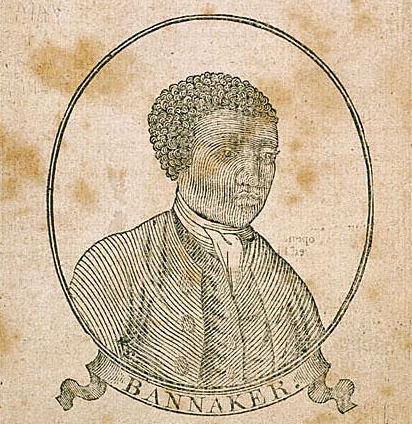
Benjamin Banneker
Banneker was a free African American surveyor, mathematician, and almanac author from Maryland. In 1791, he assisted Andrew Ellicott with a survey of the boundaries of the District of Columbia. Among his duties on the survey, Banneker operated the astronomical equipment which helped the surveyors determine their exact location. -

Marian Anderson
Marian Anderson was an African American singer, who became famous for fighting racial inequality when she gave a concert on the steps of the Lincoln Memorial. In April 1939, the Daughters of the American Revolution refused to allow Anderson to sing to an integrated audience at their Constitution Hall. With help from First Lady Eleanor Roosevelt, the concert was moved to the Lincoln Memorial. Anderson stood on the steps and performed before 75,000 people gathered on the Mall. Millions more listened to her on the radio. Her concert pointed to the value of using the National Mall as a place to bring public attention to political and social issues. -

John Kerry
In 1971, Secretary of the State, Senator, and US Navy veteran John Kerry protested against the Vietnam War in front of the US Capitol when he returned from his tour of duty. As a member of the group Vietnam Veterans Against the War, he accused the US military of committing war crimes in Vietnam and testified before Congress in April 1971. After testifying, Kerry and hundreds of other activists called for an end to the conflict in Vietnam by throwing military ribbons, medals, and pieces of their uniforms on the steps of the US Capitol. -

James Renwick Jr.
James Renwick Jr. won the 1846 competition to design the first Smithsonian Institution building. His design drew heavily from architectural styles of 12th-century Europe that gave the building a castle-like appearance. Although Renwick took pains to design the building to be fireproof, a fire destroyed part of the structure in 1865. In 1874, he completed the first Corcoran Gallery located on Pennsylvania Avenue near the White House. That building now bears his name and is part of the Smithsonian American Art Museum. -

Jesse Jackson Sr.
In May 1968, Jesse Jackson and other members of the Southern Christian Leadership Conference (SCLC) gathered in Washington, DC, to draw attention to poverty through the Poor Peoples' Campaign. Carrying on the work of Dr. Martin Luther King Jr. after his assassination in April of that year, the SCLC lobbied Congress to create laws that encouraged economic equality. To highlight issues of economic inequality, SCLC constructed a temporary encampment known as Resurrection City on the Mall near the Lincoln Memorial. Jackson served as city manager and mayor of the tent city for its six week existence. -
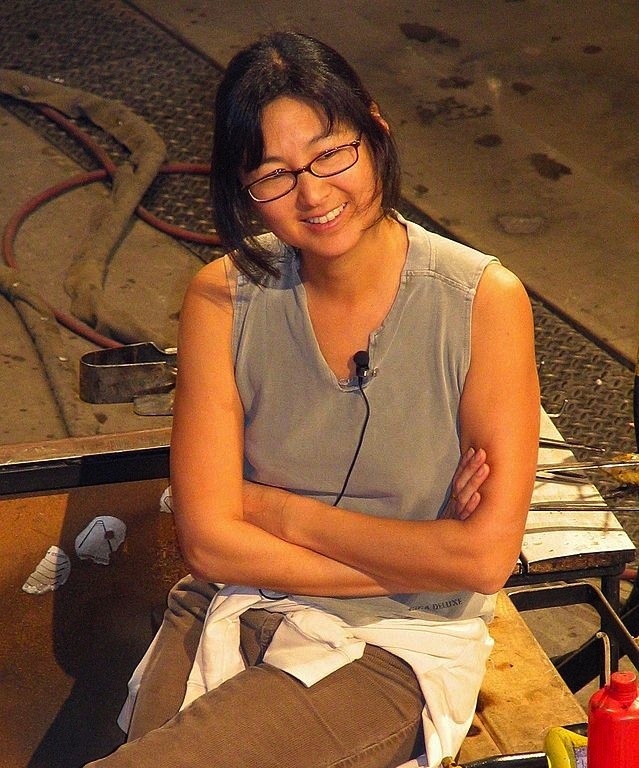
Maya Lin
Maya Lin won the design competition for the Vietnam Veterans Memorial in 1981. She was an undergraduate student majoring in architecture at Yale University when her design was chosen from nearly 1,500 entries. She proposed an abstract design in the shape of an open V, meant to look like a healing wound. Known as "the Wall," the Memorial was not liked by some members of Congress who expected a more traditional monument that looked like others present on the Mall. Lin defended her design before Congress, and visitors and veterans eventually embraced this design. -
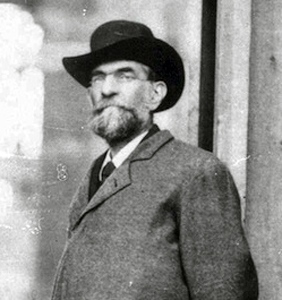
Adolf Cluss
In the late 1800s, Adolf Cluss designed four buildings on the National Mall, only one of which still stands today. In 1870, he designed the Center Market. He also designed conservatories for the Department of Agriculture and the Army Medical Museum that stood on the south side of the Mall near what is now Independence Avenue. The surviving Cluss building on the Mall is the Arts and Industries Building, next to the Smithsonian Castle, which Cluss designed with partner Paul Schulze to be a National Museum and house the Smithsonian collections after the Institution outgrew the space in the Castle. -
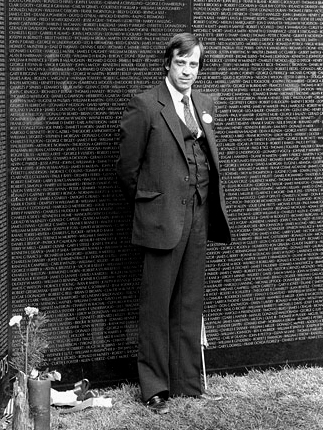
Jan Scruggs
Decorated Vietnam veteran Jan Scruggs is the founder of the Vietnam Veterans Memorial in Washington, DC. He conceived the memorial as a tribute to all who served during one of the longest wars in American history. He started the project with $2,800 of his own money and collected nearly $8 million in private donations to fund the construction of the memorial. Scruggs currently serves as the President of the Vietnam Veterans Memorial Fund. -
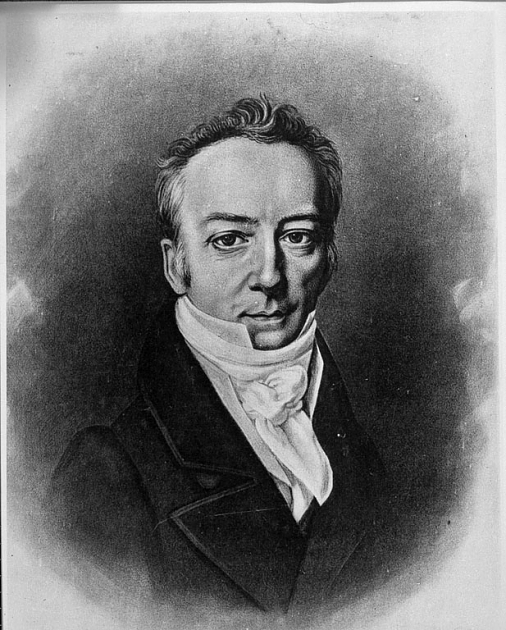
James Smithson
British scientist James Smithson provided the funding necessary to create the Smithsonian Institution. Born in France and educated at Oxford University in England, Smithson was a wealthy chemist and mineralogist. He never married or had any children. In his will, he wrote that if his nephew, who was his only heir, died without heirs, then his entire estate should go to the United States to develop in Washington "under the name of the Smithsonian Institution, an establishment for the increase and diffusion of knowledge." Smithson's nephew died in 1835, and the Smithsonian Institution was founded in 1846. -

Eisenhower Executive Office Building
Located next to the White House, the Eisenhower Executive Office Building currently houses offices for executive staffs of the President, Vice President, First Lady, and Second Lady. Designed in the French Second Empire architectural style, this massive granite building originally housed the State Department, War Department, and the Department of the Navy. The building took 17 years to complete. It was the largest office building in the US when it opened with 553 rooms. Each office door contained a brass knob with the insignia of the State, War, or Navy department. The building has been renovated and is a National Historic Landmark. -

White House
The White House is the official residence and office of the President of the United States. In 1792, the cornerstone was laid, and construction began with free and enslaved laborers doing much of the work. The building was designed in a Neo-Classical style with a sandstone exterior that was whitewashed, which is how it became known as "The White House." In 1800, when second President John Adams moved in as the first resident, the White House was unfinished. In 1814, the British burned the building during the War of 1812. The building has grown and changed several times throughout its history. Today, the White House contains 132 rooms. -

Vietnam Women's Memorial
The Vietnam Women's Memorial opened in 1993 as the first monument on the National Mall dedicated to women's military service. The memorial project began in 1984 to honor more than 7,500 American women Vietnam veterans. The memorial features 3 uniformed female nurses caring for a wounded male soldier. Each nurse is named for a virtue: Charity tends to the soldier, Faith prays for him, and Hope looks upwards for inspiration. The memorial reminds visitors that women have always served in times of war. -

Vietnam Veterans Memorial, Three Soldiers
The Three Soldiers statue sits a few feet from the Vietnam Veterans Memorial Wall. This statue was added after the Wall opened to complement it and to offer an alternative memorial for critics who disliked the non-traditional design of the Wall. The sculpture's 3 soldiers represent the diversity of the US military by including a Caucasian, African American, and Latino American whose service branch is intentionally ambiguous. Together, they face the Wall of the fallen. -

Vietnam Veterans Memorial Wall
The Vietnam Veterans Memorial Wall opened in 1982 to honor more than 58,000 American casualties lost in the Vietnam War. Two black walls form a wide V that list the names of each person missing or dead in chronological order. Diamonds appear beside names of the men and women killed, while the names of missing soldiers are marked with a cross. Kiosks near the memorial help visitors to locate names on the wall. Since it opened, visitors have left letters or other mementos for loved ones at the Wall. The Wall is 1 of 3 memorials honoring those who served in the Vietnam War. -

Korean War Veterans Memorial
On July 27, 1995, the presidents of the United States and the Republic of Korea dedicated the Korean War Veterans Memorial on the 42nd anniversary of the war's end. The memorial consists of an open triangle filled with 19 stainless-steel figures representing the 4 US military branches who look as if they are on patrol. A shallow reflecting pool fills the circle. Surrounding the soldiers is a wall filled with etchings made from war-related photographs. Another wall lists 22 members of the United Nations that contributed troops or medical support to the Korean War effort. -

National World War II Memorial
The National World War II Memorial opened in 2004 to honor American soldiers and civilians who served during World War II. Supporters spent over 15 years gathering Congressional support and raising money to fund the construction of this memorial. To highlight the national scope of the war effort, 56 granite pillars represent each of the 48 states and 8 US territories in 1945. Two arches stand at the opposite ends of the memorial symbolizing the Atlantic and Pacific theaters of the War. To remember more than 400,000 Americans who died during World War II, the Freedom Wall includes 4,048 gold stars. -
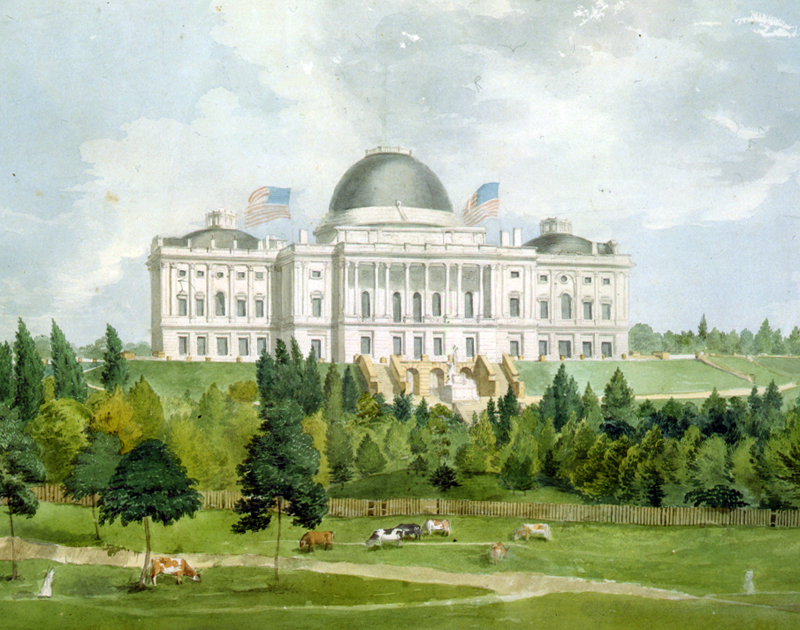
United States Capitol
In 1793, President George Washington laid the cornerstone for the Capitol, a building which saw more than 200 years of construction, redesigning, expansion, and renovation. By 1800, the building offered enough space for Congress, the Supreme Court, the Library of Congress, and the courts of the District of Columbia to operate inside. After British troops burned the Capitol in 1814, Congress moved out for five years. New architects added sections, rooms, terraces, the rotunda, a dome, and exterior landscaping. The Capitol borrows features from both ancient Roman and Greek structures. The Capitol Visitors' Center is the newest addition, built entirely underground, and is nearly 3/4 the size of the entire Capitol building. -

World War II Temporary Buildings
These buildings were erected by the federal government during World War II to create offices for the many workers who came for new, war-related jobs. The buildings were never meant to be permanent, and were referred to by locals as "tempos." Temporary housing was constructed in front of the National Gallery of Art and on the grounds of the Washington Monument. There was a group of office buildings where the National Museum of American History is today, as well as by the Reflecting Pool. Some of these buildings remained until the 1970s. -

Main Navy and Munitions Buildings
The Main Navy and Munitions temporary war buildings were built quickly in 1918 during World War I under the direction of Secretary of the Navy, Franklin D. Roosevelt, to provide emergency offices for wartime workers. Nearly 14,000 U.S. Navy personnel worked in these buildings, including the Secretary of the Navy and the Bureau of Navigation. FDR would later say he wanted the structures to be "of such superlative ugliness" that they would be torn down quickly. Despite their appearance and presence on parkland of the Mall, the offices proved useful for more than 50 years. President Nixon ordered them demolished in 1970. Today, the Vietnam Veterans' Memorial and Constitution Gardens occupy the same space that belonged to the Main Navy and Munitions buildings. -

Smithsonian Arts and Industries Building
The Arts and Industries Building opened in 1881 as the “US National Museum.” Spencer Baird, the second Secretary of the Smithsonian, developed exhibits for the museum that included objects from the Centennial Exposition of 1876 and samples of the Smithsonian’s collections of natural history and science, history, and art. Designed in a late Victorian style, the building is symmetrical and composed in the shape of a Greek cross with a central rotunda. The colorful exterior features bricks in geometric designs and has an iron truss roof. In 1910, this museum was renamed the Arts and Industries Building, and the National Museum moved to what is now known as the National Museum of Natural History. -

National Museum of Natural History
First known as the new National Museum, the National Museum of Natural History's building opened in 1910 after nearly 10 years of construction. The Museum's Beaux Arts design features a domed rotunda, columns, and a portico. The Museum first housed art, culture, history, geology, and natural history collections until the 1960s when the Museum of Natural History became a separate museum. Today, it is one of the most visited museums in the world, and displays such diverse objects as the Hope Diamond, a complete Tyrannosaurus Rex skeleton, and a live butterfly collection. -

Arthur M. Sackler Gallery
Arthur M. Sackler donated his collection of Asian art and funds to build a new museum for the Smithsonian that bears his name. Opened in 1987, the Sackler Gallery is connected physically and thematically to the Freer Gallery by interpreting Asian art. Like the National Museum of African Art, the Sackler's exhibition space is primarily underground and was designed in a post-modern style. The Enid A. Haupt Gardens surround the Sackler in the Quadrangle behind the Castle. -

National Museum of African Art
In 1979, the National Museum of African Art became part of the Smithsonian Institution and opened on the Mall in 1987. Warren M. Robbins founded the Museum in the Frederick Douglass House in Washington, DC and collected over 8,000 pieces of African sculpture, costume, instruments, and jewelry. These collections were moved to the Mall, and the NMAfA became the first museum in the United States to include in its mission a sustained focus on modern and contemporary African art. The building is designed in a post-modern architectural style with most of its exhibition space residing underground. -

Smithsonian Institution Building
Popularly known as "the Castle," the Smithsonian Institution's original building opened in 1855 and was the first museum on the Mall. James Renwick Jr designed the building in a Gothic Revival style with red sandstone from Seneca Creek, Maryland. The Castle housed collections, laboratories, and the family of the first Secretary. By 1881, the Smithsonian's collections and staff outgrew the Castle and expanded to a second building next door. Today, the Smithsonian Visitors' Center and founder James Smithson's crypt can be found inside the Castle. -

Freer Gallery of Art
Founded in 1906, the Freer became the first Smithsonian museum dedicated to Asian art. Charles Freer donated his collection of nearly 10,000 works of Chinese, Japanese, Egyptian, Near Eastern, and Indian objects and American art for this new museum. Freer also funded the construction of the building that opened in 1923, and he would only allow art from his collections to be displayed within its galleries. Since merging with the Arthur M. Sackler Gallery, the museum is now known as the Freer-Sackler. -

Hirshhorn Museum and Sculpture Garden
Established in 1966 as part of the Smithsonian Institution, the Hirshhorn collects and exhibits modern and contemporary art building on founder Joseph Hirshhorn's collection of 6,000 art works. Hirshhorn was a Latvian immigrant to the United States. His collection contained pieces by Pablo Picasso, Henri Matisse, and Edward Hopper and sculptures by August Rodin and Alexander Calder. The Museum opened in 1974, designed by architect Gordon Bunshaft as a large piece of modern sculpture. The elevated hollowed-center cylinder building distinguishes it from other museums on the Mall. Curved exterior concrete walls open to visitors through a large window offering a full view of the Mall and the Sculpture Garden below. -

National Museum of the American Indian (NMAI)
Opened in 2004 after nearly 15 years of planning and negotiations, the National Museum of the American Indian holds nearly 800,000 objects of cultural and historical significance. A photographic archive holds an additional 125,000 images. Congress established NMAI after it was discovered that the Smithsonian Institution held some 18,000 Native American remains. Native leaders petitioned Congress for respectful treatment of those remains, culminating in the museum's authorization. -

National Museum of American History (NMAH)
Originally opened in 1964 as the Museum of History and Technology, the National Museum of American History holds more than three million culturally and historically important objects on display and in its archives, including the original Star-Spangled Banner. The museum's mission is to help people understand the present through exploring the history and culture of the past. Designed by architect Walter O. Cain of McKim, Mead and White, the Post-War Modern architectural style is meant to link the classical architecture of the Mall with modern influences. -

Robey's Slave Pen and Tavern
Robey's slave pen, like its neighbor at the Yellow House, was a holding pen for slaves intended for auction. Brought in from surrounding areas, the slaves were subjected to brutal conditions before their sale and were marched through the streets of Washington in coffles. A high wall between 14 and 15 feet high surrounded the grounds to keep slaves and other prisoners in. Pens like this one operated until 1850, when the federal government abolished the slave trade in the District. -

Williams' Private Jail (Slave Pen)
A private home owned by William H. Williams, the Yellow House was one of two notorious slave holding pens in Washington, DC. The two-story home housed slaves temporarily in the basement; traders removed them to the yard on auction day for the convenience of buyers. A 12 foot high wall (originally wood, then brick) encircled the structure, guarded by ferocious dogs. Pens like this one operated until 1850, when the slave trade was abolished in Washington, DC. Williams sometimes held other prisoners here, as well, on a contract basis. -

Department of Agriculture, Jamie L. Whitten Building
Built between 1904 and 1908 to house the US Department of Agriculture, the Whitten Building is the only non-public structure on the National Mall. The Whitten building is joined to the South Building by a pedestrian bridge over Independence Avenue. The building's location is a compromise between the McMillan Plan's vision of the Mall and President Theodore Roosevelt's desire to have the building located on the Mall itself. -
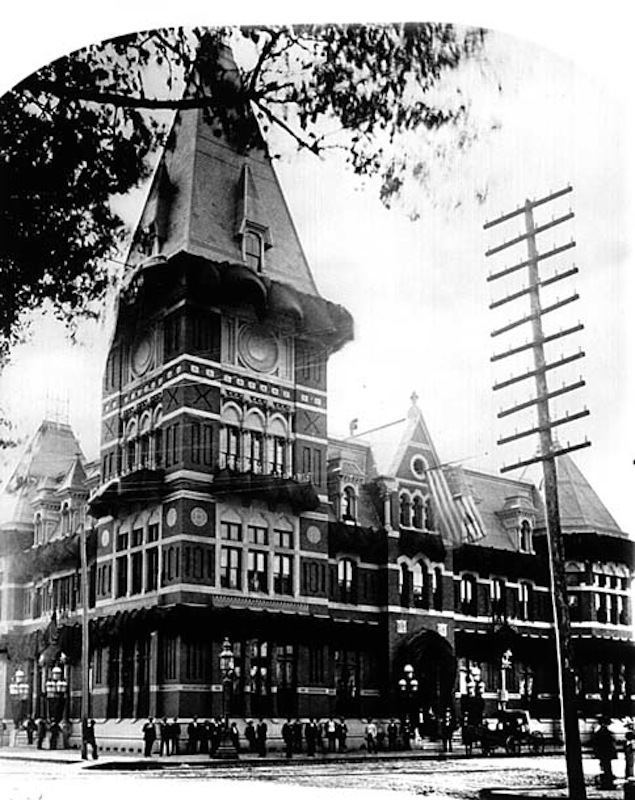
Baltimore and Potomac Railway Station
The Baltimore and Potomac Railway Station was built in 1873, over the old Tiber Creek and Washington City Canal waterway on the present-day site of the National Gallery of Art. Building contractors sank 35-foot piles to secure the foundation of the building on the waterlogged ground. Made of red brick pressed with black mortar, the building's three towers, elaborate roofs, ornamental iron, and red, blue, and green slates exemplified Victorian Gothic architecture. President James A. Garfield was assassinated at the station on July 2, 1881. The station was demolished in 1907 after nearby Union Station was built and the Baltimore and Potomac Railroad consolidated with other railroad companies. -
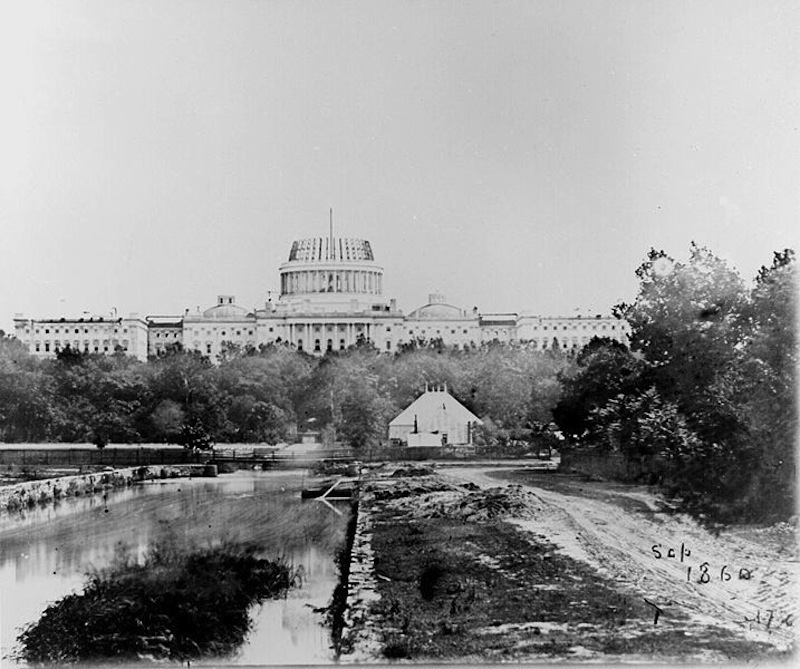
Washington City Canal
The Washington City Canal ran for approximately two miles of canal through Washington from the present day Navy Yard, across the Capitol grounds, and down present day Constitution Avenue. Completed in 1815, the Canal incorporated Tiber Creek near today's Washington Monument. In 1833, the Canal was connected to the C&O Canal through an extension known as the Washington Branch. Early city planners envisioned the Canal as part of a commercial transport system, linking the nation's capital with the interior of the country. Traffic on the canal declined by the 1850s while political and financial upheavals left the canal poorly maintained. The canal was filled in in the 1870s. -
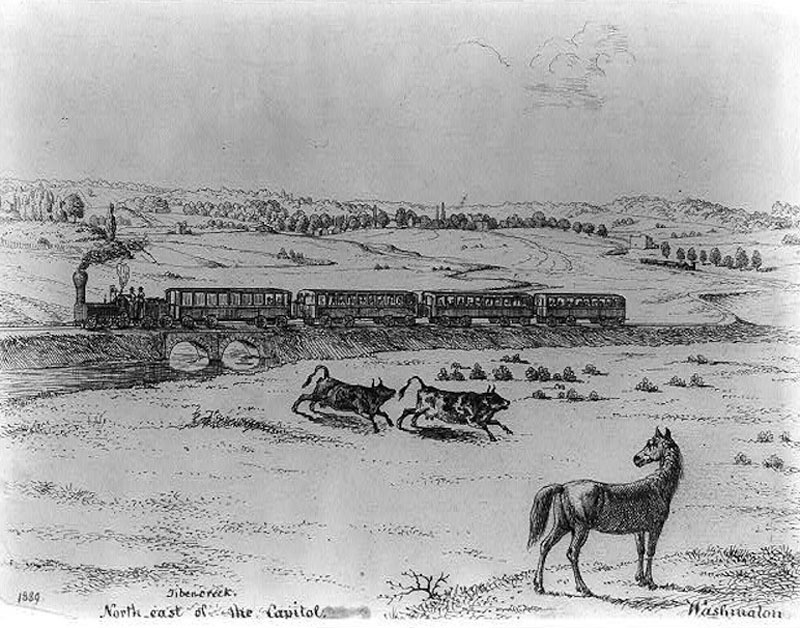
Tiber Creek
Tiber Creek had been known as Goose Creek before 1790 when the city of Washington, DC was laid out and designated the nation's capital. The creek extended from the base of Capitol Hill to its mouth near the present day Washington Monument. In 1815, it was incorporated into the Washington City Canal. Essentially an open sewer, the creek was enclosed in a tunnel and diverted underground in 1871. -
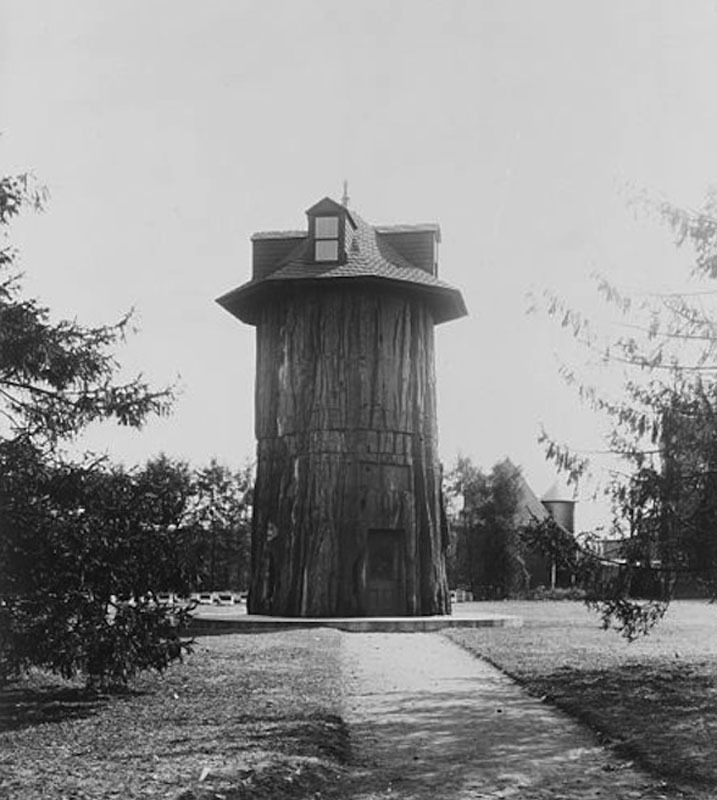
Redwood Tree House
The Redwood Tree House stood on the grounds of the US Department of Agriculture for 38 years, between 1894 and 1932. Harvested in California, it had been displayed at the 1893 World's Columbian Exposition in Chicago before coming to Washington. The giant Redwood stood 26 feet across and 36 feet high, and as a tree house, it contained a staircase and a viewing platform at the top. Visitors to the Mall could climb the staircase to enjoy the view. -
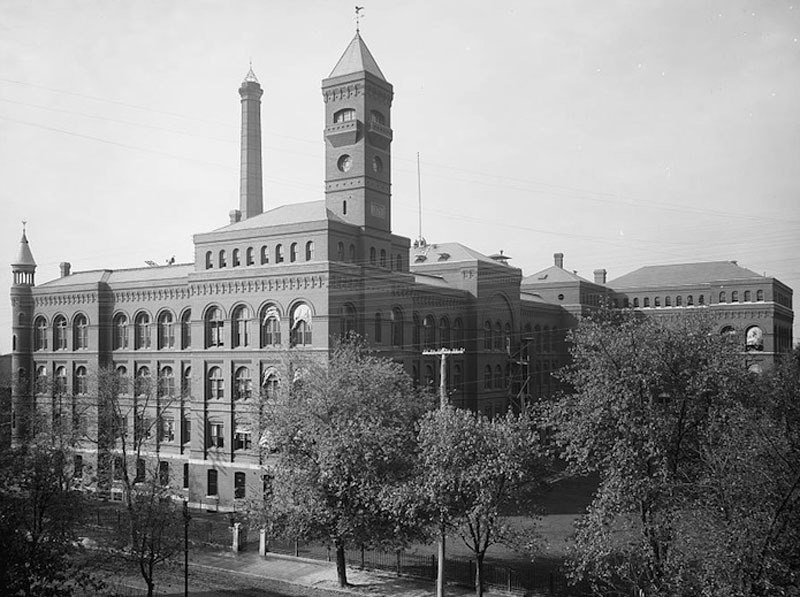
Main Building of the Bureau of Engraving and Printing
The Bureau of Printing and Engraving is one of two sites in the United States where currency is produced (the other is in Fort Worth, Texas). The Bureau has been printing money here since 1880. Prior to that, currency was printed by private companies under the direction of the Secretary of the Treasury's office. In 1894 the Bureau began printing postage stamps, which it continued until 2005. In 1938, an annex located across 14th Street was completed. The Bureau prints approximately 8 billion notes per year. -
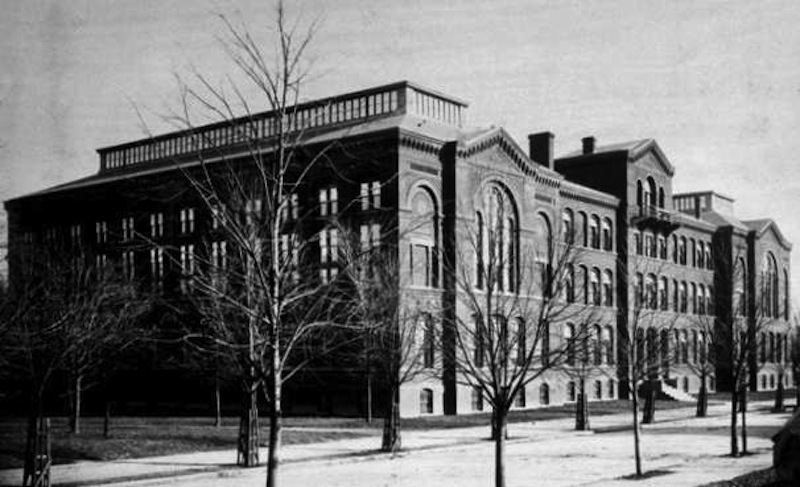
Army Medical Museum and Library
The Army Medical Museum and Library served as the home for the library and museum of the Surgeon General's office. The Museum was founded in 1862, but it did not have a permanent home until the building opened in 1887. For a time, it also housed Army medical records and the Army Medical School (1893-1910). The building received National Historic Landmark status in 1964, but in 1969, it was demolished to make way for the Hirshhorn Museum. The Army Medical Museum moved to Walter Reed Army Medical Center campus. -
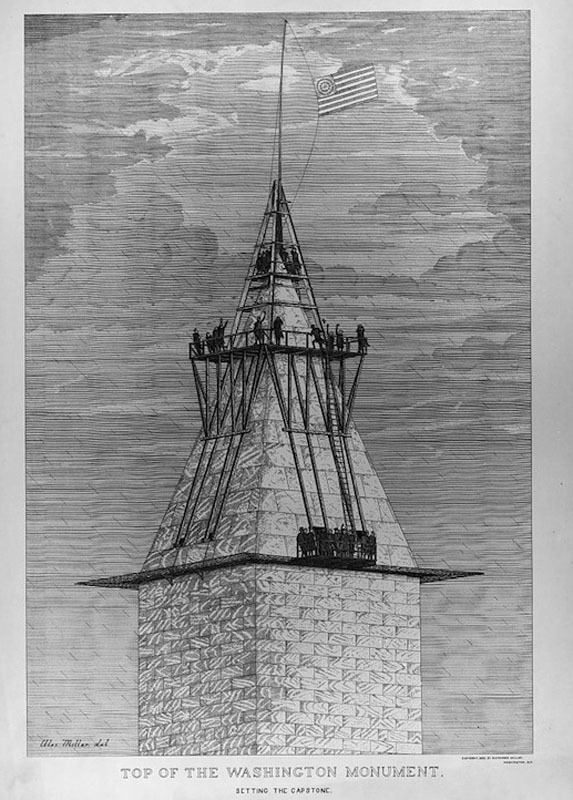
Washington Monument
The Washington Monument is the only actual monument on the National Mall because Washington was alive when it began to be planned. All others on the Mall are memorials, created after the person being remembered has died. Begun in 1848, construction of the monument was interrupted in 1854. Political and social events deferred construction until 1877, and the monument was finally completed in 1884. The line approximately a third of the way up the monument shows where construction was halted. A 2011 earthquake damaged the monument., closing it for repairs. The National Park Service reopened the monument in 2014, but issues with the elevator and electrical system forced another closure in August 2016. The landmark is expected to reopen in spring 2019. -
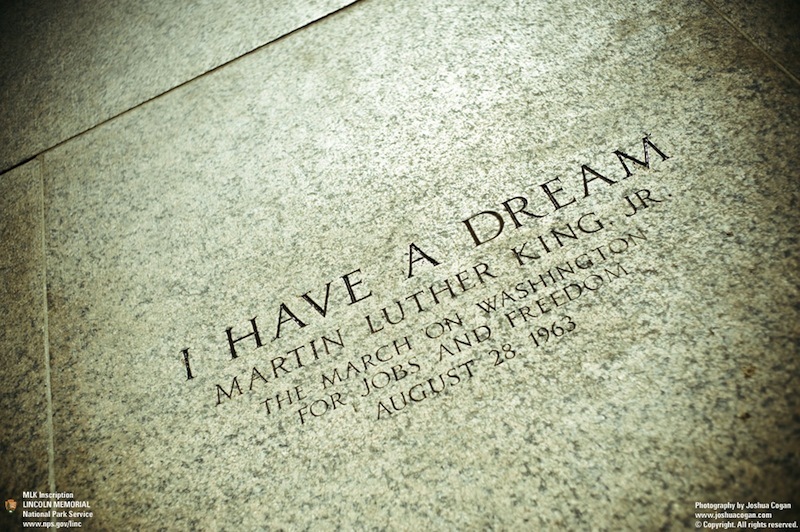
"I Have a Dream" Inscription
Eighteen steps from the top landing of the Lincoln Memorial, an inscription marks the spot where Dr. Martin Luther King Jr. stood to give his "I Have a Dream" speech in 1963. The marker was placed in 2003 to mark the 40th anniversary of that speech. Coretta Scott King, Dr. King's widow, attended and spoke at the dedication. -
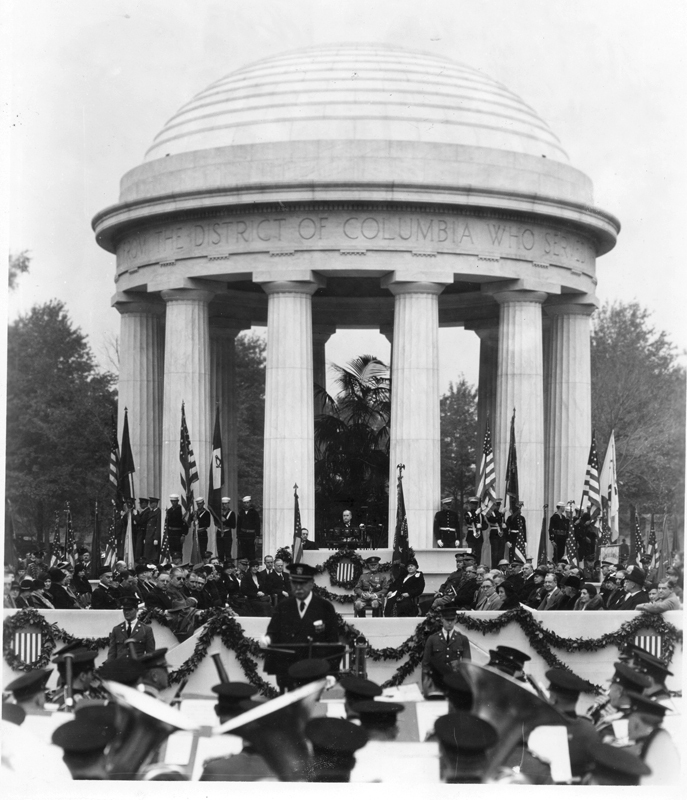
District of Columbia War Memorial
Dedicated by President Herbert Hoover in 1931, the District of Columbia War Memorial honors the residents who served and died in World War I. Inscribed on the floor of the domed monument are the names of the 499 DC residents who perished in that conflict. The names of 26,000 residents who served and survived the war are recorded and preserved within the cornerstone of the memorial. In 2010, Congress approved a measure to enlarge the memorial and re-designated it as the National Memorial to World War I. -
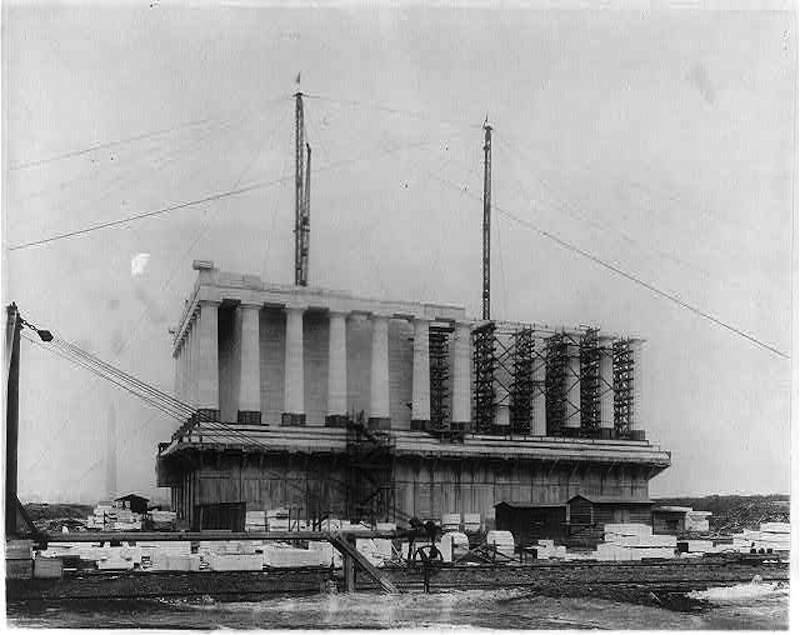
Lincoln Memorial
Constructed between 1914 and 1922, the Lincoln Memorial consists of a large, columned, classically inspired structure with a statue of Lincoln in the interior. Inscribed on the interior walls are Lincoln's Second Inaugural Address and his Gettysburg Address. The site has become a frequent stage for the civil rights demonstrations. African American opera singer Marian Anderson performed there after being barred from performing at then segregated Constitution Hall in 1939. In 1963 Martin Luther King, Jr. gave his "I Have a Dream" speech from the steps of the Lincoln Memorial. -
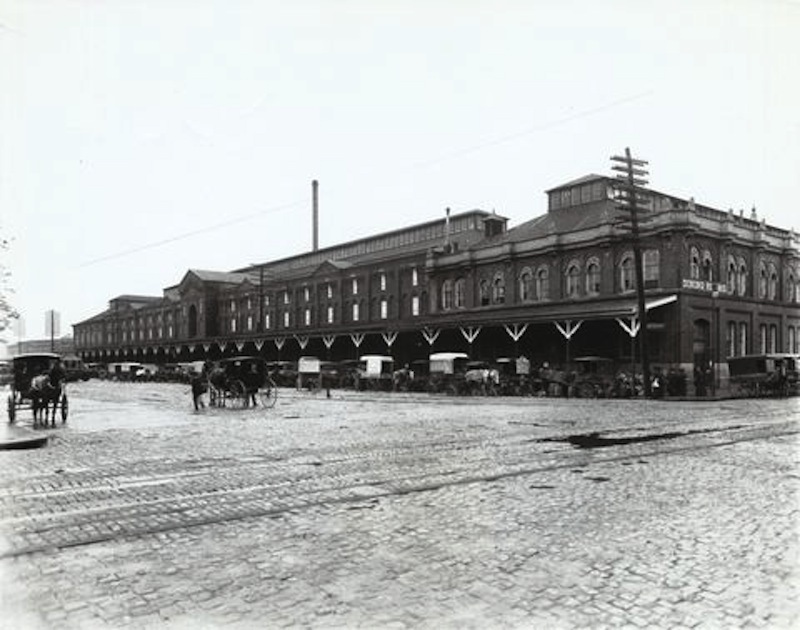
Center Market
Once the largest commercial market in Washington, Center Market opened in 1801. The original buildings were replaced in 1872 by a building designed by Adolph Cluss. The market was close to the Washington City Canal, railroads, and streetcar lines. It was demolished in 1931 and is the current site of the National Archives. Vendors sold all manner of goods inside: produce, meat and fish, and staples. Because of its access to transportation, Center Market was able to sell goods that had been grown or produced far away; fast, dependable railroads and streetcars made it possible to offer fresh foods before they spoiled. -
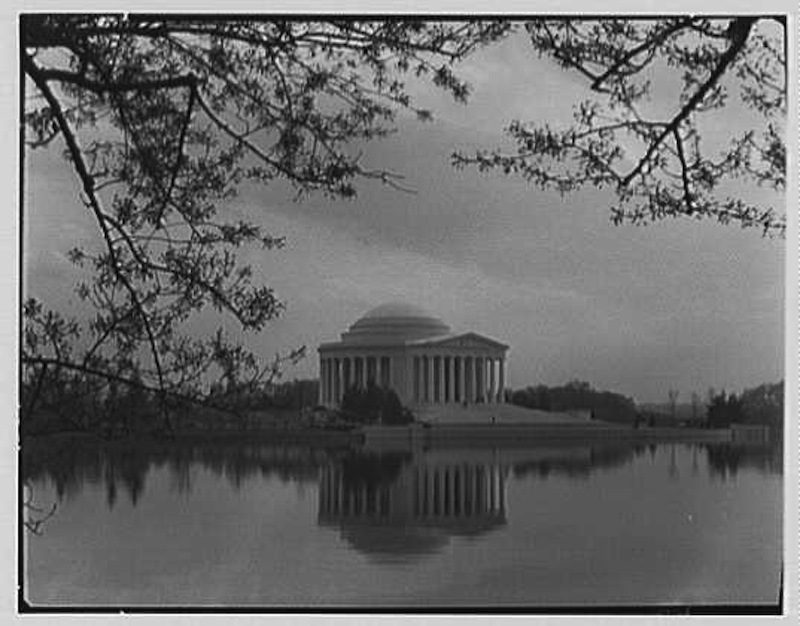
Jefferson Memorial
The Jefferson Memorial features a classically-inspired dome surrounded by columns. The centerpiece of the memorial is a 19 foot bronze statue of Jefferson. The statue was the second one of Jefferson placed in the Memorial, replacing a work made of plaster because material shortages during World War II made metal unavailable. Inscriptions on the interior walls of the memorial include passages from the Declaration of Independence, Notes on the State of Virginia, and A Summary View of the Rights of British America. -
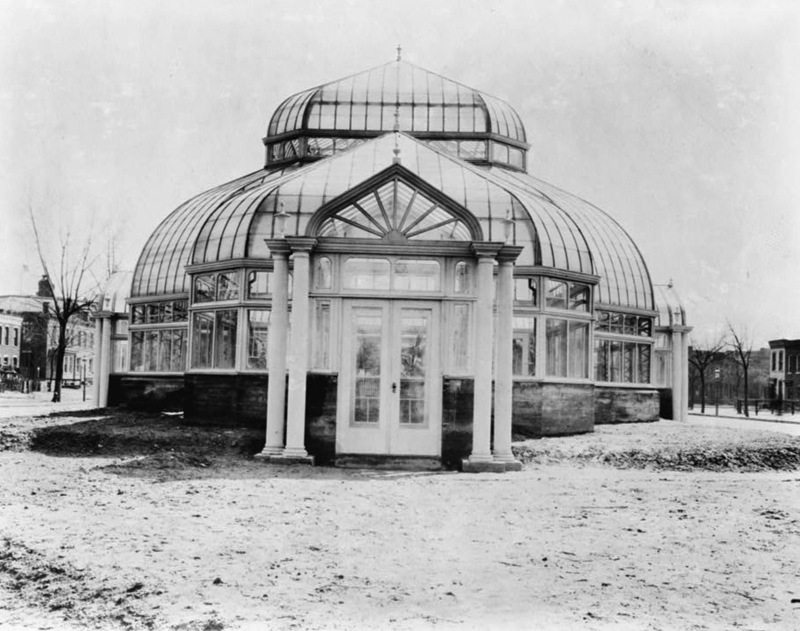
United States Botanic Garden
Now encompassing several buildings and several dozen acres, the US Botanic Garden began with an original plot of 5 acres set aside by President James Monroe. The original location of the garden buildings was on 3rd Street in line with Capitol dome, roughly where the Capitol Reflecting Pool is today. The Garden expanded several times, especially in the 1860s, to accommodate the first greenhouses built on the site. In 1933, the Garden was moved to its present site. The Garden holds over 100,000 plant specimens, many of them rare. -
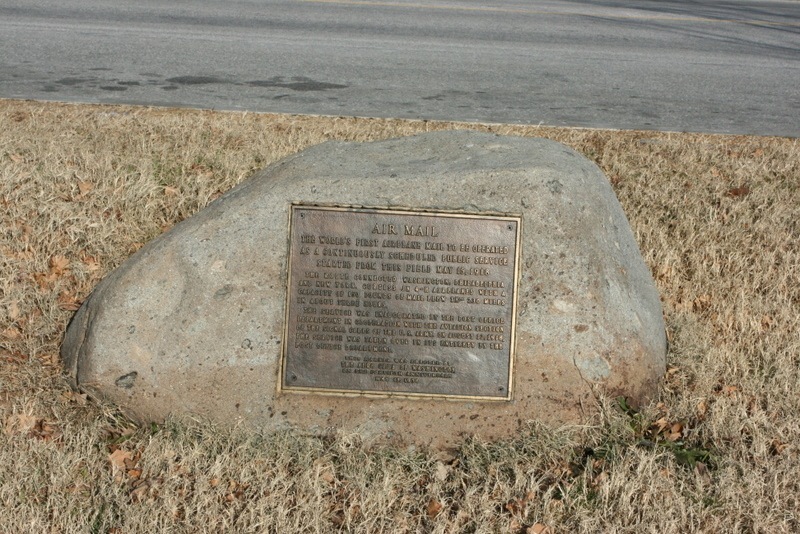
First Air Mail Flight Marker
Commemorating the first air mail flight connecting Washington, Philadelphia, and New York, the Aero Club of Washington placed this plaque in 1958 to mark the 40th anniversary of that flight. Following 52 experimental flights by the Post Office Department in 1911 and 1912, the first extended test of airmail service occurred in May 1918, when the US Army and the Post Office Department together set up an experimental line between New York and Washington, DC using army pilots. -
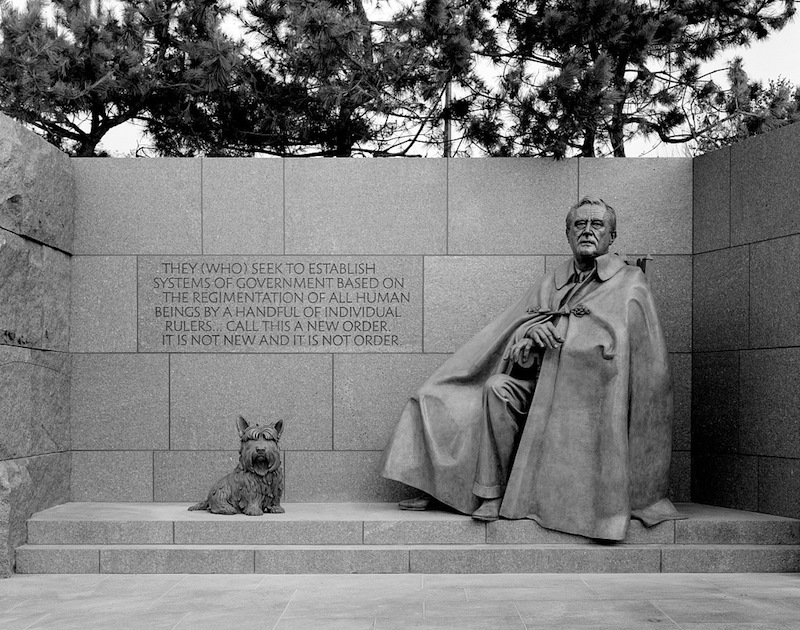
Franklin Delano Roosevelt Memorial
This is the second memorial to Roosevelt in the city; the first is near the National Archives and matches Roosevelt's own statement about what a memorial to him should look like: a block of stone about the size of a desk. However, in the 1970s, Congress approved a larger memorial, which was constructed in the 1990s once funding was secured. The FDR memorial generated controversy over depictions of Roosevelt in a wheelchair. Some activists argued that the wheelchair should be more prominent, while others pointed out the fact that Roosevelt's disability was largely hidden during his own lifetime. -
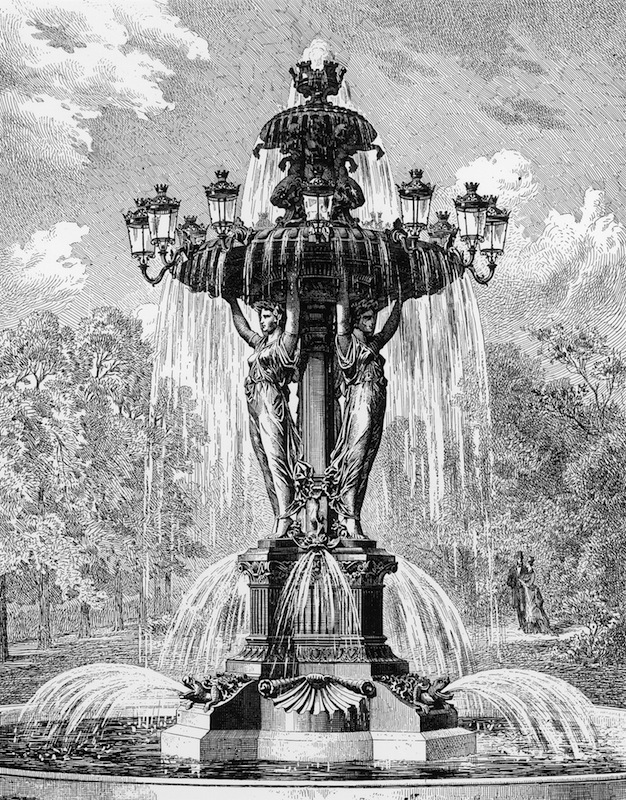
Bartholdi Fountain
Originally created for the 1876 Philadelphia Exposition, sculptor Frederic Bartholdi had hoped to sell the fountain after the exposition concluded. The only offer to purchase it was made by Congress, who bought the work for $6,000. The sculpture was moved from Philadelphia to Washington and placed at the site of the original botanical garden, which stood where the Capitol Reflecting Pool is today. In 1927 the sculpture was moved to its present home in the newly-established Bartholdi Park. -
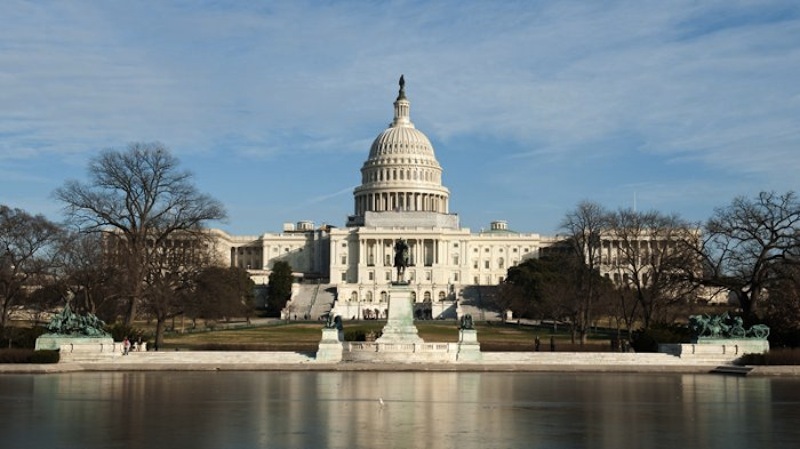
Capitol Reflecting Pool
Pierre L'Enfant's 1791 plan for the city of Washington first suggested a reflecting pool for the Capitol, but was never built. The 1902 McMillian Commission design for the National Mall revived the idea, yet it still took until 1971 for the Reflecting Pool to be completed. -
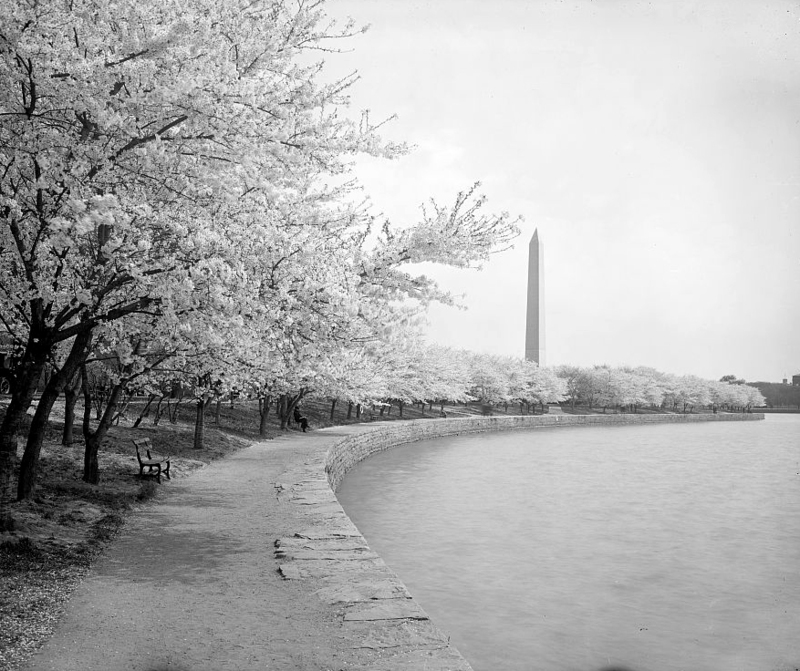
Original Cherry Trees
In 1912, the United States received a shipment of 3,020 cherry trees as a gift from the government of Japan. These were a replacement for a gift of trees in 1909 which had to be destroyed because they were infected with root disease. The trees were a token of friendship between the two nations. The first two trees were planted ceremonially by First Lady Taft and Viscountess Chinda, wife of the Japanese Ambassador. In 1935, the city held its first Cherry Blossom Festival. Several trees were vandalized in 1941 in retaliation for the Japanese bombing of Pearl Harbor. -
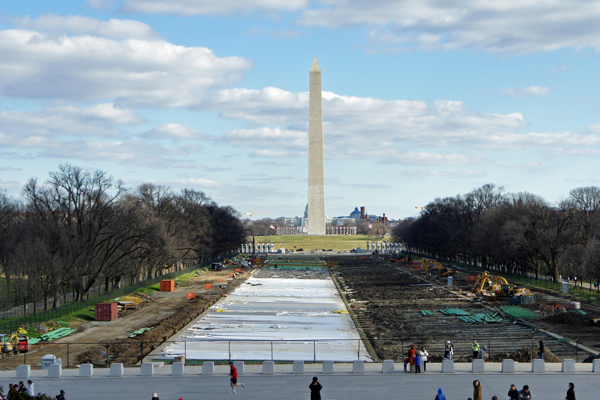
Lincoln Memorial Reflecting Pool
Stretching approximately a third of a mile from end to end, the reflecting pool lies between the Washington Monument and the Lincoln Memorial. Built in 1920 on marshland, the pool gradually sank, leaking into the surrounding land. In 2012, the pool was reconstructed. It now holds nearly seven million gallons of water and utilizes a sustainable circulation system pulling water from the nearby Tidal Basin. -
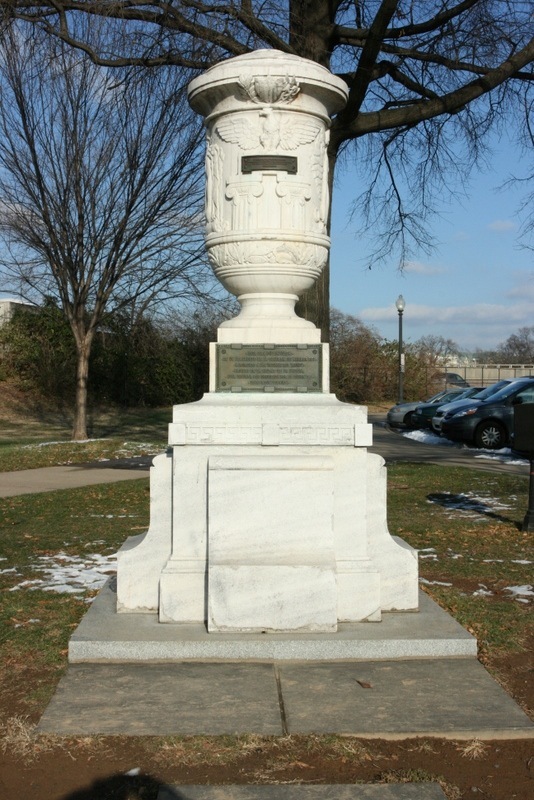
Cuban Friendship Urn
The Cuban Friendship Urn originally stood in Cuba to honor American deaths on the USS Maine and during the Spanish-American War. After the urn was damaged in a 1926 hurricane, it was sent to the United States and placed outside the Cuban Embassy. Some time in the 1960s, it disappeared following the deterioration of Cuban-American relations. In 1992, the National Park Service located the urn and placed it in its present position in East Potomac Park. -
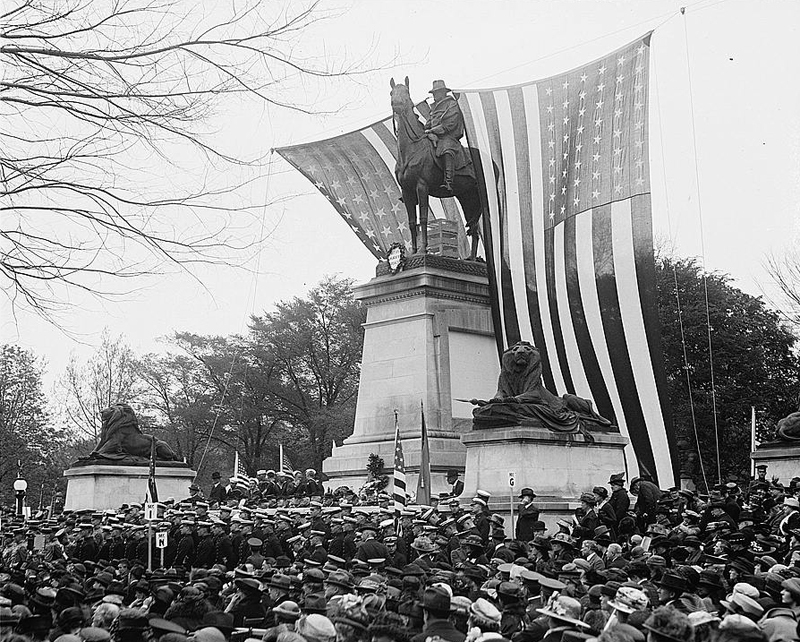
Ulysses S. Grant Memorial
The result of decades of planning and effort, the Ulysses S. Grant Memorial honors the Civil War general and US President. The massive memorial features three sections: a large statue of Grant on his horse, a separate sculpture entitled Artillery on Grant's left, and a third entitled Cavalry Charge on Grant's right. By design, the statue of Grant faces exactly west, toward the Lincoln Memorial, so that these two memorials flank the National Mall. -
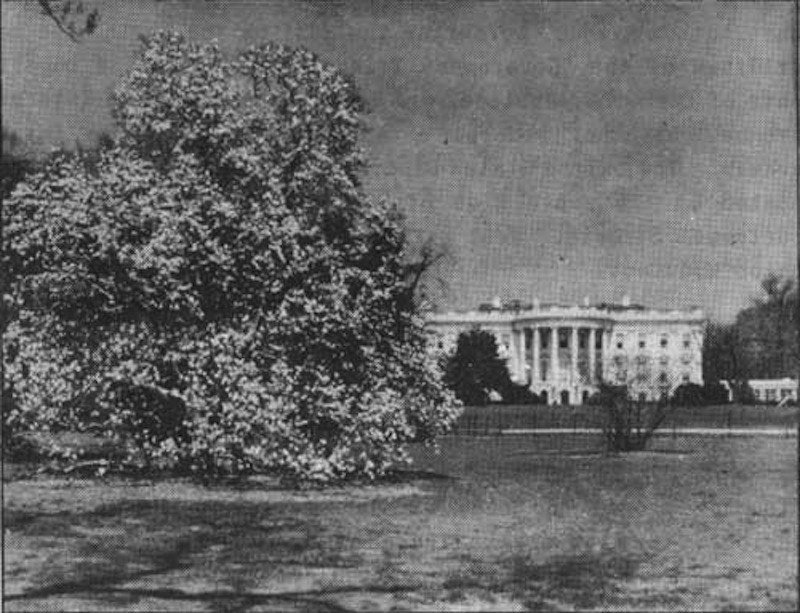
President's Park
President's Park is made up of the White House, the Ellipse, and Lafayette Square, and has existed for more than 200 years. Originally, President's Park was only the grounds immediately surrounding the White House, but over time it grew to include Lafayette Square and the Ellipse. The Ellipse has been the site of the National Christmas Tree since 1923. -
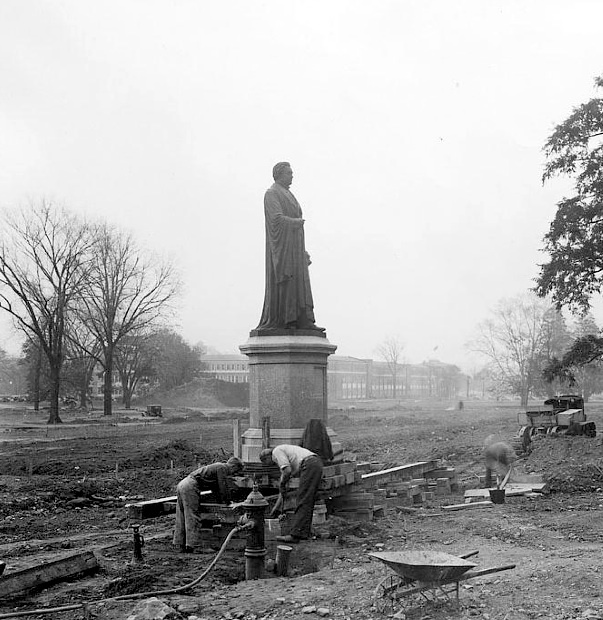
Joseph Henry Statue
One of America's premier scientists, and the first secretary of the Smithsonian Institution, Joseph Henry (1797-1878), is memorialized in this statue just outside the Smithsonian Castle. John Phillips Sousa wrote an original musical piece, Transit of Venus March, for the statue's dedication in 1883. In 1934 the statue was moved to its current location, but it faced toward the Smithsonian Castle. The statue was turned around in 1965 to look towards the Mall to symbolize that the museum was not a closed, elite site, but a place that welcomed people to share the nation's heritage. -
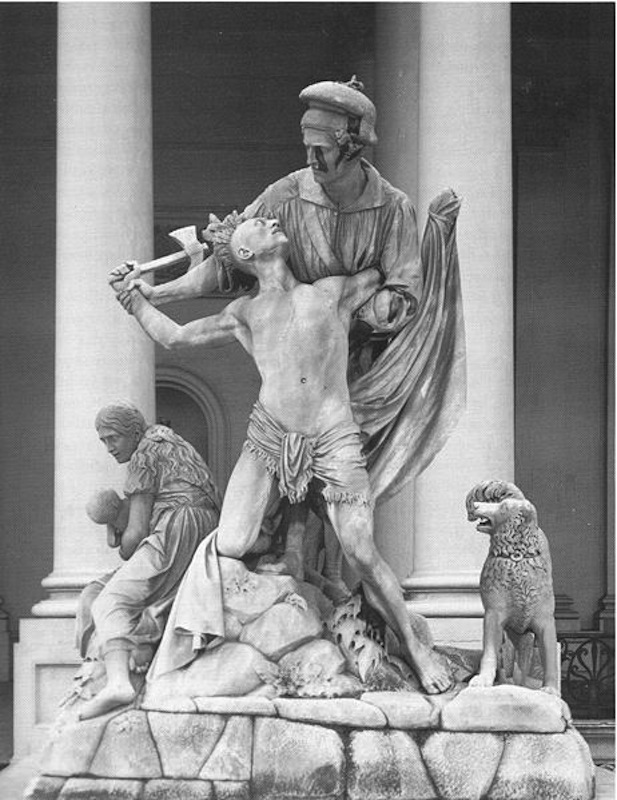
The Rescue
A large sculpture depicting a frontier father defending his family from an attacking American Indian, "The Rescue" has been a source of controversy since its installation in 1850. Sculptor Horatio Greenough stated that he was trying to show the dangers of "peopling our continent," but objections have ranged from the criticism of the attitude of the dog to various objections to its portrayal of American Indians. The US House of Representatives voted on, but did not pass, a provision to destroy the sculpture in 1939. After advocacy by American Indians and members of Congress, the statue was removed in 1958. -
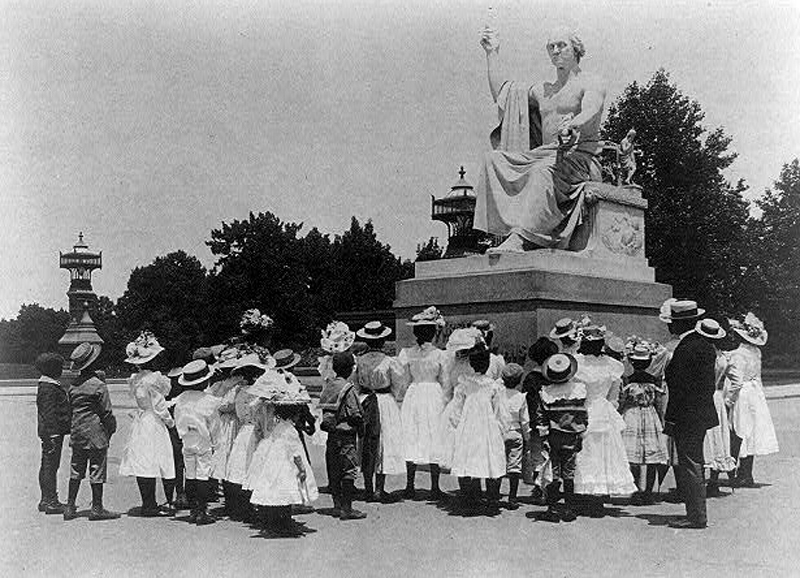
Enthroned Washington
Horatio Greenough's "Enthroned Washington" is one of the more controversial sculptures located on the Mall. Congress commissioned the statue in honor of Washington's 100th Birthday and was installed in the Capitol Rotunda in 1841. Many legislators objected to Washington's semi-nude state, believing it was not appropriate for an American president. Congress voted to move it outside of the Capitol to the east lawn in 1842. This photograph shows that even if it was controversial, it was still visited by residents and tourists. In 1908, the statue left the Capitol grounds to became part of the Smithsonian's collection and was moved to the "Castle." It remained there until 1962 when it crossed the Mall to the National Museum of American History, where it remains today. -
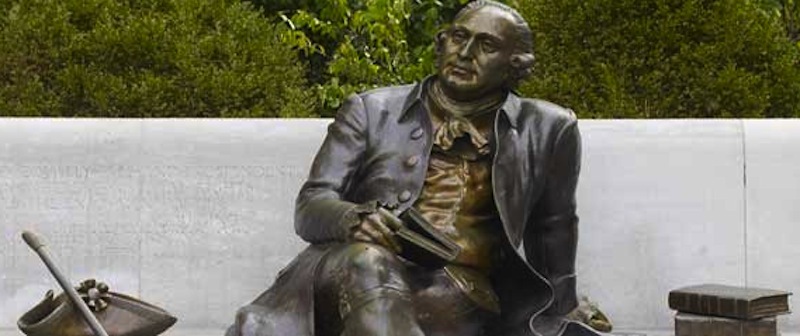
George Mason Memorial
George Mason (1725-1792), author of Virginia's Declaration of Rights, was a delegate to the Constitutional Convention. He refused to sign the Constitution because of the absence of a Bill of Rights and a disagreement over the issue of standing armies. The memorial was funded through an effort by the Board of Regents of Gunston Hall, Mason's home in Fairfax, Virginia, which now operates as a museum. The site of the memorial was home to a garden called the Pansy Garden in the 1920s. The memorial was approved in 1990, but groundbreaking did not take place until 2000. -
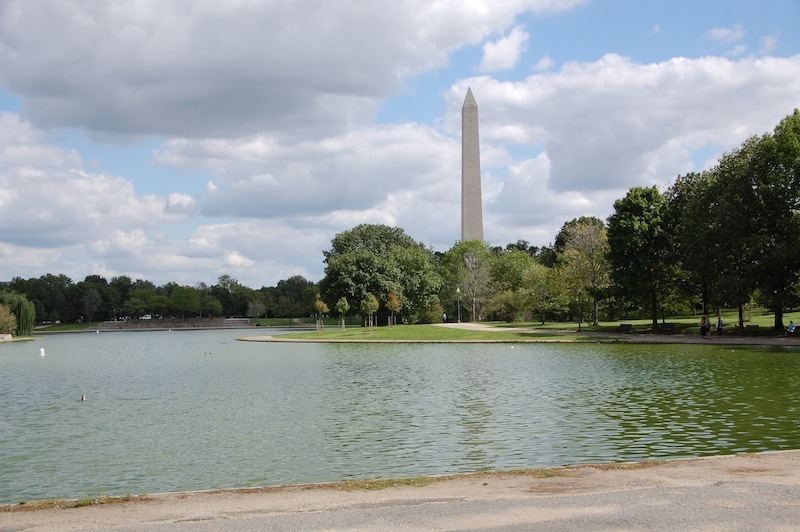
Constitution Gardens
The Constitution Gardens were dedicated in May 1976 as part of the United States Bicentennial and were declared a living legacy to the US Constitution by President Ronald Reagan in September 1986. During World War I, the US government built temporary offices on this site. Those buildings remained until the early 1970s when President Nixon ordered their removal and replacement by a park. On a small island in the middle of the lake lies a memorial to the 56 signers of the Declaration of Independence, dedicated in 1984. -
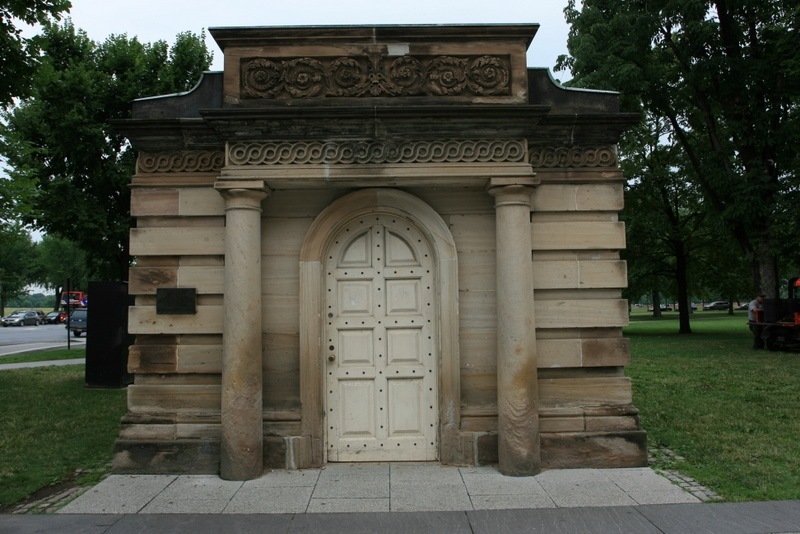
Bulfinch Gatehouses
Architect of the Capitol, Charles Bulfinch, designed the gatehouses and matching gateposts in the 1820s. They originally flanked a grand pedestrian entrance on the west side of the Capitol. They were removed in 1874 and placed in their present locations in 1880. Currently, one gatehouse and three gateposts are in place at the corner of 15th and Constitution Avenue; the other gatehouse is at the corner of 17th and Constitution, and the remaining gateposts are located at the entrance to the National Arboretum in north-eastern Washington. -
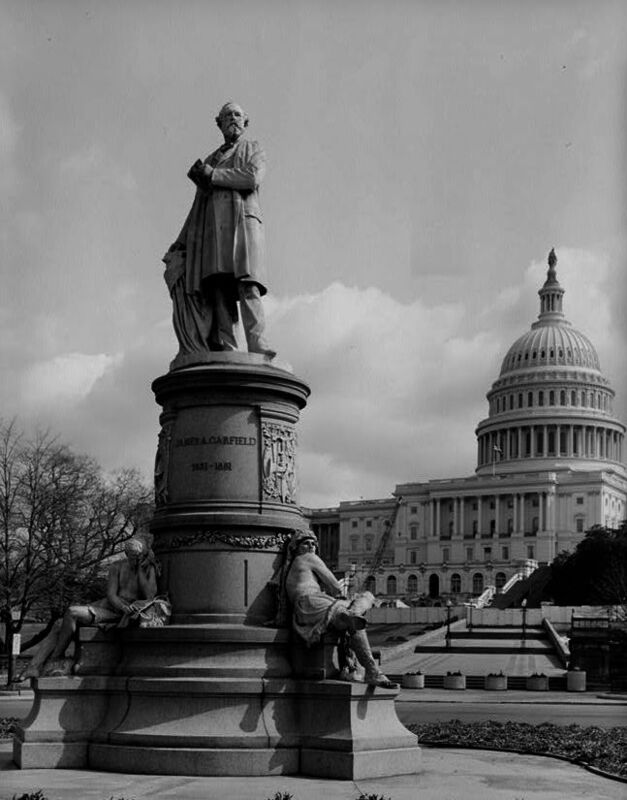
James Garfield Monument
This monument to President James Garfield (1831-1881) depicts him giving a speech, gazing outward with papers in one hand. Garfield was elected in 1880, but he served only four months of his term before his assassination in a railroad station on the Mall in 1881. The Society of the Army of the Cumberland, of which Garfield had been a member, commissioned the statue in 1884. It was dedicated in May 1887. -
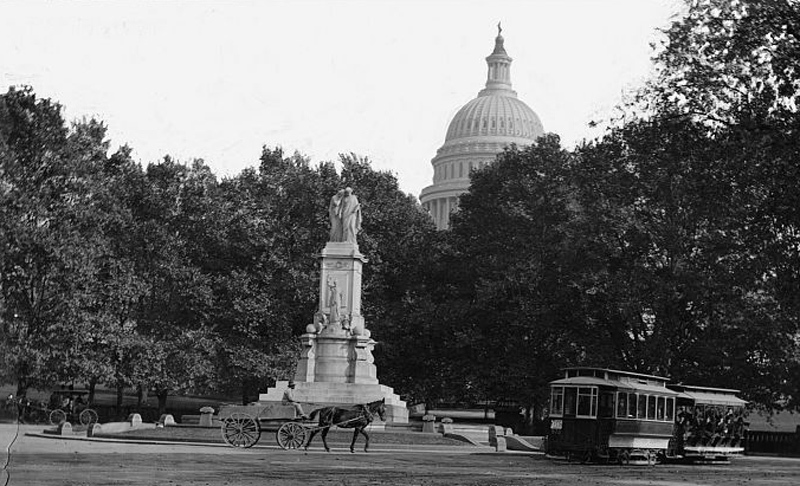
Peace Monument
The Peace Monument, also known as the Naval Monument and the Civil War Sailors Monument, honors naval deaths at sea during the American Civil War. Admiral David Dixon Porter conceived the idea of the monument and sketched an initial design in the mid-1860s, originally intending for it to be placed in Annapolis, Maryland at the US Naval Academy. Porter commissioned Franklin Simmons to create the monument and worked with him on the final design. The monument was not formally dedicated after its completion in 1878. -
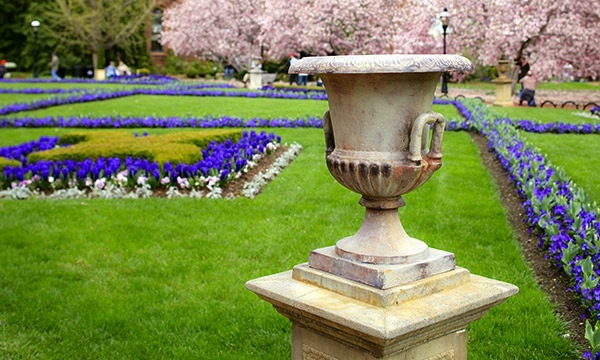
Andrew Jackson Downing Urn
This urn memorializing horticulturist Andrew Jackson Downing (1815-1852) was installed on the Mall in 1856 near the present location of the National Museum of American History. The urn was moved several times before it arrived in the Enid A. Haupt Garden in the Smithsonian in 1999. Downing's friend and architectural partner Calvert Vaux designed the urn and inscribed it with a quote by Downing which contains the line, "Plant spacious parks in your cities, and loose their gates as wide as the morning, to the whole people." -
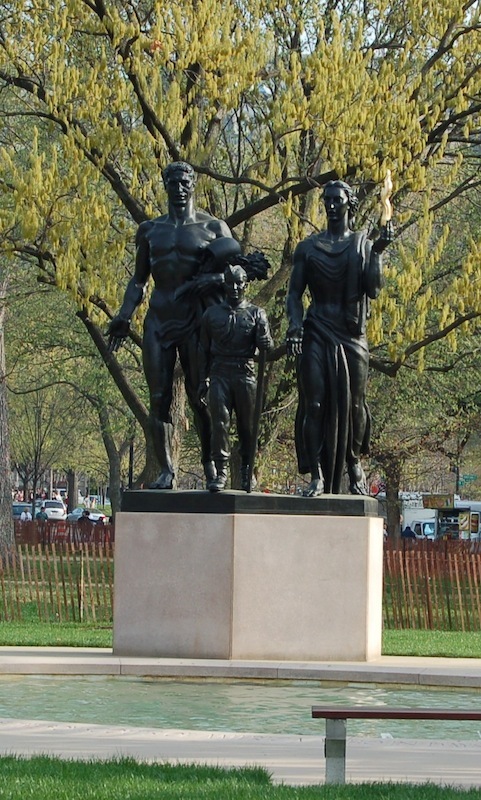
Boy Scout Memorial
The Boy Scout Memorial is a bronze and granite sculpture honoring the Boy Scouts of America. It is located on the White House Ellipse on the site of the 1937 Boy Scout Jamboree. Built without any public funds, Boy Scouts raised all the money for the memorial themselves by collecting dimes. Then Senate Majority Leader Lyndon Johnson authored legislation permitting the memorial on the Mall. The sculpture includes a Boy Scout flanked by idealized figures of adults. Scrolls at the base of the memorial list the names of each Boy Scout who participated in the dime-collecting effort. -
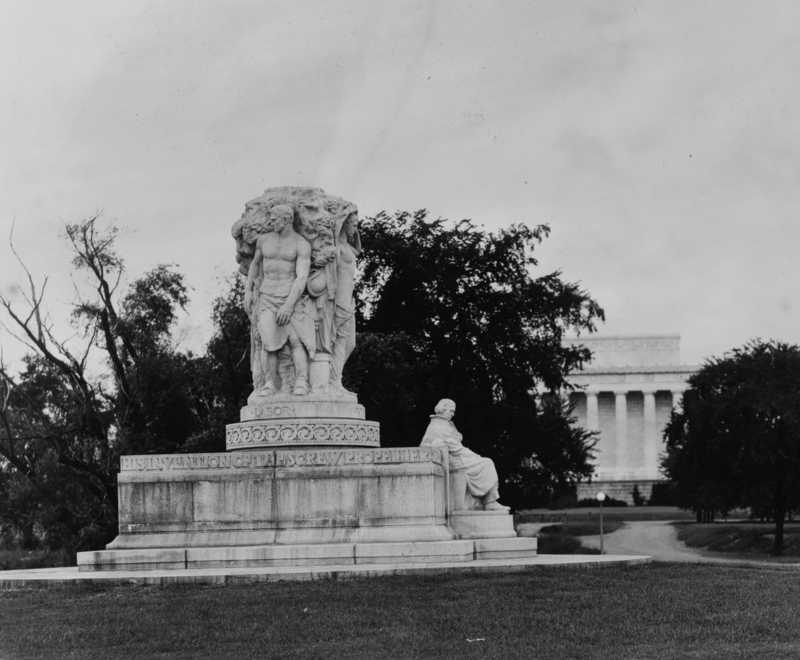
John Ericsson National Memorial
John Ericsson (1803-1889), a Swedish-born engineer, made inventions and improvements critical to the Union's naval success in the United States Civil War. In particular, his design of the USS Monitor, the first Union ironclad ship, represented an important advance in naval armor and became a critical factor in the Civil War. Approved by Congress in 1916 and supported by funding from Americans of Scandinavian descent, the memorial was dedicated in the spring of 1926 by President Calvin Coolidge and Crown Prince Gustaf Adolf of Sweden. The sculpture includes a likeness of Ericsson and symbolic representations of adventure, labor, and vision. -
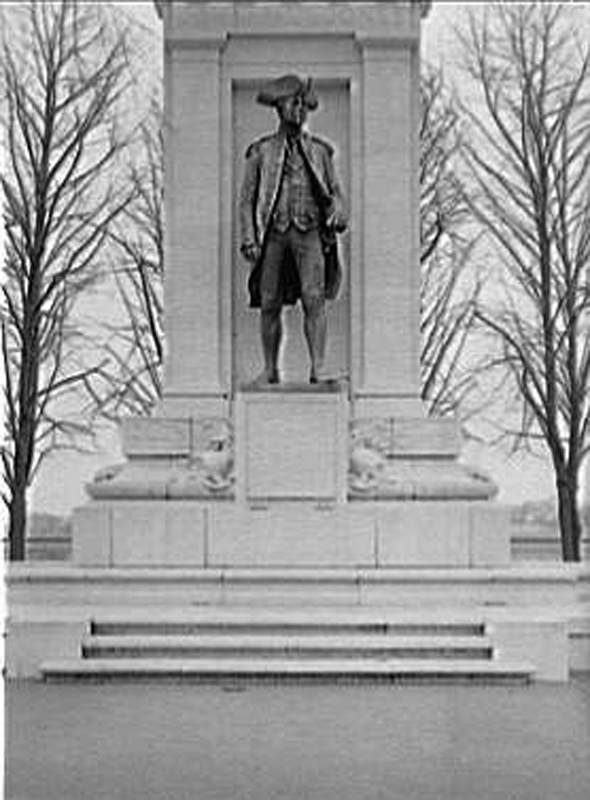
John Paul Jones Memorial
Honoring Revolutionary War hero John Paul Jones (1747-1742), this memorial lies just off the Mall in West Potomac Park. As Captain of the ship Bonhomme Richard during the Battle of Flamborough Head during the Revolutionary War, Jones famously uttered the phrase, "I have not yet begun to fight!" Dedicated in 1912 by President William Howard Taft, the memorial contains a bronze statue of Jones, as well as a carving of Jones raising an American flag of the Bonhomme Richard. -
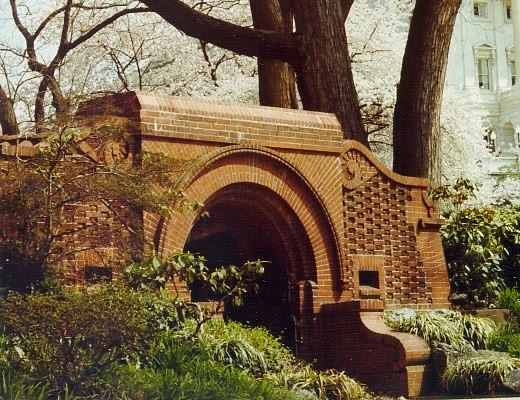
Summerhouse
Frederick Law Olmsted designed the Summerhouse so that visitors to the Capitol could sit and rest as they toured the Capitol grounds. It contains intricate brickwork, several windows, wrought iron gates, and seating space for up to 22 people. The Summerhouse is hexagonal in shape. A fountain in the center once offered drinking water, but now is simply decorative. Olmsted originally intended to build a second summerhouse, but Congress objected. -
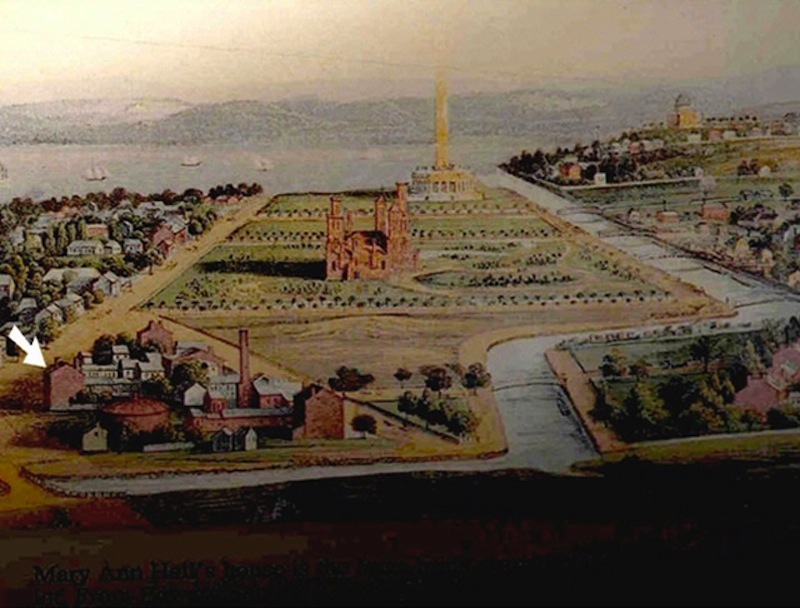
Mary Ann Hall's Brothel
Mary Ann Hall’s brothel was the largest and most luxurious of more than 100 known bordellos in Washington during the 1800s. Hall’s three-story establishment stood where the National Museum of the American Indian (NMAI) is today. According to Union Army records, she employed 18 women. Archaeological excavations indicate that Hall imported French wine and champagne for her clients. She ran her establishment until 1883, dying in 1886 with a net worth of $87,000. Although Washington police frequently harassed and arrested prostitutes, the profession remained legal in DC until 1914. -
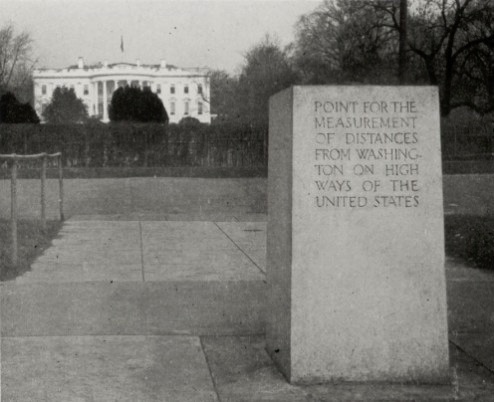
Zero Milestone
The current zero milestone dates from the spring of 1923, replacing a temporary marker placed on this site in President's Park in 1919. Originally intended as a central point from which to measure highway distances throughout the United States, the zero milestone marked the beginning of the age of the automobile and the national system of paved roadways. Today, roads and other distances in Washington, DC, as well as in surrounding suburbs, are measured from the zero milestone. -
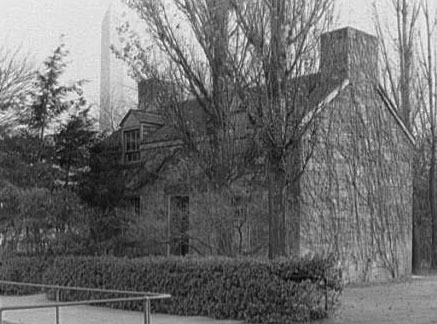
Lockkeeper's House
Built between 1832 and 1833, the Lockkeeper's House was the home of the toll keeper who collected tolls from those traveling along the Chesapeake & Ohio Canal Extension. Some accounts report that a resident lockkeeper and his family of 13 children shared the small quarters. The Extension, connecting the C&O Canal to the Washington City Canal, was filled in during the 1870s, as rail shipping replaced canal shipping. The National Park Service acquired the house in the early 1900s, after squatters lived in it for decades, to use for offices and storage. In December 2016, the Park Service began a renovation project that will move the structure away from a busy intersection, and expand the building to serve as a visitor’s center and exhibition space. -
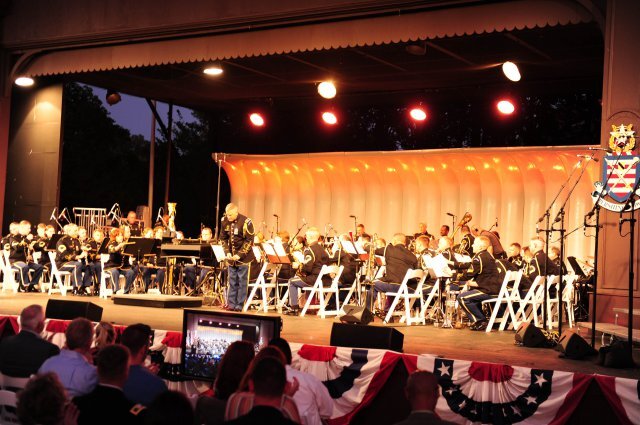
The National Sylvan Theater
The National Sylvan Theater, located on the grounds of the Washington Monument, was the first federally funded theater in the United States. The modest stage hosts 10,000 spectators who come to the Mall to enjoy more than 100 events hosted here each year. These cultural gatherings include plays, classical music, and ceremonies. One of the most popular events occurs each August, when the Presidential Salute Battery of the 3rd US Infantry performs Tchaikovsky's "1812 Overture." -
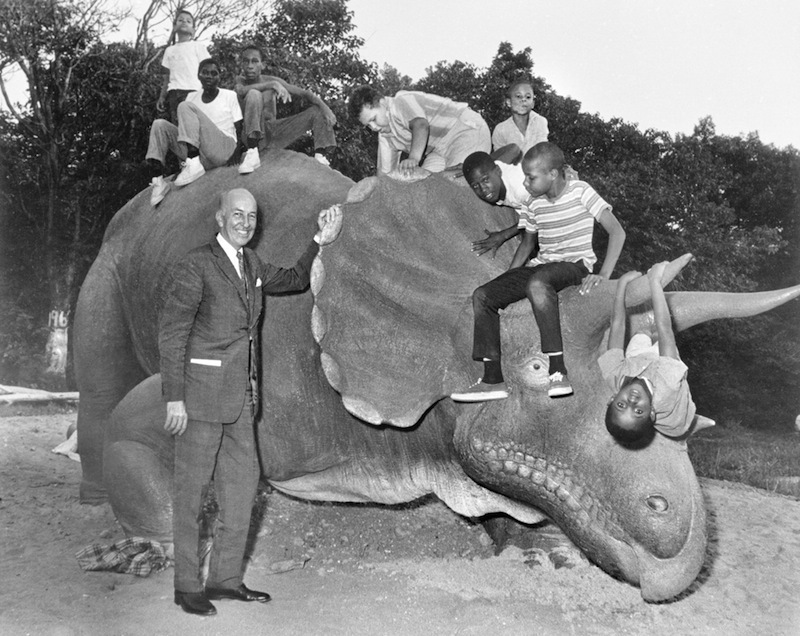
Uncle Beazley
Generations of children climbed on Uncle Beazley, a fiberglass triceratops, who lived on the National Mall in front of the Museum of Natural History. For a slow-moving dinosaur, Uncle Beazley is widely traveled. Before coming to the Mall in the 1970s, his home was the Smithsonian's Anacostia Neighborhood Museum. In 1994, Uncle Beazley moved from the Mall to his current residence, the National Zoo. Beazley was constructed in 1967 for "The Enormous Egg" TV special that aired the next year. The Sinclair Company subsequently donated Beazley to the Smithsonian.