Mall History Test
Item set
Items
-
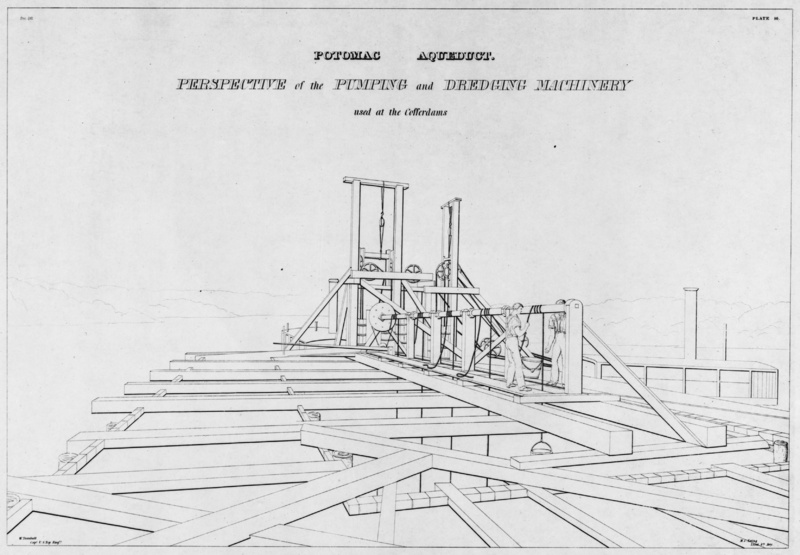
Potomac Flats Reclaimed
In 1870 the Army Corps of Engineers, headed by Major Nathaniel Michler, began dredging the Potomac to remove silt and improve ship traffic. Dredged material was dumped into the tidal flats along the Washington waterfront. In 1875 the project was expanded to include reclaiming the flats. The initial experiment lasted until 1882, but the reclamation continued until August 30, 1911, by which time contractors had moved over 12 million cubic yards of material from the river to the flats, creating Potomac Park. -

Polo Field
The polo field on the National Mall has been a popular site for polo matches since the early 1900s. During World War II members of the military, including General George S. Patton, used the field for intramural games. Today, the polo field and surrounding softball fields are used by local enthusiasts and maintained by the National Park Service. -
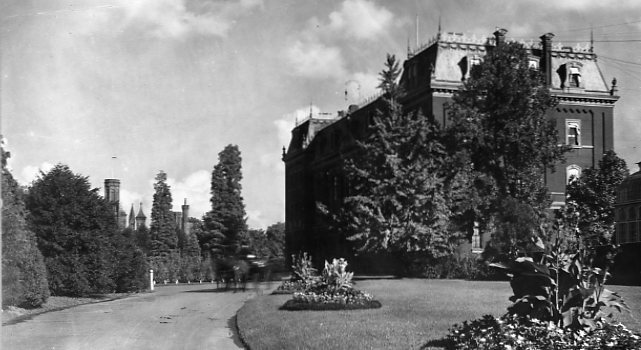
Grounds of the Department of Agriculture
Even before President Abraham Lincoln officially created a Department of Agriculture in 1862, the Bureau of Agriculture, part of the Patent Office, was growing crops on the National Mall, conducting research, and distributing seeds across the country. In 1865, the Department of Agriculture expanded its presence on the Mall, creating landscaped gardens and growing experimental crops. By the 1930s, formal gardens surrounded its main building, as shown in this photograph. -

Tripoli Monument
The Tripoli Monument was commissioned by members of the US Navy's Mediterranean fleet in memory of 6 officers who died during the Barbary Wars of the early 1800s. Built in Italy in 1806, the monument came to the US on board the USS Constitution and was placed in the Washington Navy Yard. The monument was damanged during the burning of the Navy Yard in 1814. In 1831, it was restored and moved to the center of the Capitol reflecting pool in 1831, where is remained until 1860 when it was relocated to Annapolis, Maryland. -
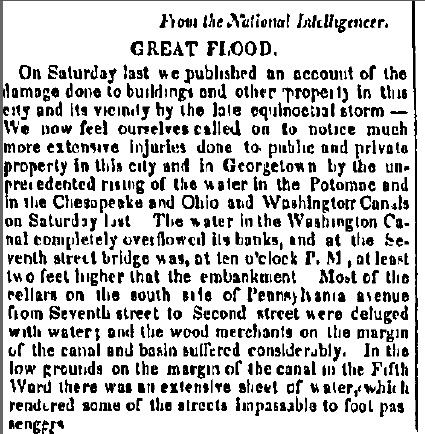
Washington Canal Floods
On Saturday, September 16, 1843, a violent storm caused the rivers feeding into the Potomac to rise dramatically. The resulting water levels were higher than anyone could remember. When the Potomac River and Washington Canal overflowed their banks, water flooded into the cellars and storage rooms in properties along the waterfronts in the Federal City and Georgetown. It covered one of the bridges across the canal, which connected the Mall with the city, and damaged the supply of some of the local businesses. Flooding like this continued until the 1870s, when engineers brought it somewhat under control. -

Potomac Flats
The mud flats and marshland to the west of the Washington Monument (on the left side of this image) were called the Potomac Flats for most of the 1800s. In 1870, the Army Corps of Engineers began dredging the Potomac to remove silt and to deepen the ship channel to improve access to Washington by water. Dredged material was dumped onto the tidal flats along the Washington waterfront. The work continued until August 30, 1911, when contractors had moved over 12 million cubic yards of material from the river to create East and West Potomac Parks and the Tidal Basin. -
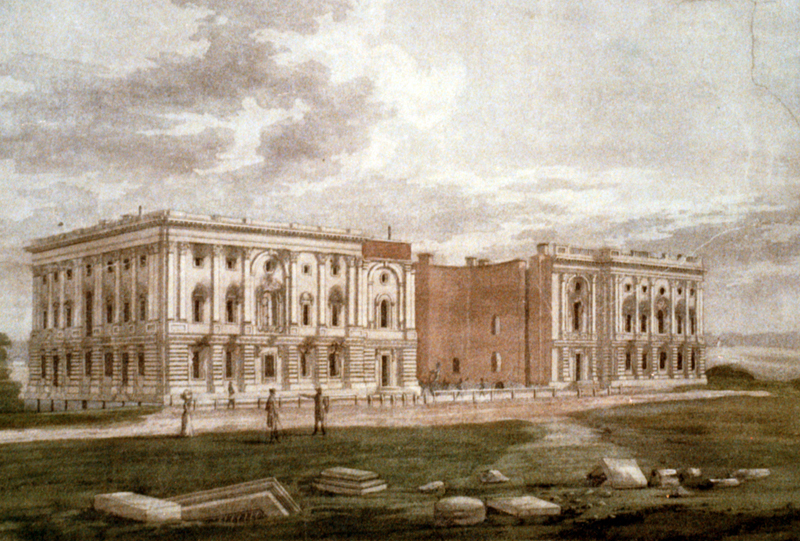
US Capitol in 1814
British troops invaded Washington during the War of 1812. On August 24, 1814, British soldiers marched into the city and set fire to federal buildings, including the U.S. Capitol. At the time, the Capitol only consisted of two wings; the connecting Rotunda was not yet built. Fireproof building materials protected the exterior structure, but the interior was severely damaged. The wing for the House of Representatives was worst hit. The fire there was so intense that glass lamps melted. This engraving was made in the fall of 1814, when Congress debated whether to rebuild the Capitol or move back to Philadelphia. -
The White Lot
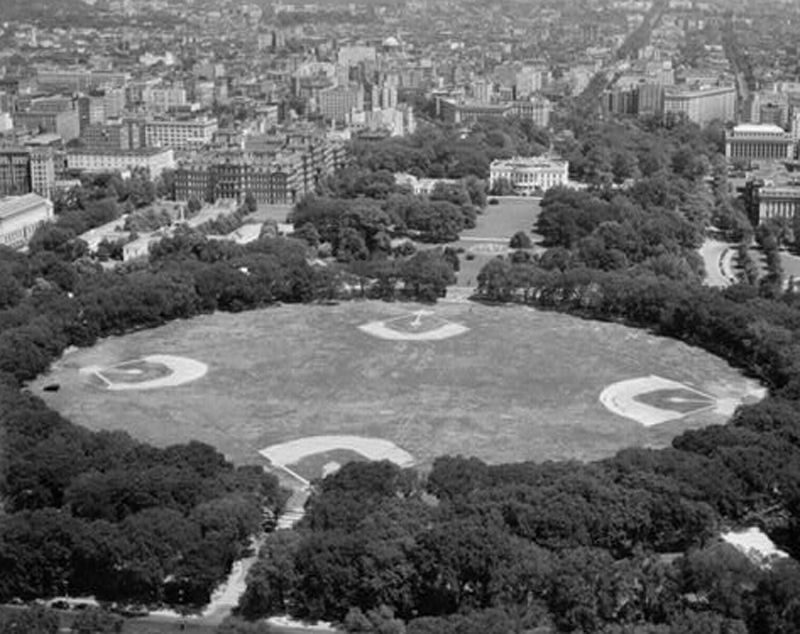
In 1860, the first baseball clubs in Washington, DC, the Nationals and the Potomacs, played a game on the field south of the White House, then known as the White Lot. The field was originally open to baseball enthusiasts of all races, but became segregated in 1874. In 1904, President Theodore Roosevelt formalized the park, laying out four diamonds for public play. The baseball fields remained open until the 1990s. -

Jefferson Pier
This historical survey stone was established in 1793 to mark the prime meridian of the United States. It was also intended to mark the intersection of direct lines from the middle of the Capitol and the White House, but it is in fact a little off center. The first marker, a wooden stake, was replaced by a stone in 1804. In the 1870s, the Army Corps of Engineers accidentally removed that marker, and the present stone was placed in 1889. The prime meridian was relocated in 1850. -

Washington Canal Groundbreaking Ceremony
In May of 1810 President James Madison broke ground for the Washington Canal amidst city officials and citizens crowded at New Jersey Avenue SE. The Canal was part of the original city plan from 1791, but work stalled until 1809 when Congress chartered a new company to complete the canal. President Madison, the president of the company, and the city mayor each dug a small hole with a shovel at the groundbreaking. As a horse and plow began digging the canal in earnest, onlookers celebrated with enthusiasm and enjoyed free refreshments under a large tent. -

Fish Commission Building
The site of the National Air and Space Museum was once home to the headquarters of the United States Fish and Fisheries Commission, also known as the US Fish Commission. President Ulysses Grant signed the US Fish Commission into existence in 1871 to address issues of declining commercial fish populations in America. Stephen F. Baird, first curator of the Smithsonian Institution, also served as the first Commissioner of Fisheries. The Commission was housed in the old Armory Building, which was also used as storage by the Smithsonian until the building was demolished in the 1960s. -

The Ellipse
The Ellipse, officially known as President's Park South, is a 52 acre park located directly south of the White House. It was part of L'Enfant's original plan of the city. The Ellipse was originally called "The White Lot" due to the whitewashed fence which enclosed the area. It was the home park for some of Washington's first amateur baseball teams. The park was used by the military during the Civil War and World War II. The area is open to the public and contains many monuments and memorials. Since 1954, it has been the site of the annual Christmas Pageant of Peace. -

Dwight D. Eisenhower Memorial
The Eisenhower Memorial is a proposed monument to the 34th President of the United States, Dwight D. Eisenhower. The proposed monument site is located on the south side of Independence Avenue, directly across from the National Air and Space Museum. Like most memorials on the National Mall, architect Frank Gehry's proposed design selected in 2010 has generated controversy on Capitol Hill, within Eisenhower's family, and among public art organizations. In October 2014, the monument gained preliminary approval from the National Capital Planning Commission after design revisions. -

Babcock Lakes
The Babcock Lakes, located west of the Washington Monument, served as spawning pools for the US Fish Commission. Mandated to remedy decreases in the availability of commercial fish in America, the Commission used Babcock Lakes to breed Eurasian Carp, introduced in the US because they were hardy, harmless, vegetable feeders, and were already adapted to artificial propagation. By 1896, the Fish Commission had distributed 2.4 million carp to restock fish supplies in North and South America. The lakes were subsequently covered by land dredged from the Potomac River during the westward expansion of the National Mall. -

South B Street
The street now known as Independence Avenue was originally called South B Street, following the district's street-naming conventions. In 1934, Congress voted to rename the street Independence Avenue, three years after it had renamed North B Street as Constitution Avenue. -

North B Street
The street which is now known as Constitution Avenue was originally called North B Street, following the District's street naming system. For much of the 1800s, there was no road, but instead was the site of the City Canal. When the canal was covered over and paved, the street was named B. The street was renamed Constitution Avenue in 1931, following improvements to the road. -

Butterfly Habitat Garden
Built in 1995, the Smithsonian Butterfly Garden supports a variety of plant species which are important to the life cycle of butterflies in the Eastern United States. The 11,000 square foot area was originally built with funds provided by the Smithsonian Women's Committee and was later expanded through a gift from the Garden Club of America. The garden is comprised of several habitats, including an urban garden which showcases butterfly-friendly plants commonly found in American cities. -

Braddock's Rock
Originally, Braddock's Rock was a sizable outcropping of Piedmont stone jutting into the Potomac. Called the "Key of all Keys," this rock became a starting point for surveyors drawing property lines for early settlers. In 1755, General Edward Braddock landed at the rocky promontory and began his march to Fort Duquesne with the young George Washington among his soldiers. Later used as a quarry for the stone used in the White House, Capitol, and C&O Canal, it was blasted away in 1832. Today, the remaining portions are 16 feet underground, enclosed by a well located among the approaches to the Theodore Roosevelt Bridge. -
Commissioners for the District of Columbia
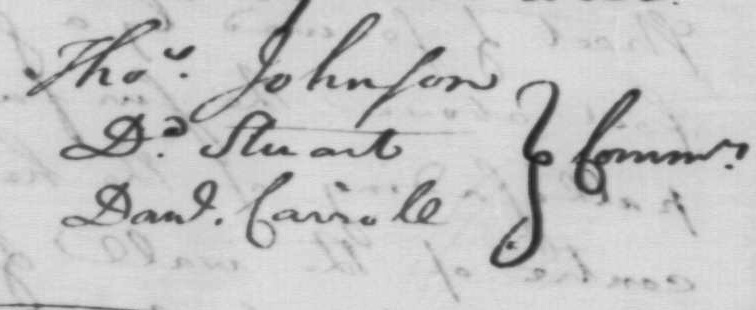
In 1791, President Washington appointed Thomas Johnson, Daniel Carroll, and David Stuart commissioners to supervise the planning, design, and construction of the new capital city and surrounding federal district. They oversaw the survey and land acquisition of the district, and were responsible for approving a modified version of Pierre Charles L'Enfant's city plan. -

Armory Square Hospital
Built in 1862 as a model hospital to treat wounded Union soldiers, the Armory Square Hospital had twelve pavilions, overflow tents, and 1,000 hospital beds. It included officers' quarters as well as a chapel. President Lincoln frequently visited the patients here, shaking hands, and offering words of comfort. He suggested building flower beds between the wards using plants from government gardens. After the war, the hospital closed. The armory building was used for storage and then as the home of the Fish Commission. It was demolished in 1964. The National Air and Space Museum stands on the former hospital site. -

Old Brick Capitol
First known as the Old Brick Capitol, this building served as a a temporary meeting place for Congress after the burning of the US Capitol during the War of 1812. At the outbreak of the Civil War, the building became a prison. Confederate soldiers and spies, insubordinate Union officers, and several conspirators in the assassination of President Lincoln were imprisoned here. In 1929, the building was demolished, and the current U.S. Supreme Court building was constructed on the site. -
Basement of Capitol in Use As a Military Bakery
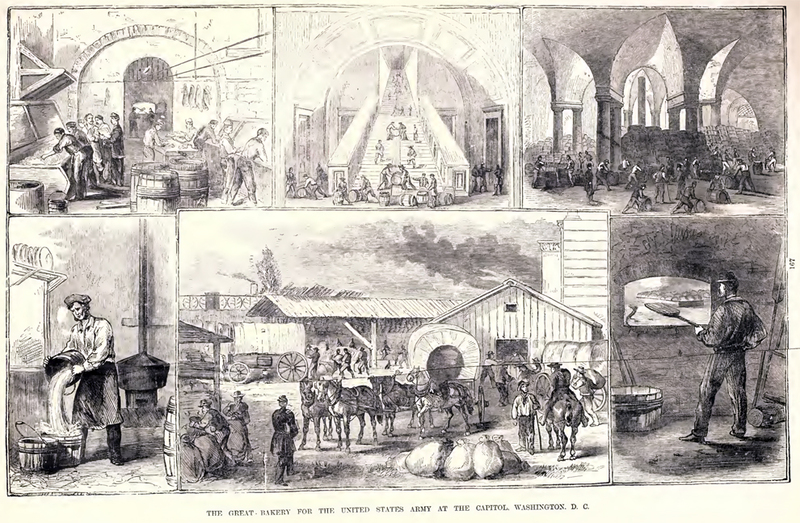
The National Mall and nearby neighborhoods supported the lives of Union troops stationed in the city during the Civil War. This woodcut shows the bakery which was located in the basement of the US Capitol, and was capable of producing 58,000 loaves of bread a month for consumption by the Union Army. -
President Lincoln and Genl. Scott Reviewing Regiments
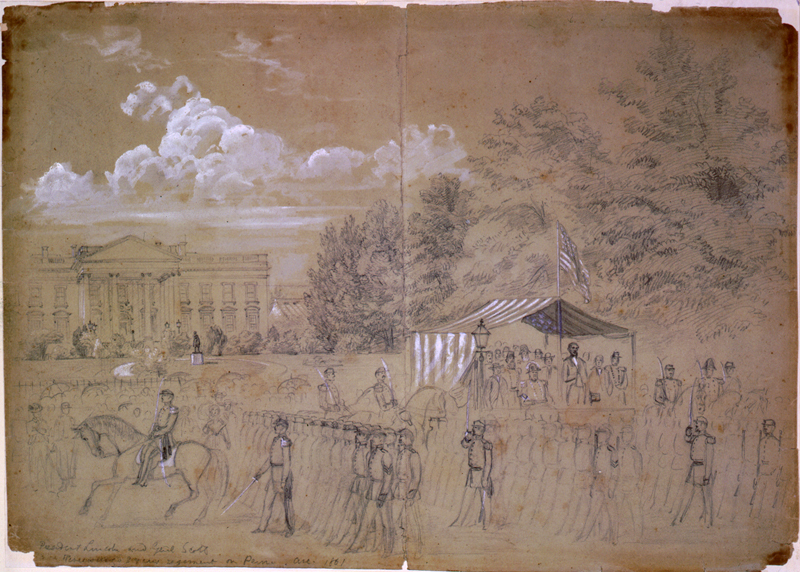
During the Civil War, Mall grounds were used to quarter troops and house a hospital for the wounded. Union soldiers frequently paraded in the vicinity. In this picture, President Abraham Lincoln and General Winfield Scott review a regiment of Union troops in 1861. Lincoln stands before a flag pole, and Scott is shown sitting to Lincoln's right. The White House is clearly visible in the background. During the Civil War, the public relied on sketch artists to capture action. Alfred Waud, who drew this scene, became known for his accurate portrayal of events and his passion for portraying the realities of soldiers' lives. -

Thomas Jefferson
Thomas Jefferson worked with President George Washington to advocate that the nation's capitol be situated on the banks of the Potomac. His sketch of a layout for the federal city is the oldest known plan of Washington, DC, and he shared his ideas with many of the early planners and architects of the city, including L'Enfant, Hoban, and Latrobe. He was the first president to serve entirely in Washington, DC, and he used the Ellipse and White House grounds for some of his scientific and agricultural experiments during his time in office. -
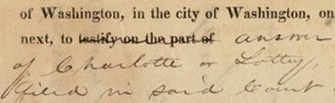
Charlotte Dupuy
Charlotte Dupuy was an enslaved African American woman owned by Congressman and Secretary of State Henry Clay. Clay, with Dupuy and her family, lived in Lafayette Square, just north of the White House. In 1829, Dupuy sued Clay for her freedom and the freedom of her children. The circuit court decided against Dupuy, and she was forcibly removed to Clay's Kentucky estate. -
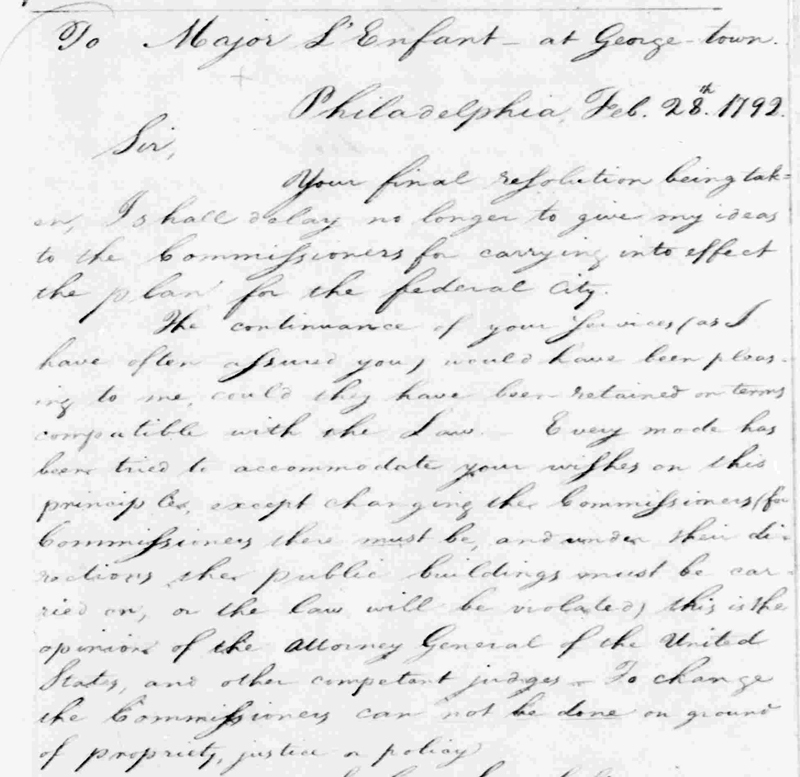
George Washington fires Major Pierre Charles L'Enfant
In February 1792 President George Washington dismissed city planner Major Pierre Charles L'Enfant, who had been hired to design the new capital but continually argued with the Federal City commissioners. One of L'Enfant's most offensive acts was demolishing the house of local landowner Daniel Carroll because it stood in the way of a new road. Although Carroll was eventually reimbursed for the damages, the event led Washington to fire L'Enfant. However, L'Enfant's design for the city was still adopted and is visible in the grid and spoke pattern of Washington, DC, today. -
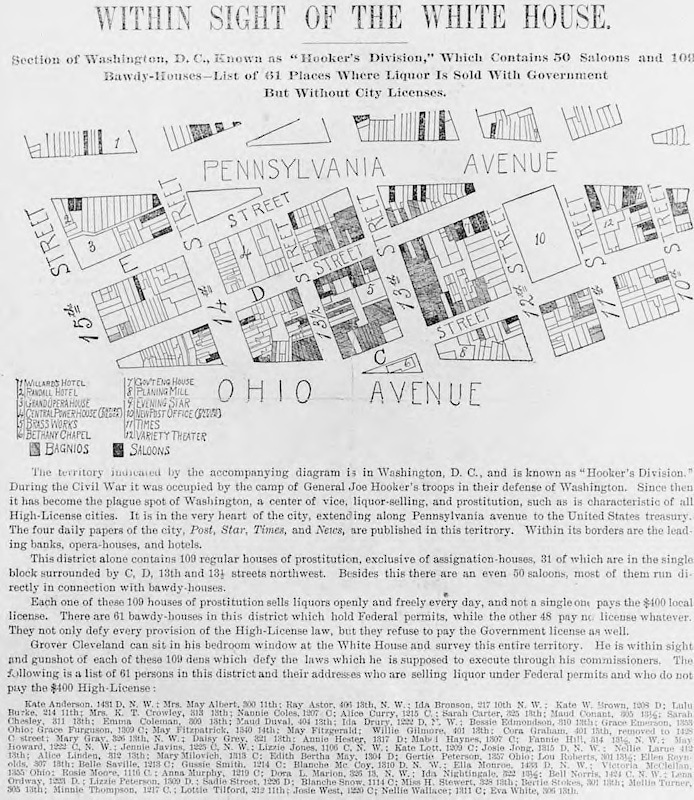
Murder Bay
In the years preceding the Civil War, the area bordered by Pennsylvania Ave., 15th, and the "open sewer" of the Washington Canal was a slum characterized by rampant prostitution, muggings, and robberies. The population of this area increased during the Civil War as soldiers took advantage of Murder Bay's cheap alcohol and brothels. This area eventually came to be known as "Hooker's Division" or just "Division," and became a destination for former slaves. Reform movements in the late 1800s generally failed, but in 1928, the city leveled Murder Bay and began building Federal Triangle in its place. -

Joseph Hooker
General Joseph Hooker commanded the Union Army of the Potomac during the American Civil War. Though he served throughout the war, reaching the rank of Major General, he is most remembered for suffering a major defeat at the Battle of Chancellorsville. Away from the battlefront, General Hooker's division sometimes encamped on the National Mall. After the war, the area near the present day Federal Triangle was referred to as "Hooker's Division," a double-entendre referencing his troops' encampment and rampant prostitution in the neighborhood. -

Smithsonian Carousel
In 1967, Smithsonian Secretary S. Dillon Ripley opened a carousel on the Mall. Built in 1922, the carousel featured music played by a Wurlitzer organ. In the photo, Ripley celebrated its 10th anniversary on the Mall. By 1981, the carousel was too difficult to repair and it was replaced by a larger one that remains today. The current carousel originally ran in Baltimore's Gwynn Oak Amusement Park, and was the first ride taken by an African American child when the park was desegregated in 1963. -
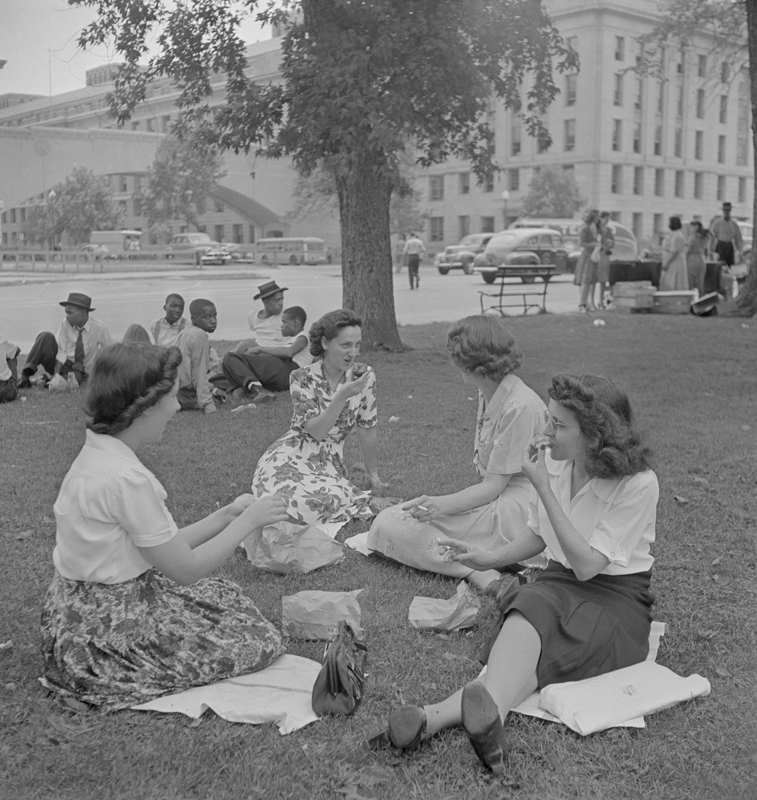
Government workers lunch outside the Department of Agriculture
For thousands of federal employees, the National Mall is a workplace as well as a public space. The Department of Agriculture, where these women and men worked in 1942, is the only building bordering the Mall exclusively designated as an office, but there are also offices in many of the museum buildings around the Mall. Workers in these buildings have always enjoyed the space of the Mall as a place to eat lunch, relax, and play. -
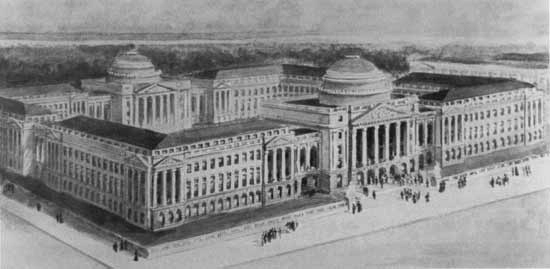
Monumental plans for the Department of Agriculture
Sketched in 1904 and later published in Women's Home Companion, this drawing demonstrates grand neoclassical plans to expand the Department of Agriculture. The Department had long since outgrown the original 1868 construction, one of the oldest on the National Mall. By the turn of the century, almost 500 people worked there, and laboratory space was no longer sufficient for chemistry and botanical research programs. Plans for rebuilding the department came, in part, from the massive redesign of the National Mall proposed by the McMillan Commission in 1901 to construct the Mall as a sweeping vista of monuments bordered with museums and government buildings. -

John Marshall Statue
In 1882, Congress approved the creation of a statue to honor John Marshall, fourth Chief Justice of the Supreme Court. The statue was sculpted by artist William Wetmore Story, whose father had served on the Supreme Court with Marshall. It was unveiled on May 10, 1884 on the west plaza of the United States Capitol. In 1981, the statue was moved to the ground floor of the Supreme Court Building. There are two other casts of the memorial, one in John Marshall Park in Washington and the other at the Philadelphia Museum of Art. -
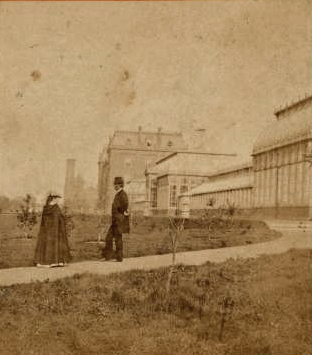
Agricultural Depot
By 1870, after two years on the National Mall, the Department of Agriculture combined the functions of an office building, a research center, library, and museum. In this stereoscopic view of the mall, visitors chat in from of large iron and glass greenhouses which held live plant specimens from around the world. A gate on present-day Constitution Avenue led into the formal gardens of the Department filled with heart-shaped, terraced flower beds bordered by two summer houses. The design of these gardens to some extent tamed the untended space of the Mall, an expanse considered an eyesore in the nation's capital. -
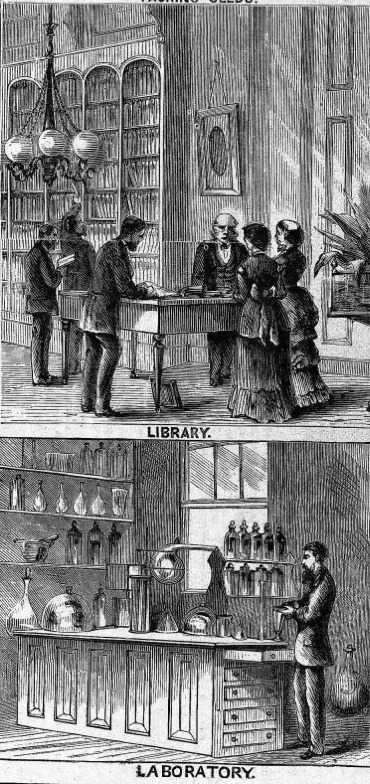
Interior of the Department of Agriculture, 1871
During the 1800s, the massive red brick Department of Agriculture, designed by Adolf Cluss, housed laboratories, agricultural specimens, seeds, plants, animals, geological artifacts, an extensive library, and a museum. Visitors came to see exhibits on every aspect of agricultural and animal life on the ground floor of the building. The statisticians' office, entomology department, and other research laboratories each had their own section, while on the third floor, workers, usually women, sorted and distributed seed packets. -

Isaac Newton
Pennsylvania farmer and dairyman, Isaac Newton served as the first United States Commissioner of Agriculture. Under Newton, the agency focused on research and education, disseminating information to farmers throughout the nation. Newton advocated for daily weather reports being telegraphed nationwide, created an experimental farm on the National Mall, and contributed to the National Botanical Garden's specimen collections. -
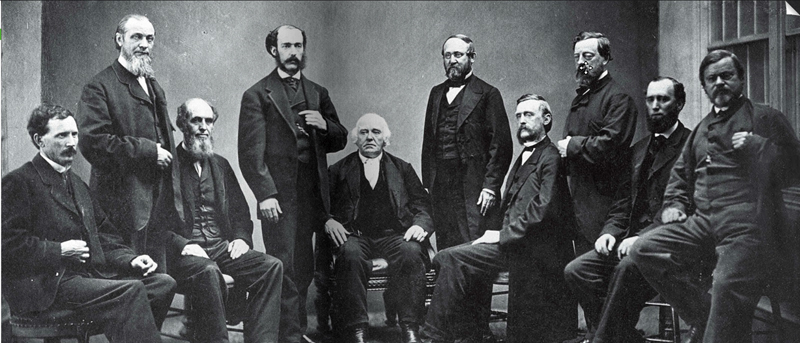
Scientists and Farmers at the Department of Agriculture
When President Lincoln created the Department of Agriculture in 1862, the agency consisted of only four scientists and agriculturists. By 1867, their numbers grew to 70 employees, indicating the rapid growth of the scope and influence of what is now the nation's sixth largest federal agency. Housed in the basement of the US Patent Office until 1868, Agricultural Department employees also tended experimental crops in gardens and fields on the National Mall, extending between today's Independence and Constitution Avenues. In this image, the first Commissioner of Agriculture, Isaac Newton, is seated in the center. -
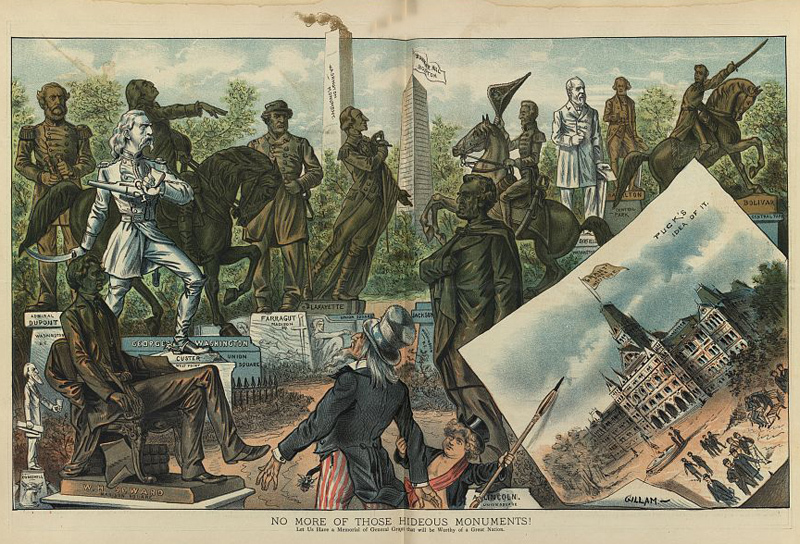
"No More of those Hideous Monuments!"
This political cartoon was printed in New York in 1885. Complaining about all of the monuments being erected to honor our nation's history in the wake of the turmoil of the Civil War, the captions proclaims "No more of those hideous monuments!" Monuments from the National Mall are featured prominently in the cartoon, including the Washington Monument which appears as a smokestack. This shows the contested nature of the Mall and its many memorials, which were not universally popular in their own times. -
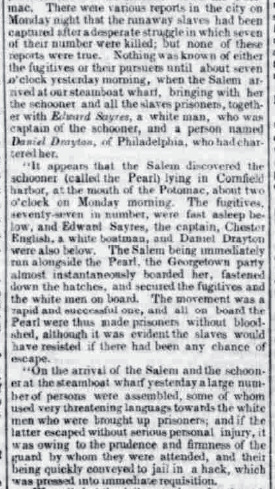
Capture of escaped slaves on the Pearl
In 1848, 77 enslaved African Americans, including the Edmonson sisters, attempted to escape their bondage in Washington, DC, by fleeing north to freedom via the ship the Pearl. Unfortunately, unfavorable winds slowed their escape, the ship was captured, and the escapees were brought back to Washington. This newspaper article details the attempted escape, capture, and a minor riot which broke out on the land that would become the National Mall as the Pearl's passengers were transported to jail. -

National March on Washington for Lesbian and Gay Rights
The National March on Washington for Lesbian and Gay Rights, held on October 14, 1979, was inspired in part by the assassination of openly gay California politician Harvey Milk. The five issues the march supported included the end of anti-homosexual laws and a push for a ban on discrimination in the federal government based on sexual orientation. Thousands of people attended, and the event nationalized the movement for gay rights, which was previously fragmented and focused on problems in individual communities. -
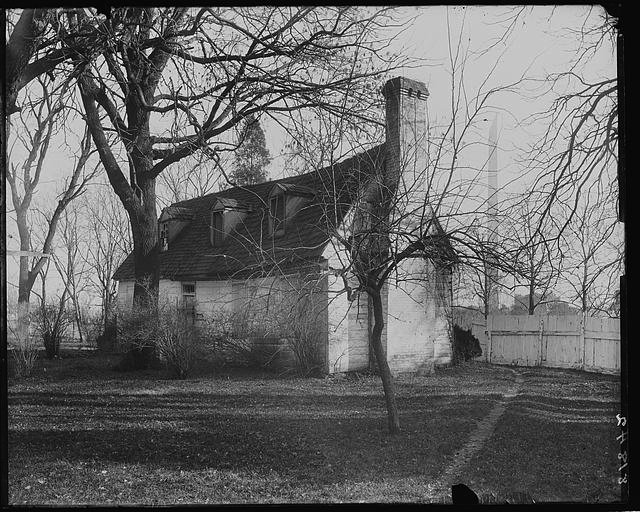
David Burnes' Cottage
David Burnes, one of the original nineteen proprietors of land that created the District of Columbia, lived in this humble cottage overlooking today's Constitution Avenue. Burnes owned 700 acres encompassing the heart of downtown, including the future sites of the White House and Ellipse. Contemporaries characterized Burnes as an argumentative, controversial Scotsman. Despite great wealth (reportedly the equivalent of $14 million today), he never replaced his original home. His daughter, Marcia, married New York Congressman John Van Ness, later mayor of Washington. A close friend of Dolly Madison, she built a magnificent home behind Burnes's cottage which became a center of social life in the capital. -
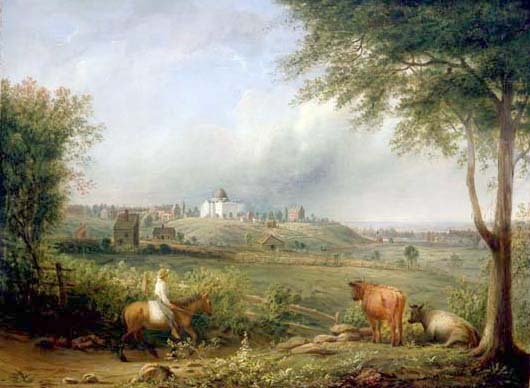
Early Washington, DC
This landscape painting of Washington, DC, looks out from the area that is Union Station today onto the early US Capitol building. George Washington built two row houses to the right of the Capitol. Although this is a highly romanticized view of the city, when artist William McLeod painted this landscape in 1844, cows still roamed the Mall and much of the land around the Capitol remained undeveloped. -

Edmonson Sisters
Mary and Emily Edmonson were among the 77 enslaved African Americans who boarded the schooner, Pearl, in 1848 intending to sail down the Potomac, then north to freedom. Captured when the Pearl becalmed, the Edmonson sisters were jailed. They awaited sale as slaves in New Orleans while their father, a freeman, worked to raise money to buy their freedom. Abolitionists, including Harriet Beecher Stowe, heard of their plight and launched a fundraising effort that lead to the sisters' emancipation. The Edmonsons later studied at Oberlin College in Ohio, and became active anti-slavery crusaders. -
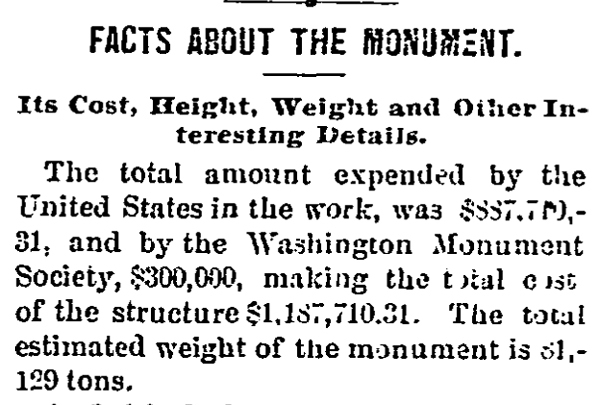
"Facts About the Monument"
This Washington Post article from February 22, 1885 discusses the features of the newly completed Washington Monument. Including facts about height, weight, and marble used, the article shows the enthusiasm Americans felt that the monument was finally being completed after more than 20 years under construction. -
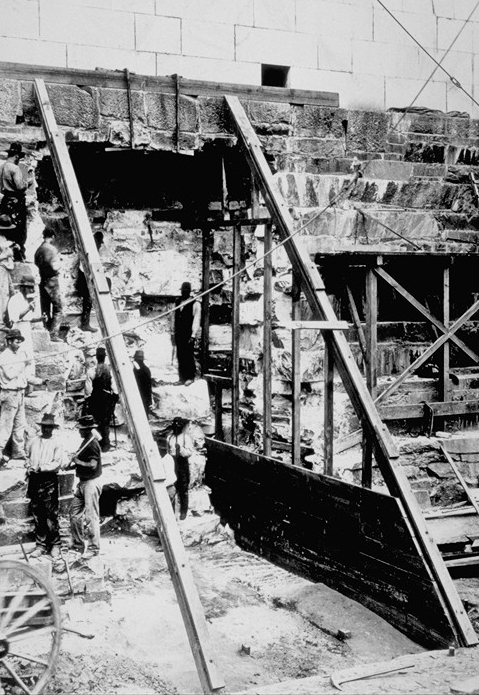
Construction of the Washington Monument resumes
In 1876 after sitting uncompleted for almost twenty years Congress passed a joint resolution taking charge of the completion of the monument. Taking control of the land and monument back from the Washington National Monument Society who had run out of funds shortly after construction began in 1854. In this image workers can be see fortifying the base of the monument. Now controlled by the federal government, the design of the monument became the more simple Egyptian style obelisk which appears today. -
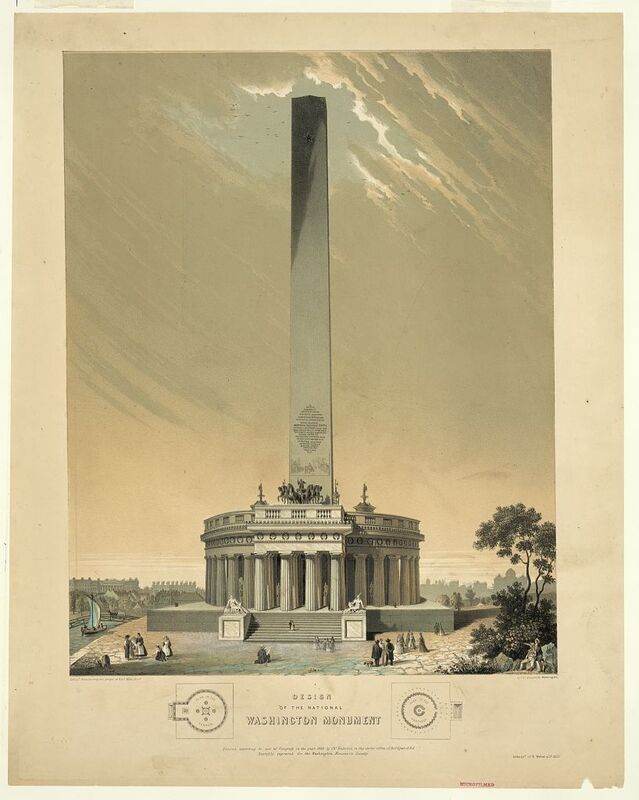
Original Design of the Washington Monument
This original, lavish design of the Washington Monument was created by Robert Mills, who won a national design competition in 1836 sponsored by the Washington National Monument Society. The Society relied on public funds for construction. Shortly after construction began in 1854 they were forced to stop when money ran out. In 1876 Congress took over the construction of the monument, choosing to construct a simple obelisk instead of Mills' original design. -

The Rabbis' March
On October 6, 1943, a group of 400 rabbis walked from Union Station to the US Capitol, Lincoln Memorial, and White House in an effort to raise awareness that millions of European Jews were being killed or imprisoned by the Nazi regime. Led by Hillel Kook, the rabbis marched to the White House to urge President Franklin D. Roosevelt in person to resuce Jewish victims of the Holocaust. Roosevelt would not meet with them, but Vice President Henry Wallace accepted a petition from the rabbis calling for immediate US action. Many moderate Jewish leaders opposed the march, but the rabbis march on the Mall caught the attention of the American press, bystanders, and the Roosevelt administration. -
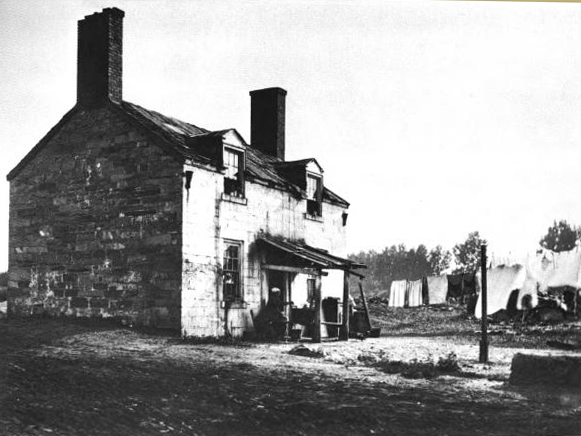
Old Lock house still standing
Between 1835 and 1855, a lockkeeper lived in a small stone cottage on the juncture of the Washington City Canal and the C & O Extension. The Canal closed due to competition from railroads, and decaying conditions, poor sanitation, and arguments among federal and local officials, contractors, and workers that led to its deterioration. When the lockkeeper's tenure ended in 1855, the house was abandoned. Squatters took lived in the house for a few years. In this picture, a resident sits by the front door with their laundry drying on a clothesline nearby. Later, the house became a holding pen for prisoners, then a storage facility for the National Park Service. In 2016, the National Park Service began a construction project that will convert the building into a visitor’s center. -
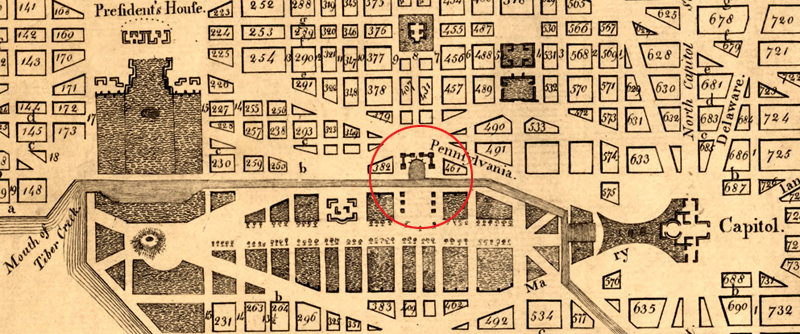
Plan of the city of Washington in the territory of Columbia [detail]
In 1791, Andrew Ellicott surveyed the future city of Washington, taking the place of Pierre Charles L'Enfant, the city's original designer. While Ellicott reshaped many intricacies of L'Enfant's plans for grand views, fountains, and public buildings, the essence of the original street layout remained the same, including the location of the Center Market. George Washington had conceived the idea of a Center Market on the edge of the Mall between the Capitol and the White House as a center of commerce and trade for the city. -
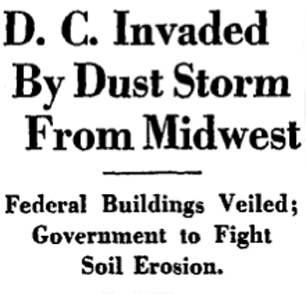
DC Invaded By A Dust Storm From Midwest
In March 1935 a dust storm hit Washington, DC, caused by soil erosion in the midwest in what came to be called the Dust Bowl. Washington had already experienced at least one dust storm, in May the previous year, but this storm had special timing. It hit on the day Hugh Bennett, Director of the Soil Erosion Service, testified before Congress for the need to continue funding the program, which worked to stop the erosion causing the dust storms. Washingtonians saw firsthand the impact of soil erosion as dust covered the Mall and city and Congress approved changes. -
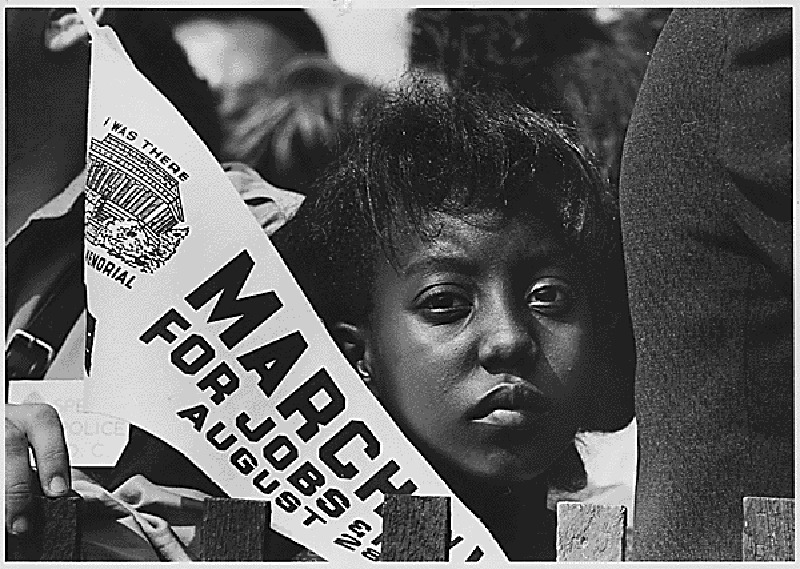
Edith Lee-Payne at the 1963 March on Washington
The 1963 March on Washington for Jobs and Freedom attracted demonstrators of all ages. Edith Lee-Payne attended the March, which was held on her twelfth birthday, with her mother who thought it important to teach her about the Civil Rights struggle. Though she was not aware of it until well into adulthood, Edith's photo became one of the iconic images of the Civil Rights Movement, used in publications around the world. -
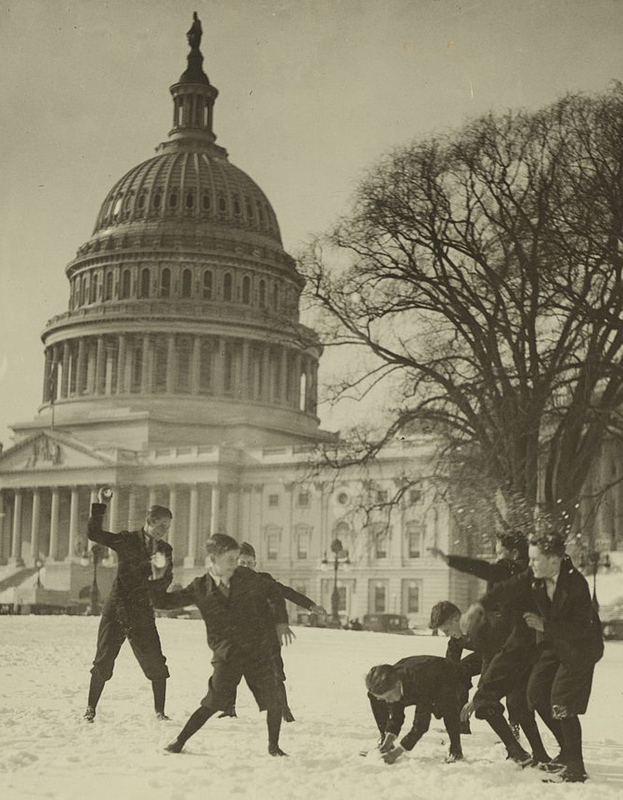
Congressional Pages work and play on the Mall
These young Pages participate in a snowball fight on the Capitol grounds. The Congressional Page program began during the 20th Congress (1827-1829). In the early 1900s, Pages, also called messengers, were generally local Washington children, many of whom were either orphaned or destitute. -

Last 'Tempos' Fall in Style: Wrecker's Ball Set to Music
Although most of the office buildings constructed on the Mall to house war department offices during World War I and II had been removed by the 1960s, a row of buildings from 1918 still stood in the space between Constitution Avenue and the Reflecting Pool. In 1969 President Nixon ordered these buildings demolished, to be replaced with parkland more in keeping with the rest of the Mall. On July 15, 1970, Naval officers and government officials held a demolition ceremony, watching as the wrecking ball took its first swing at the walls. By December, the buildings were gone. -

Prayer Pilgrimage for Freedom
Held in the spring of 1957, the Prayer Pilgrimage for Freedom was organized by the newly formed Southern Leaders Conference (later known as the Southern Christian Leadership Coalition or SCLC). 25,000 demonstrators attended the event at the Lincoln Memorial, urging the Eisenhower administration to push for compliance with Brown v. Board of Education's school integration. Martin Luther King Jr. gave the keynote speech at this event, which reinforced his role as a new key leader in the civil rights movement. -

National Air and Space Museum
The National Air and Space Museum holds the world's largest collection of historic aircraft and spacecraft. A second location in Chantilly, Virginia, opened in 2003 to display even more items from its collection, including the Space Shuttle Discovery. Some of the museum's popular artifacts include the original Wright brothers' 1903 flyer, Charles Lindbergh's "Spirit of St. Louis," the Apollo 11 command module, and a moon rock that visitors can touch. -

George Meade Memorial
The creation of a memorial to Civil War Union General George Meade was first proposed by the Pennsylvania legislature in 1911. Congress approved the memorial in 1915, but conflicts between the Pennsylvania Meade Memorial Commission and the Washington Commission of Fine Arts delayed the construction of the statue. In March of 1922, President Harding attended the groundbreaking and the memorial was dedicated in 1927. When construction began on the I-395 underpass in the late 1960s, the statue was removed. In 1983, it was finally placed in its present location outside the Federal Courthouse. -
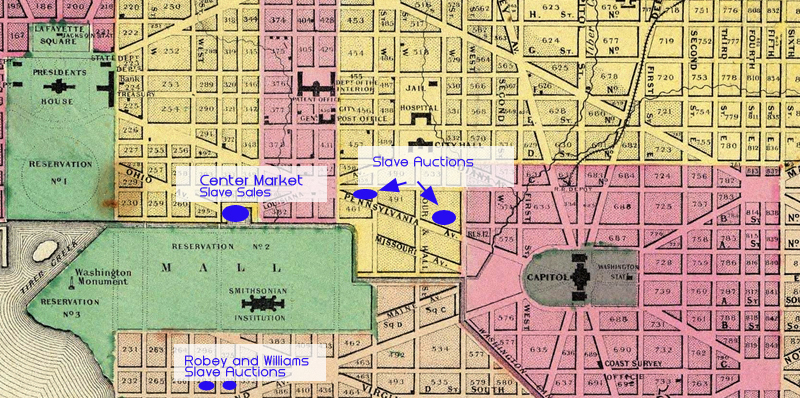
Colton Atlas, 1855, showing former sites of slave trade bordering the National Mall
Slave trading establishments in Washington, DC are superimposed on this 1855 Atlas of Washington, DC to show the locations of a few of the many slave trading establishments in the city. Businesses flourished on the Mall's borders including slave traders who operated from hotels, auction houses, and taverns until the trade was abolished in the District of Columbia in 1850. South of the Mall, the Yellow House and Robey's were notoriously cruel slave pens. North of the Mall, sales at auction houses flourished, promoted in local newspaper advertisements. -
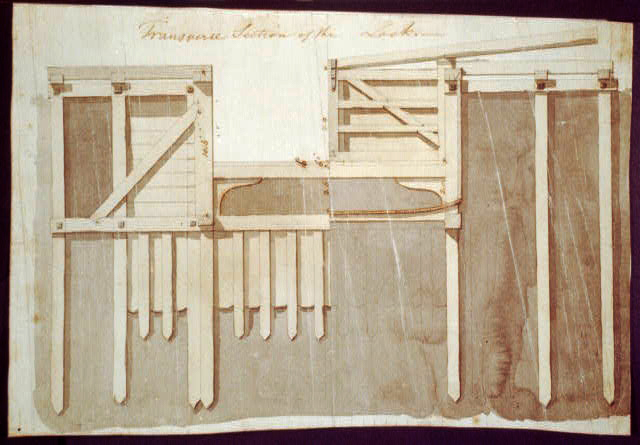
Washington Canal lock details and sections
Henry Latrobe, an architect of the US Capitol, was also the chief engineer of the Washington City Canal. He prepared drawings of the canal locks in 1810, before construction began. The Canal was about one mile long and passed in front of the Capitol. According to Latrobe's early drawings, the canal lock located at 17th and Constitution Avenue was likely a vertical sluice gate. The lockkeeper would manually raise and lower the gate to control the flow of water in the canal. -

2011 Earthquake in the Washington Monument
On the afternoon of August 23, 2011, a 5.8 magnitude earthquake occurred in Mineral, Virginia which was felt as far away as New York state. In Washington, DC the Washington Monument swayed from the force of the earthquake. Visitors were evacuated by Park Rangers, as this video shows. Afterwards, several crack were discovered in the structure of the monument, and the elevator system was damaged. Four days after the earthquake, a hurricane passed through the city, adding water damage through the cracks to the damage from the earthquake. As a result, the Monument was closed until May 2014. -
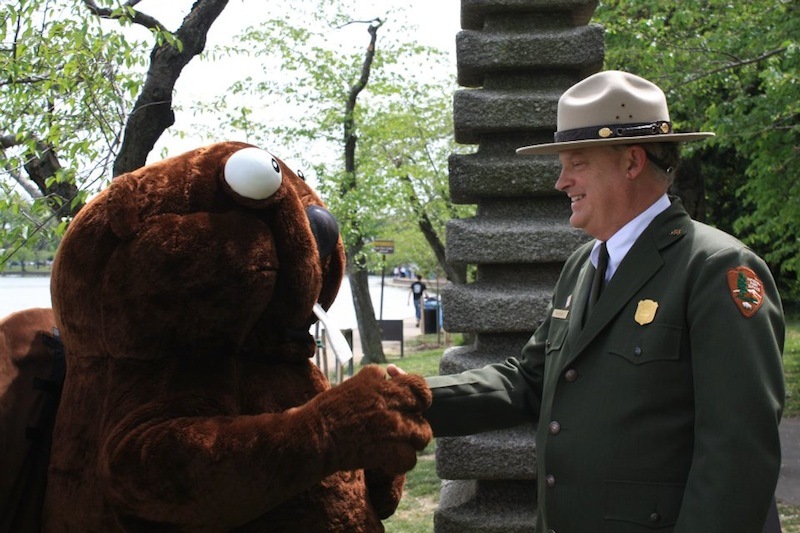
Paddles the Beaver
In the late 1990s, beavers threatened the cherry trees at the Tidal Basin, gnawing on the trunks and killing at least five trees. The National Park Service had to find a way to preserve the trees without harming the beavers. They placed protective cages, tall enough to keep out a large beaver, around the bases of the cherry trees. In addition, they made these furry residents of the Tidal Basin part of the Cherry Blossom Festival. Paddles the Beaver is the official mascot of the Festival and appears on signs reminding visitors not to pick blossoms or climb the trees. -
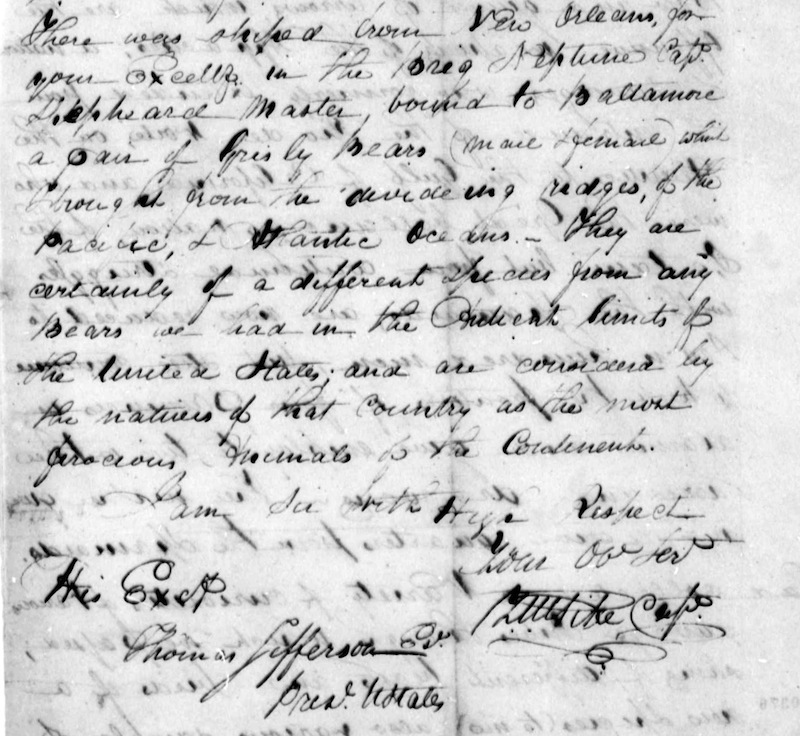
Zebulon Pike to Thomas Jefferson, October 29, 1807
Among the items Captain Zebulon Pike sent to President Thomas Jefferson from the western United States was a pair of grizzly bear cubs. Jefferson kept them in a garden on the south side of the White House for a short time before sending the animals to a museum in Philadelphia. -
Woodrow Wilson's Sheep
During World War I, President Woodrow Wilson had flocks of sheep on the White House lawn. Although previous presidents had kept farm animals as pets, these sheep were part of a Presidential initiative to support the war effort. The sheep grazed on lawns as a way of lowering groundskeeping costs. When the sheep were sheared, their wool was auctioned off to help raise money for the Red Cross, totaling $52,823 by the end of the war. -
Deer on the Mall
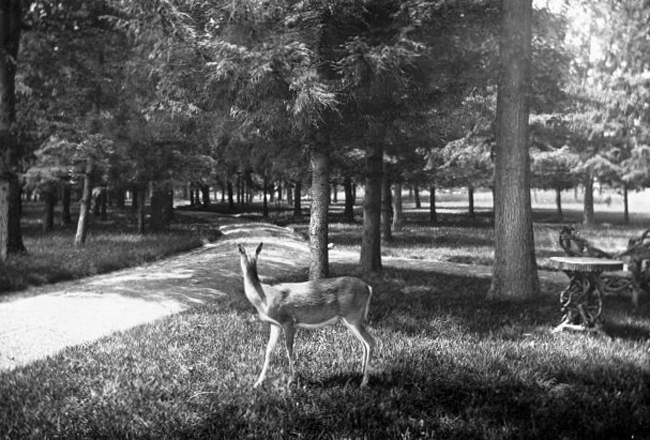
This photograph was taken around 1890, when the Mall was landscaped according to a design by Andrew Jackson Downing. Rather than the wide open lawn edged with trees we see today, this section of the Mall was covered in small evergreens with a winding path. This deer may have been wild, enjoying a forested spot in the city, or part of the Smithsonian's Department of Living Animals. -
Buffalo behind Smithsonian Institution Building
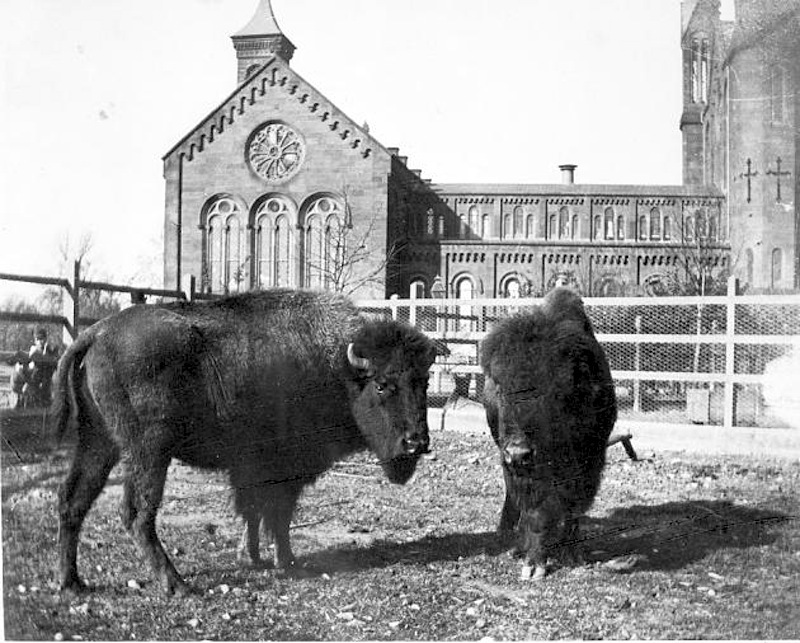
These American bison, also known as buffalo, were part of the Smithsonian's Department of Living Animals. The Department was started by chief taxidermist William T. Hornaday, who was a spokesman for the conservation movement and very concerned about the possible extinction of American bison. The bison formed part of a collection of wild North American animals in a small sort of zoo in the yard behind the Smithsonian Castle in the late 1880s and early 1890s, before the establishment of the National Zoo. -
Map showing the territory flooded in June 1889
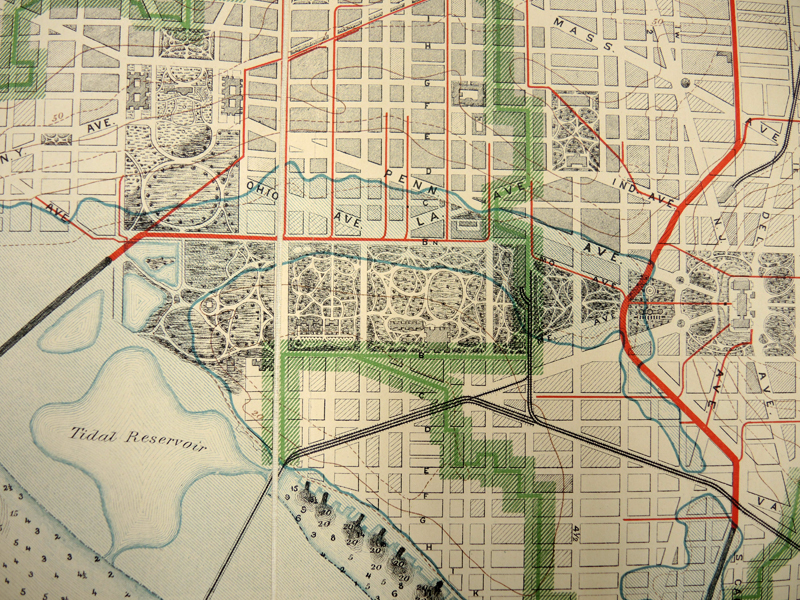
The same storm system which contributed to the Johnstown Flood in June 1889 also caused flooding in Washington, DC. This map detail shows the extent to which the flooding affected the National Mall. The dark blue lines show the edges of the flooding; everything with blue hatching was underwater. Most of the Washington Monument grounds, half of the White House Ellipse, and an area near the Capitol were all under water. The path of the flooding follows the creek bed of Tiber Creek, which was filled in during the 1870s. -
A view of the Lockkeeper's House
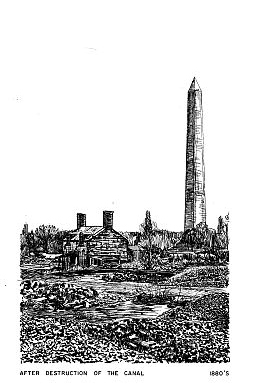
The lockkeeper's house at 17th Street and Constitution Avenue is a reminder that canals once flowed through Washington, DC. Between 1835 and 1855, a lockkeeper served the lock that connected the Washington branch of the Chesapeake and Ohio Canal to the Washington City Canal, which ran parallel to the National Mall, where Constitution Avenue is today. At that time, the Potomac River extended nearly to the base of the Washington Monument and a wharf stood on the south side of the Lockkeeper's House. The National Park Service took over the site at the beginning of the 1900s. -
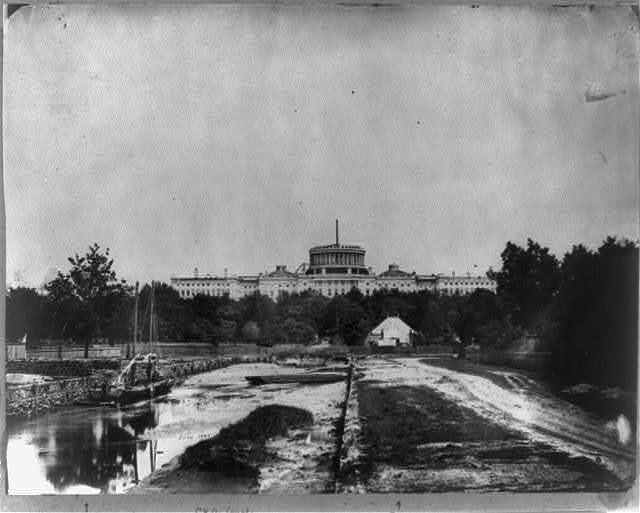
West front of Capitol, vii, peristyle complete
This 1860s photograph shows the Capitol dome under construction, with the Botanical Gardens and canal in foreground. In the 1860s, the Capitol dome was not yet complete. The city's canal system connected the Anacostia River to the Potomac by flowing west from the Anacostia along the Mall, emptying into the Potomac. The mucky, watery landscape added to the impression that the Mall was built on a swamp. -
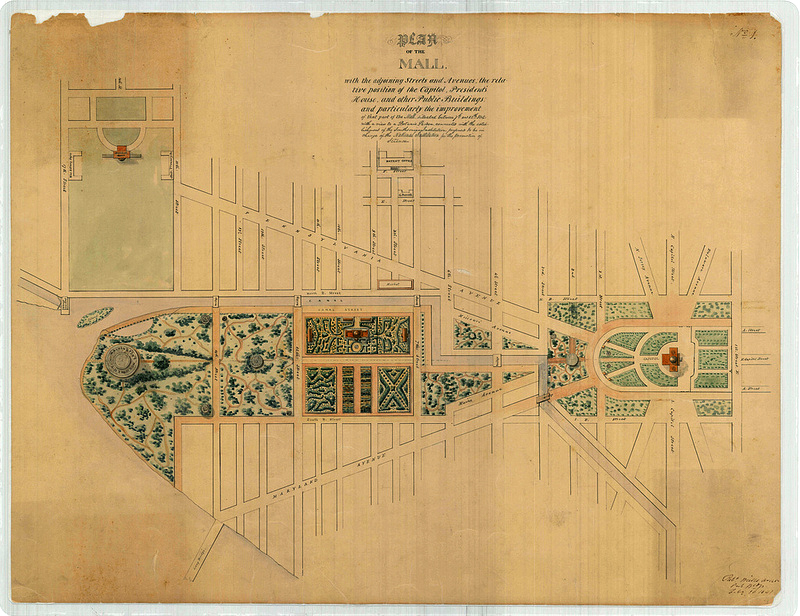
Plan of the National Mall in Washington, DC
This map shows a plan for the National Mall which featured gardens, parks, winding paths, and the existing canal. Before the McMillan Commission's proposed redesign of the Mall in 1902, the space was much more pastoral in look and feel. -
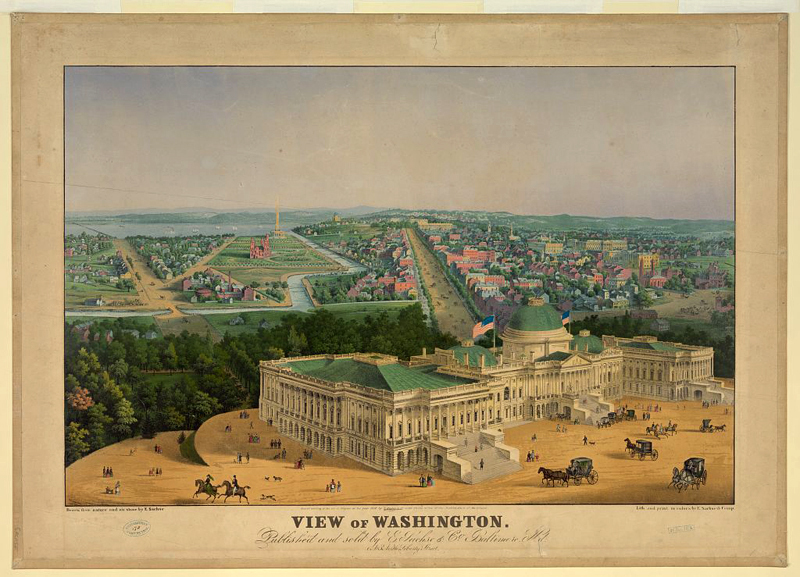
View of Washington drawn from nature and on stone
This bird's-eye view of Washington, DC faces west with the US Capitol in the foreground. Canals and other waterways intersecting the National Mall are visible to the left of tree-lined Pennsylvania Avenue, then the capital's ceremonial thoroughfare, and between the Capitol and the Washington Monument. They provided transportation for commerce and brought needed food and retail supplies to the District, connecting the Eastern Branch, the Potomac, and the Chesapeake & Ohio Canal. Note that the Mall extended only as far as the Washington Monument until the early 1900s. -
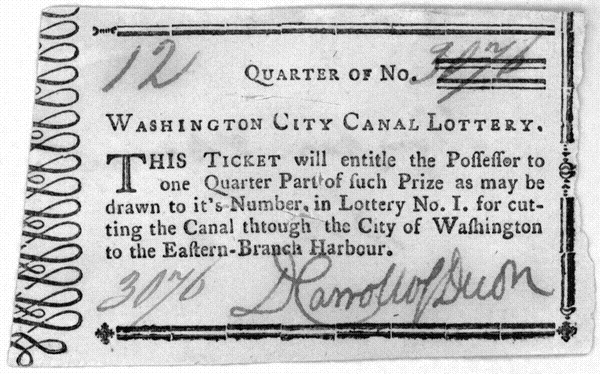
Washington City Canal Lottery Ticket
This ticket is one from a collection of 20 lottery tickets of the Washington City Canal lottery "for cutting the canal, through the City of Washington to the Eastern Branch harbour." Eight tickets are signed by Notley Young, four by Daniel Carroll, both of whom were original proprietors of land sold to create the District of Columbia and sections of the National Mall. -
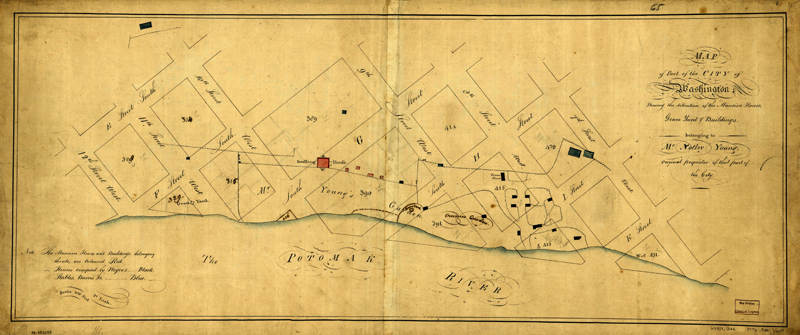
Map of Notley Young's Plantation
Notley Young's plantation bordering the Potomac was among the lands appropriated for the city of Washington and its public buildings. These site plans show the plantation's original grounds, buildings, slave quarters, overseer's house, gardens, water features, fence lines, and graveyards. Notley Young conveyed eight squares of land from his property for the federal city. The south side of the Mall, in part, incorporates tracts from the Notley Young plantation. -
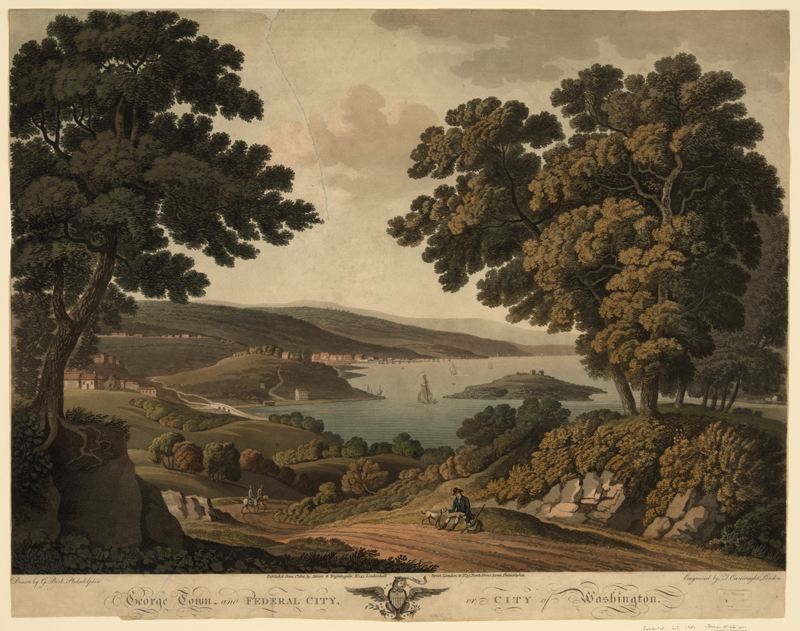
George Town and Federal City, or City of Washington
By 1800, the new capital city had begun to develop near the Potomac in the view down the river from the port of Georgetown. Rolling hills, prolific vegetation, and the powerful Potomac river promised a beautiful Capitol city and vibrant commercial trade. -
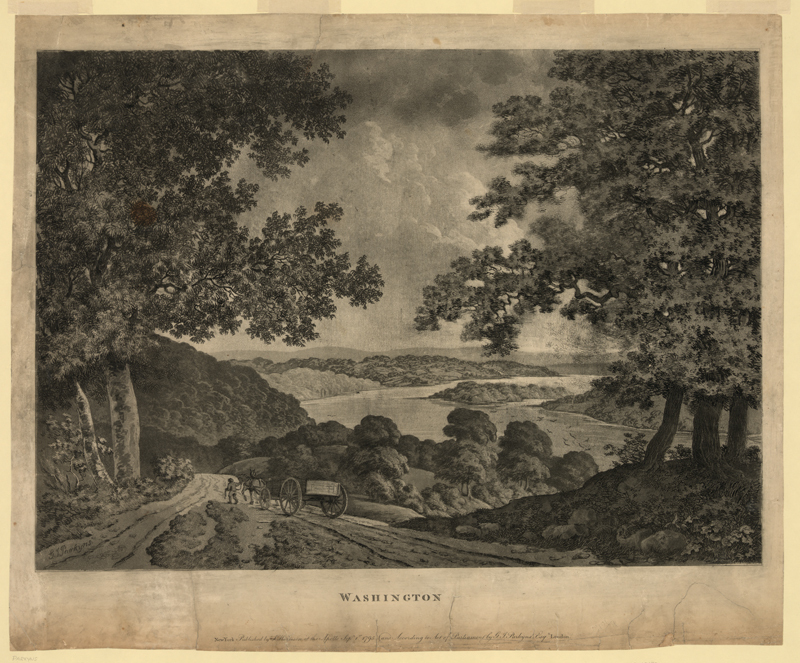
Cart on road overlooking Potomac River
This early aquatint shows the landscape surrounding Washington. Looking east from the land of the federal city, it shows views of the Potomac River. -
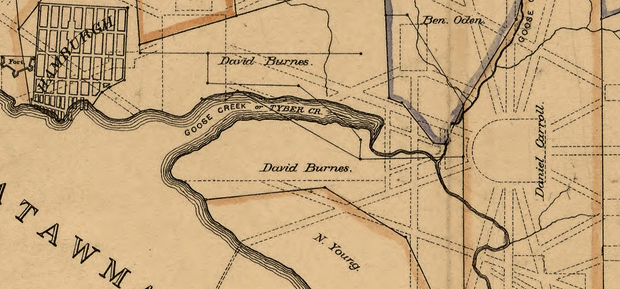
Sketch of Washington in Embryo
Three-quarters of a century of a century after the founding of the city of Washington, Dr. Joseph Toner, an amateur historian of the District of Columbia, decided to find out who had owned the land of the nation's capital before the city was established. He created a map which showed the boundary lines of property holdings, labeled with the name of the landholder. This portion of Toner's map shows the boundaries on the land that became the National Mall, with plots owned by David Burns, Daniel Carroll, Notley Young, and Ben Oden. The map was drawn in 1874 but depicts the area circa 1792. -
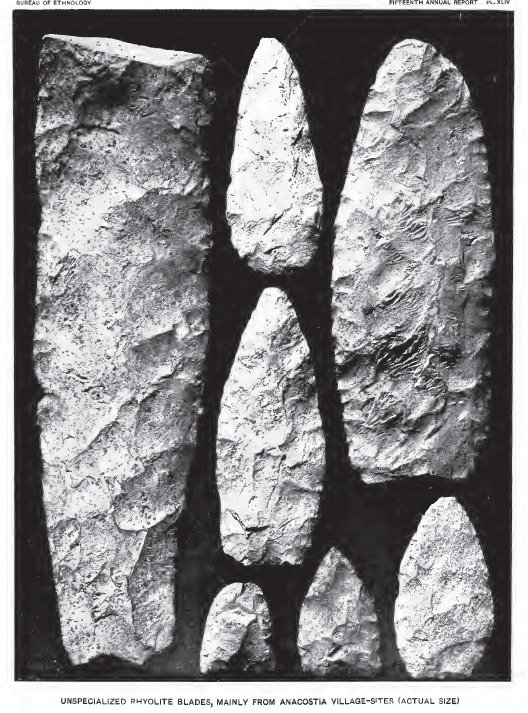
Spearheads and Chips
During the 1890s, archaeologists, geologists, and paleontologist affiliated with the Smithsonian began extensive excavations in stone quarries dotting the land in the District of Columbia. "The spot now the political center of the nation was, in prehistoric times, a chief resort of the native peoples of the region," reads the report of the Bureau of American Ethnology. Their findings spanned historic eras and included remnants of implements and projectile points created by the Nacochtanks, early Native Americans who established a trading center near the National Mall on the Anacostia River. These early instruments are carved from quartz, quartzite, and rhyolite. -

Solomon Northup
Solomon Northrup, a free African American from New York, arrived in Washington in 1841 in the company of two white men who had promised him a job as a fiddler. After a day touring the Capitol and White House Grounds, the men drugged him and handed him over to a slave trader. He was imprisoned in Williams' Slave Pen near the Mall, and then sold into slavery for $1,000. He labored for twelve years on a cotton plantation until northern abolitionists, hearing of his plight, obtained his freedom through a series of legal battles in 1853. -
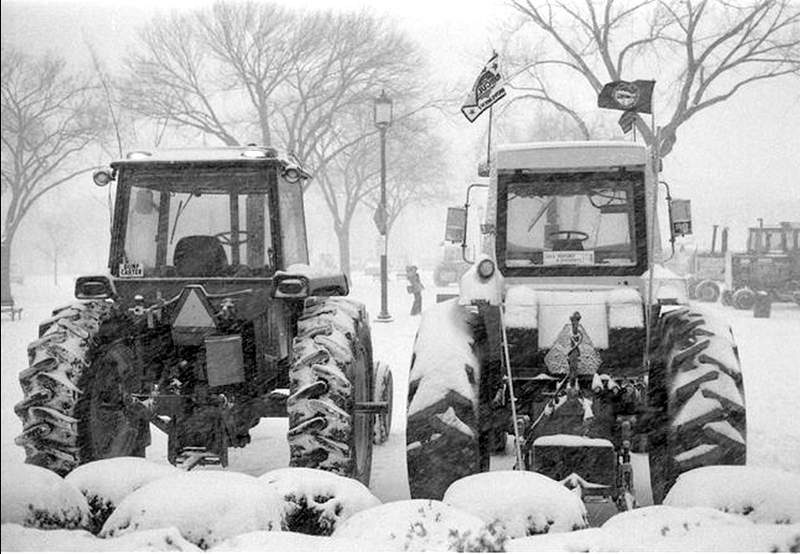
Tractorcade Occupies the Mall
Hundreds of tractors paraded into Washington in February 5, 1979 to protest existing agriculture policies. The American Agriculture Movement organized this protest in 1979 after the 1st Tractorcade in 1978 did not bring changes they demanded. After slowly riding into Washington, the tractors were barricaded on the Mall where they had parked. Farmers stayed and occupied the Mall while police allowed tractors out for permitted demonstrations. Residents and Congressmen grew tired of the tractors and did not appreciate the damage caused on the Mall's grounds. When a blizzard shut down Washington on Presidents' Day, the occupying farmers helped the city by plowing streets, rescuing stranded residents, and transporting medical staff to hospitals. Residents grew more sympathetic to the farmers' cause after the snowstorm. By March 1, 1979, the tractors began leaving the city and the Mall's ground re-opened for public use. -
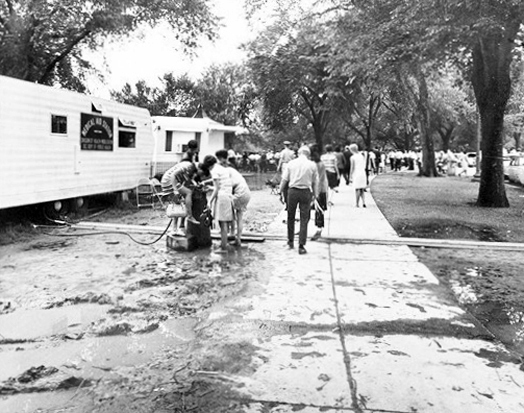
Residents of Resurrection City
In this photo, residents of Resurrection City wash mud from their feet. In the late spring and early summer of 1968, 2800 demonstrators camped on the Mall on 15 acres of open space south of the Reflecting Pool, including the area which is now the Korean War Memorial. This demonstration was part of the 1968 Poor People's Campaign envisioned by Martin Luther King Jr. and organized by Ralph Abernathy to protest for meaningful jobs and living wages. That spring was particularly rainy causing serious issues with mud, flooding, and sanitation for the demonstrators on the Mall. -
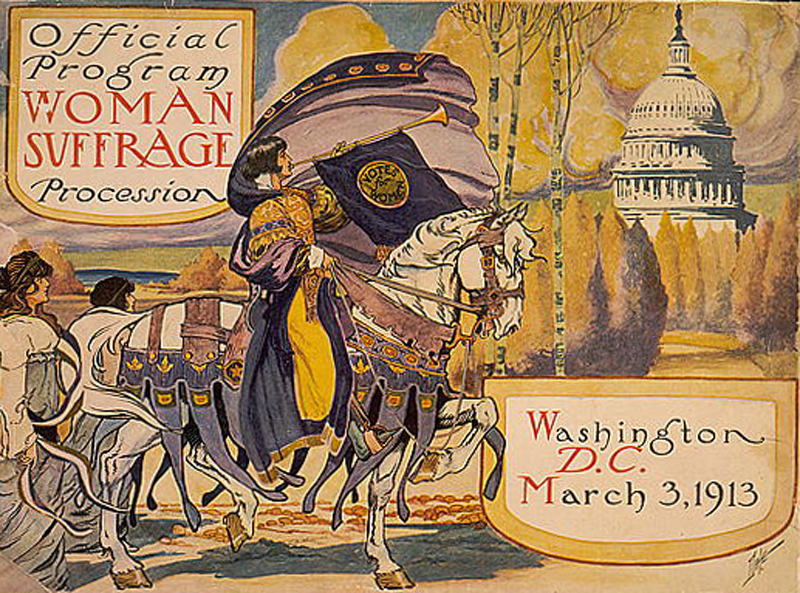
Official Program of the Woman Suffrage Parade of 1913
This program cover for the 1913 March shows a woman dressed as a knight, carrying the banner of "Votes for Women" upon her white steed. The Capitol is shown in the background. On the day of the Suffrage Parade over 5,000 mostly female marchers processed down Pennsylvania Avenue from near the Capitol to a grandstand at the Treasury Building. -
Miniature Cyclone Strikes South Washington
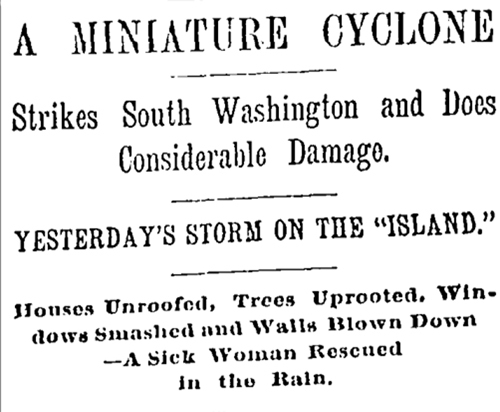
In September 1888 a tornado, called a cyclone by the press, touched down on Maryland Avenue SW. It damaged the roofs of the National Museum and the Fish Commission buildings. Just north of the Fish Commission buildings, a group of houses and businesses were damaged. The Botanic Garden, then located in line with the Capitol, also sustained damage to its greenhouses and some of the plants. A group of sea turtles at the Fish Commission attempted to escape onto the Mall when their gate broke down, but the watchman in charge managed to return them to their pen. -
Film clip of the Rabbis' March
In 1943 a group of more than 400 rabbis, many of whom were Jewish Orthodox, demonstrated on the National Mall to urge the US to help the Jewish people of Nazi occupied Europe. Held three days before Yom Kippur, the October 6 rally generated national media attention for the Jewish leaders and their cause. Part of this attention was sparked when President Roosevelt controversially refused to meet with the delegation. Vice President Henry Wallace met with them instead. In this video, a rabbi speaks on the steps of the Lincoln Memorial. -
Beef Depot Monument
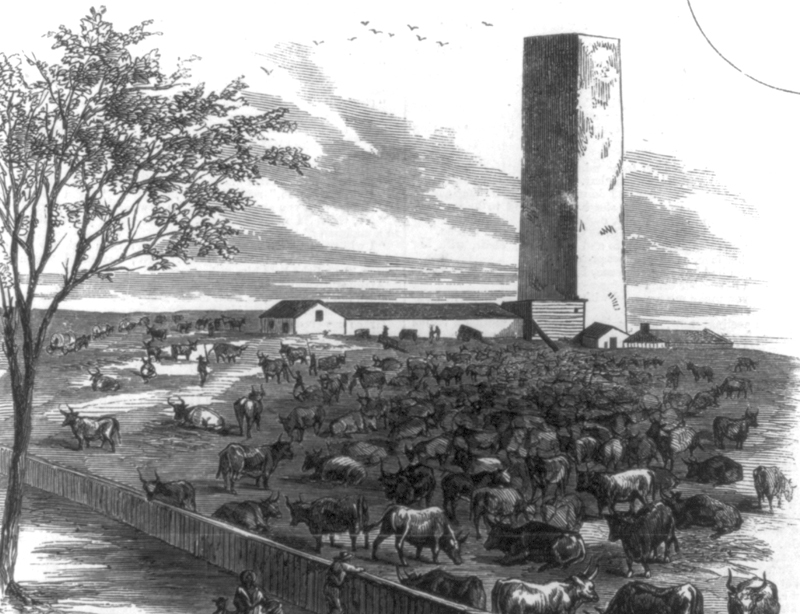
During the Civil War, the U.S. Army grazed cattle on the grounds of the unfinished Washington Monument, earning the structure the nickname "Beef Depot Monument." In addition to being the seat of the federal government, Washington was on the front lines. The Mall served as a staging area for the quartermasters division which provided supplies to the troops, such as beef from the cattle. -
Captain John Smith's Map of Virginia (excerpt)
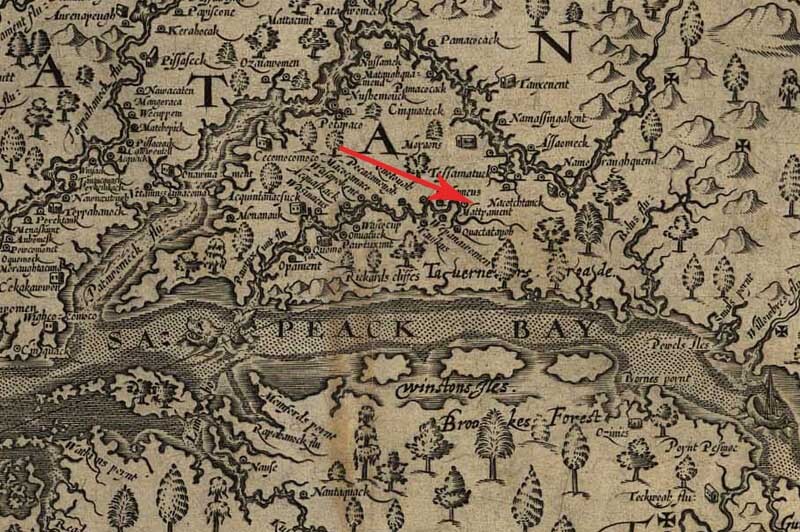
In 1607, English colonists established the Jamestown settlement in Virginia at the mouth of the Chesapeake Bay. Captain John Smith and a small party of colonists explored and mapped the Chesapeake Bay, its rivers, and the surrounding lands. The map is oriented with north to the right, not the top. They recorded the names of more than 200 Native American villages and tribes, including the settlement of the Nacotchtank, Algonquians whose village served as a major trading center on the Anacostia River near the site of the US Capitol and the National Mall. -
Video of Moratorium to End the War in Vietnam
The Moratorium to End the War in Vietnam took place in November, 1969. Thousands of people came to Washington to protest the Vietnam War, meeting throughout the city but especially on the National Mall. This video shows protesters gathered near the Washington Monument and in front of the National Archives. -
William Temple Hornaday
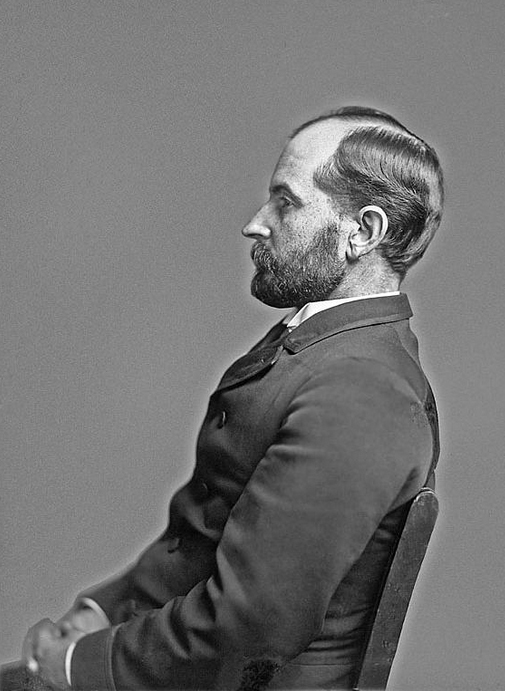
William Temple Hornaday was a hunter, taxidermist, zoo director, and a founder of the American conservation movement. He served as Chief Taxidermist of the United States National Museum from 1882, Curator of the Department of Living Animals, and the first Superintendent of the National Zoological Park. Hornaday acquired live bison during a trip to Montana, which he displayed with other animal exhibits behind the Smithsonian Castle in 1886. The successful expedition produced the most complete scientific series, and an artistic grouping of taxidermied specimens of the American bison displayed for 70 years in the Smithsonian. -

Department of Living Animals, Smithsonian Institution
A bear, an eagle, badgers, and buffaloes comprised the original exhibition of the Department of Living Animals on the south side of the Smithsonian Institution Building. Opened to the public in 1887, the Department's live exhibits gave Smithsonian taxidermists an opportunity to observe the habits and positions of various animals and to use this knowledge in mounting collections and exhibitions. Under the direction of William Hornaday, the Department of Living Animals was the forerunner of the National Zoological Park, established by an Act of Congress in 1889 for "the advancement of science, the instruction and recreation of the people." -
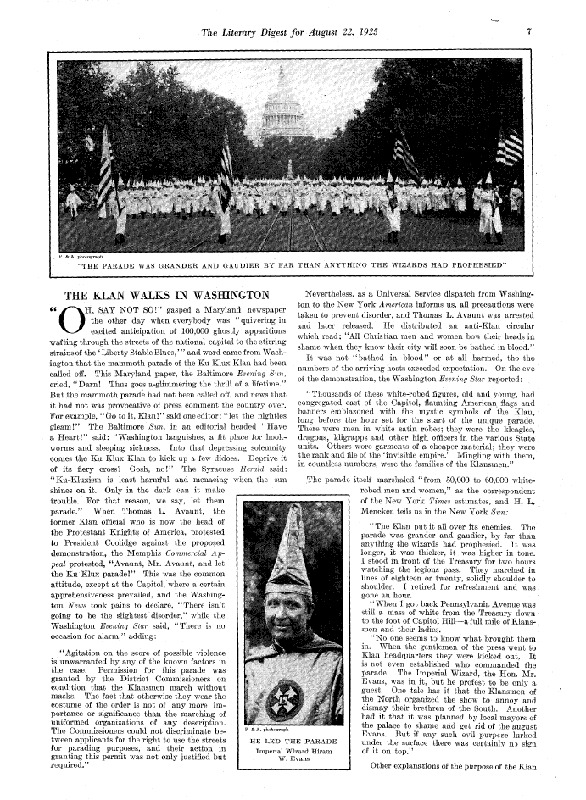
The Klan Walks in Washington
This article from the magazine The Literary Digest, a popular weekly publication, tells the story of the August 1925 Ku Klux Klan march along Pennsylvania Avenue and the National Mall. Held August 8, 1925, an estimated 50,000 to 60,000 Klansmen participated in the event. Many were worried about violence at the event, but a strong police presence as well as the stipulation that marchers could not wear masks helped to keep the march peaceful. -
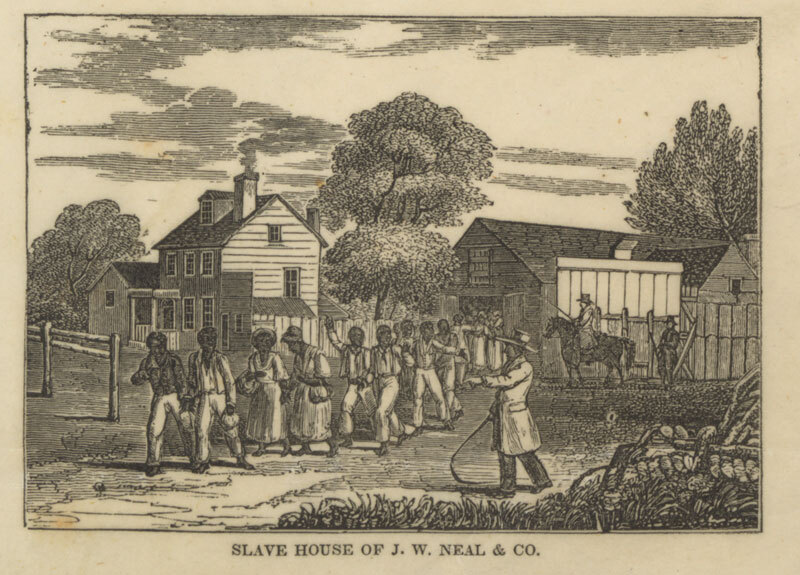
Slave Coffle, House of J.W. Neal & Co, Washington, DC
This image of slaves chained together marching from the House of J.W. Neal & Co.in Washington, DC, was published in a broadside (or poster). The broadside was printed during an abolitionist campaign in 1835-36 designed to pressure Congress to end slavery in the nation's capital. -
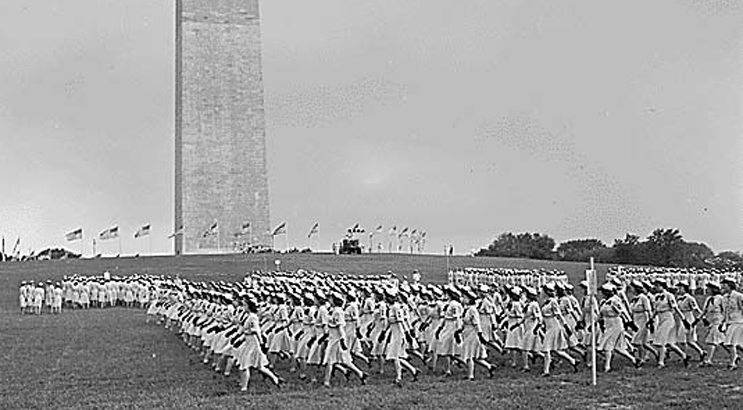
WAVES Units march on Washington Monument grounds
The WAVES (Women Accepted for Volunteer Emergency Service) were established on July 30, 1942 as a women's reserve corp for the United States Navy. WAVES were restricted to work within the United States. Many worked in Washington in buildings on the Mall, some of which stood where the Korean War Memorial and Vietnam Veteran's Memorial stand today. In 1944, the WAVES held a rally on the Washington Monument Grounds to celebrate the second anniversary of the establishment of the corps. In 1948, a law passed which granted women permanent status in the US armed services, and former WAVES became members of the regular service. -
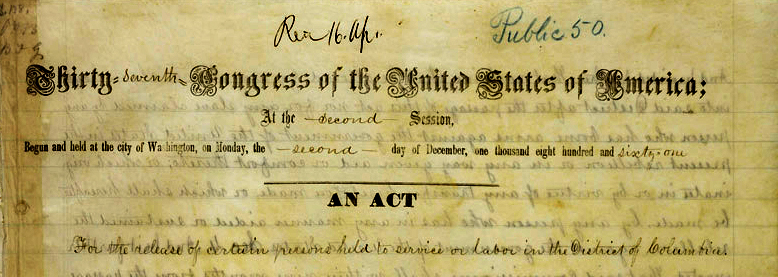
An Act for the release of certain persons held to service or labor in the District of Columbia
The District of Columbia Emancipation Act was signed into law by President Abraham Lincoln on April 16, 1862. Introduced during the thirty-seventh Congress in 1861, the Act granted the immediate emancipation of slaves in the District of Columbia, compensation to loyal Unionist slaveholders of up to $300 for each slave, and voluntary emigration of former slaves to colonies outside of the United States. The April 16 act stipulated that emancipation and compensation applied only to slaves working and slaveholders residing in the District of Columbia as of that date. -
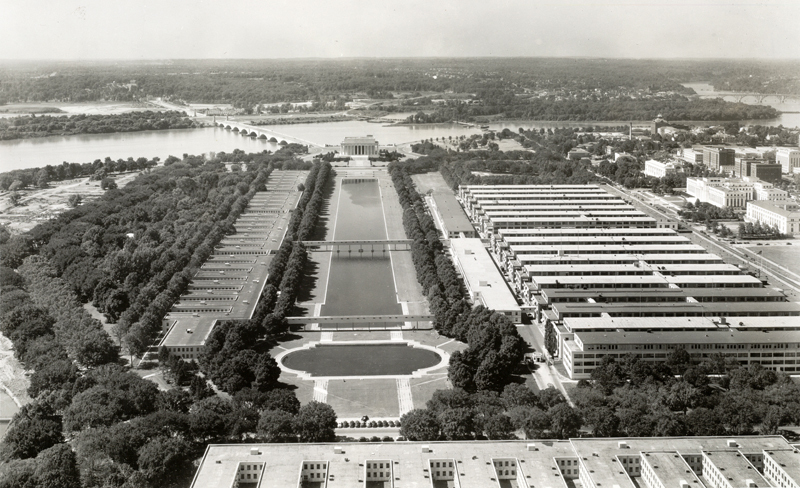
Reflecting Pool during World War II
Soon after the US entered World War II in the early 1940s, the government increased tremendously. The Department of Defense expanded rapidly, but there was not enough space for all of the new employees. To accommodate these new workers, the government constructed new, temporary office buildings on the Mall. The Department of Defense intended to tear down the structures when their new home, the Pentagon, opened in Virginia. Some of these "temporary" buildings remained on the Mall until the 1970s. -
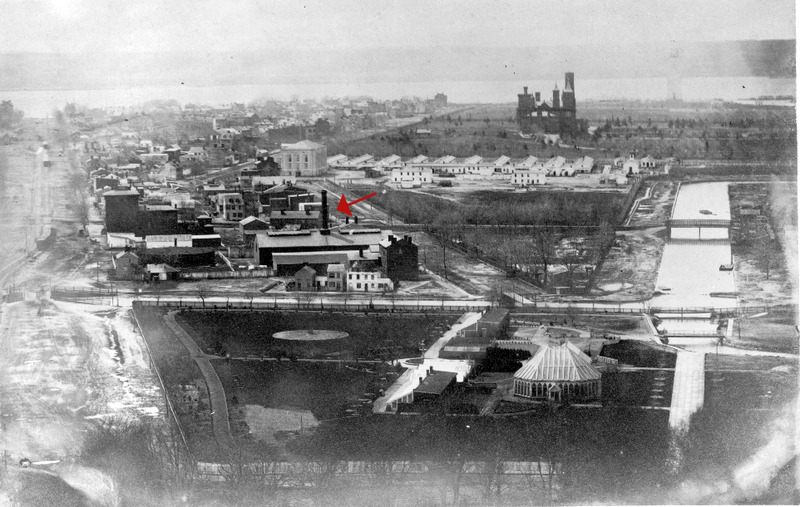
Washington Gas Works
During the 1840s, tired of the smell and dangers of candles and oil lamps, residents of Washington, DC regularly petitioned Congress to establish a gas company to light the city. In 1848, Congress agreed, first experimenting with lighting the Capitol dome using gas. The Washington Gas Light Company plant opened on the Mall in 1852 where the National Museum of the American Indian stands today; the site was a mixture of homes and businesses. Gas from this works illuminated Pennsylvania Avenue streetlamps and the White House, as well as local homes and businesses. The gas works remained for over 50 years. -

Arts of War
In 1930, the Arlington Memorial Bridge Commission selected Leo Friedlander to design a pair of statues representing war. Lack of funding because of the Depression delayed the project until 1935, when it was decided to use bronze instead of the more expensive granite. Friedlander completed his models by 1938, but by then, bronze became a critical war material and the project was again delayed. Finally, in 1949, the Italian government offered to cast the sculptures as a gift to the United States in thanks for post-war aid. The statues were dedicated in September 1951. -

Arts of Peace
In 1930, the Arlington Memorial Bridge Commission selected James Earle Fraser to design a pair of statues representing peace. Lack of funding during the Great Depression delayed the project until 1935. To curb costs, Fraser worked in bronze rather than granite. The sculpture models were completed in 1938, but were not cast completely due to wartime demands for bronze. In 1949, the Italian government offered to cast the sculptures as a gift to thank the United States for aid after World War II. The statues were dedicated in September 1951. -
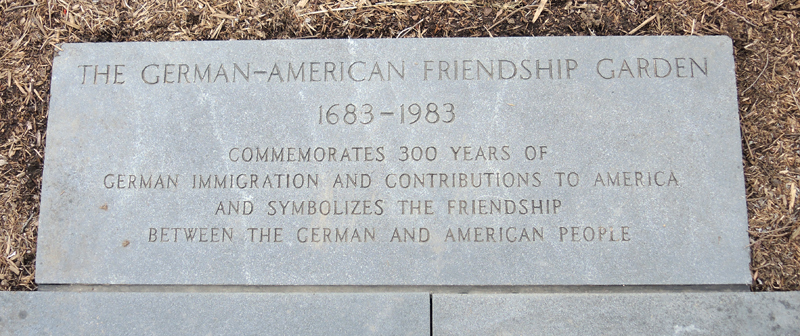
German-American Friendship Garden
In 1983, President Ronald Reagan created a Presidential Commission to commemorate the 300th anniversary of the arrival of 13 German Mennonite families in Pennsylvania. The Commission decided to create a German-American Friendship Garden on the National Mall. Donations to support the project came from American and West German businesses; in the 1980s, Germany was divided into two countries, West Germany and East Germany. The garden was dedicated on November 15, 1988. -

US Airmail Service Begins
The first airplane carrying US mail left the Washington Polo Grounds, now in West Potomac Park, on May 15, 1918. The US Post Office Department created air mail service to speed up the delivery of mail traveling between Washington, Philadelphia, and New York. President Woodrow Wilson presided at this event that drew a large crowd of spectators to the southwest end of the Mall. US Army Lieutenant George L. Boyle piloted the inaugural flight, but it never reached Philadelphia. Boyle crash landed near Waldorf, Maryland. After a rough first day, the post office began moving mail by planes regularly. -

Moratorium to End the War in Vietnam
The Moratorium to End the War in Vietnam began as nationwide anti-war protests which took place during October 1969. A month later, on November 15, roughly half a million people gathered in Washington for anti-war activities. Protesters spoke out in all parts of the city, including on the National Mall. Folk singer and activist Pete Seeger led a large group in singing protest songs near the Washington Monument. The March Against Death took protesters past the White House, where they spoke aloud the names of American soldiers who had been killed in Vietnam, often naming a relative. -
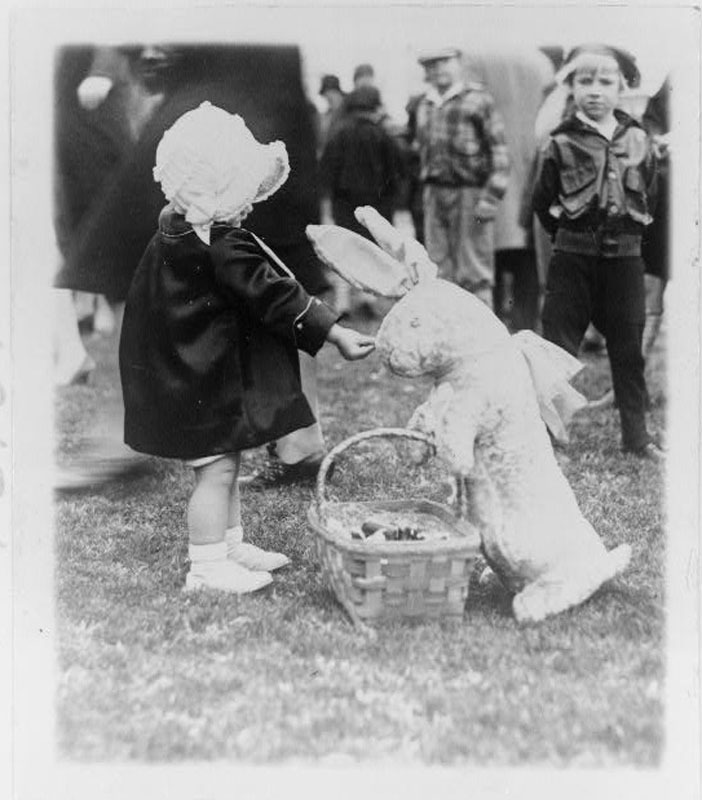
First White House Easter Egg Roll
The first official White House Easter Egg Roll was held Monday April 22, 1878. Earlier in the 1870s, children rolled eggs across the lawn at the US Capitol. Congressmen were not pleased with this activity and in 1877 prohibited the Capitol grounds from being used as a playground. On Easter Monday, 1878, President Rutherford B. Hayes and his wife Lucy opened the White House lawn to egg rollers. Soon after, the Easter Egg Roll became a White House tradition, and was one of the few events in Washington that was never segregated. In this photo from 1929, a youngster shares her candy with a stuffed rabbit on the White House lawn. -

Smithsonian Metro Stop Opens
The Smithsonian Metro station opened on July 1, 1977 giving visitors and residents a new option for taking public transportation to the Mall. At the official opening, the Metro's General Manager presented the Assistant Secretary of the Smithsonian with a fare card to add to the institutional collections. -

First Annual Screen on the Green Festival
The summer outdoor film festival “Screen on the Green” on the National Mall began in 1999. Held at sundown throughout July and August, this free event is one of the most popular social and recreational events held on the Mall among locals and visitors alike. The films shown that first summer were Casablanca, The Wizard of Oz, Citizen Kane, King Kong, and Rebel without a Cause. -
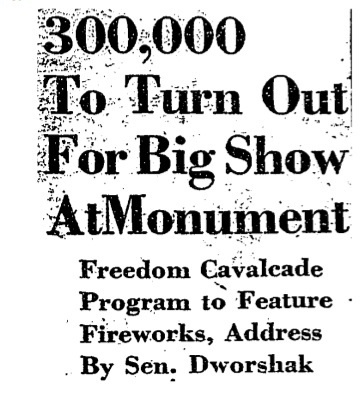
First Televised July Fourth Celebration on the National Mall
On July 4, 1947, Washington, DC's Independence Day celebration was televised for the first time. The Mall was the backdrop for the national event attended by nearly 225,000 people. Spectators on the Mall, and many watching on television, enjoyed musical performances by military bands, speeches by elected officials and World War II veterans, and a fireworks display.